Crispy, Tangy Cauliflower Tacos: Ready in 30 Minutes
The batter isn't broken — moisture physics is working against you, and here's the science-based fix for air fryers and leftovers.
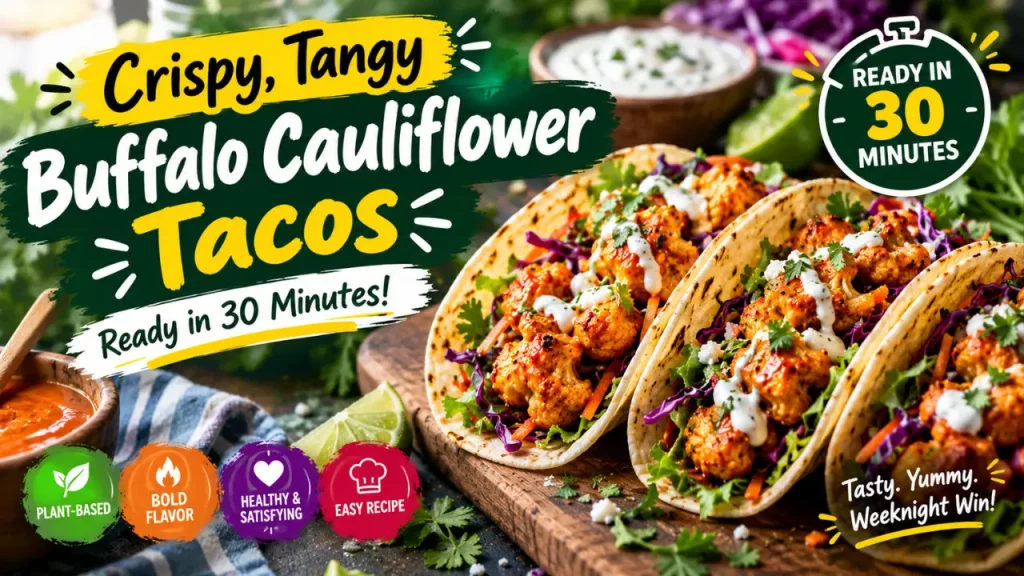
Your cauliflower taco shell is crisp for about four minutes after it leaves the oven, and then it isn’t, no matter how carefully you followed the recipe. That isn’t a sign you did something wrong. It’s physics happening inside the floret, and once you understand it, you can actually stop it.
1. Why the crust collapses even when you did everything right
A thin batter crisps in a hot oven because the starch on the outside gelatinizes — the granules absorb heat, swell, and set into a rigid, dry shell. That part works exactly as every recipe promises. The problem is what’s underneath it. Cauliflower, like most vegetables, is mostly water, and that water doesn’t disappear when you roast it. It stays trapped inside the floret, and as the vegetable cools after coming out of the oven, that internal moisture has nowhere to go but outward, through the crust you just worked so hard to crisp.
This is moisture migration, and it’s the same reason a fried chicken wing left on a plate for twenty minutes goes from crackling to leathery. The dry, porous starch shell is hygroscopic — it pulls in nearby water almost like a sponge. Toss that shell in hot sauce, which is mostly vinegar and water, and you’re adding free liquid directly onto a surface designed to absorb it. The sogginess isn’t a timing mistake. It’s the batter doing exactly what starch chemistry predicts it will do once water is available, whether that water comes from inside the vegetable or from the sauce bowl.
2. The air fryer conversion, with real numbers
An air fryer actually fights moisture migration better than an oven because the smaller chamber and constant air circulation strip surface moisture faster, giving the starch shell less water to compete with while it sets. For battered florets, preheat to 375°F and cook in a single uncrowded layer for 10 to 12 minutes, shaking the basket at the halfway point so every side gets direct airflow. If your batter is thicker or the florets are large, push to 400°F for the final 2 minutes to finish the shell without drying out the inside.
Overcrowding is the one mistake that undoes all of this — florets touching each other trap steam exactly like they would on a packed sheet pan, just in a smaller space where it’s worse. Cook in two batches if you have to. It costs five extra minutes and saves the entire texture of the dish.
3. Making it ahead without the sogginess penalty
If you need these ahead of time, keep the cauliflower unsauced and the components separated — this single decision matters more than any reheating trick. Store the plain roasted or air-fried florets in the fridge, uncovered or loosely covered, for up to two days. Covering them tightly traps the steam they release as they cool, which is the fastest way to turn a crisp batch soggy in storage.
To revive them, skip the microwave entirely — it adds moisture and heats unevenly, finishing the job the fridge started. Reheat in the air fryer at 375°F for 5 to 6 minutes, or in a 425°F oven for about 8 minutes, until the shell audibly crisps again. Toss with sauce only after reheating, never before storage. Florets frozen in a single layer on a tray before bagging hold up similarly and can go straight from freezer to air fryer with an added 3 to 4 minutes.
4. Corn versus flour tortillas: a real texture trade-off
Corn tortillas are more rigid and lower in moisture to start, which means they resist the sauce’s liquid longer and hold their structure through a messier filling. Flour tortillas are softer and more pliable from the start, but that same pliability comes from a higher starch-to-structure ratio that absorbs liquid faster, so they go limp sooner once sauced cauliflower sits on top. If texture survival time is your priority, corn wins by a clear margin.
On calories and carbohydrates, exact figures vary by brand, thickness, and diameter, so resist any chart that claims a universal number — check the label on your specific package rather than assuming a swap automatically makes the meal lighter. What’s consistent is size: a standard corn tortilla is typically smaller in diameter than a standard flour tortilla, so a side-by-side taco built on corn is often a smaller portion by default, independent of any nutritional claim.
5. Who this recipe doesn’t actually work for, as written
Standard batters lean on wheat flour, so anyone avoiding gluten needs a swap to rice flour, chickpea flour, or a cornstarch-based batter — cornstarch alone crisps well in an air fryer because it has no gluten network to go gummy, though it browns less deeply than wheat flour does. Double check your hot sauce brand too; some use wheat-derived thickeners.
The cooling side — yogurt or ranch — is the dairy sticking point. A plain unsweetened coconut or soy yogurt thinned with lime juice replicates the tang reasonably well, though the result is thinner and less rich. For a lower-fat version, skip the oil-based batter dip entirely and use an aquafaba or egg-white wash with a light flour dredge before air frying, and cut the butter typically melted into the hot sauce in half, replacing it with a splash of the sauce’s own vinegar base to keep the tang without the fat.
6. The nutrition claim, checked honestly
Cauliflower tacos get marketed as the “healthy wing alternative,” and there’s a real basis for that beyond marketing. Meat is a review on adding plant fiber to meat products that points out plainly: meat carries a high fat percentage and no dietary fiber at all, a combination linked to cardiovascular and gastrointestinal health problems, which is exactly why that same research explores blending vegetable fiber into meat products in the first place. A cauliflower taco starts from the opposite direction — a vegetable base that already carries the fiber meat lacks.
That doesn’t mean the dish is automatically low in anything else. Hot sauce and melted butter are both concentrated sodium sources, and a generous toss can push a few tacos well past what a label might suggest for a “vegetable” dish, especially once ranch or a buttery sauce is added on top. Without a verified lab analysis for this specific recipe, resist trusting any single site’s calorie count at face value — read your actual hot sauce and tortilla labels, since those two ingredients, not the cauliflower itself, drive most of the final numbers.
None of this means skip the recipe — it means treat crispness and sodium as two separate problems with two separate fixes: control moisture with technique, and control sodium by measuring your sauce instead of pouring freehand.
Sources

Mick Hudson
Low-and-slow recipes, rubs, sauces and fire management from our pitmaster team.