Easy Tandoori Paneer Momos Recipe: Smoky, Spicy & Delicious
Why your tandoori paneer momos leak, turn gummy, or taste flat without a tandoor — and the safe fixes that actually work.
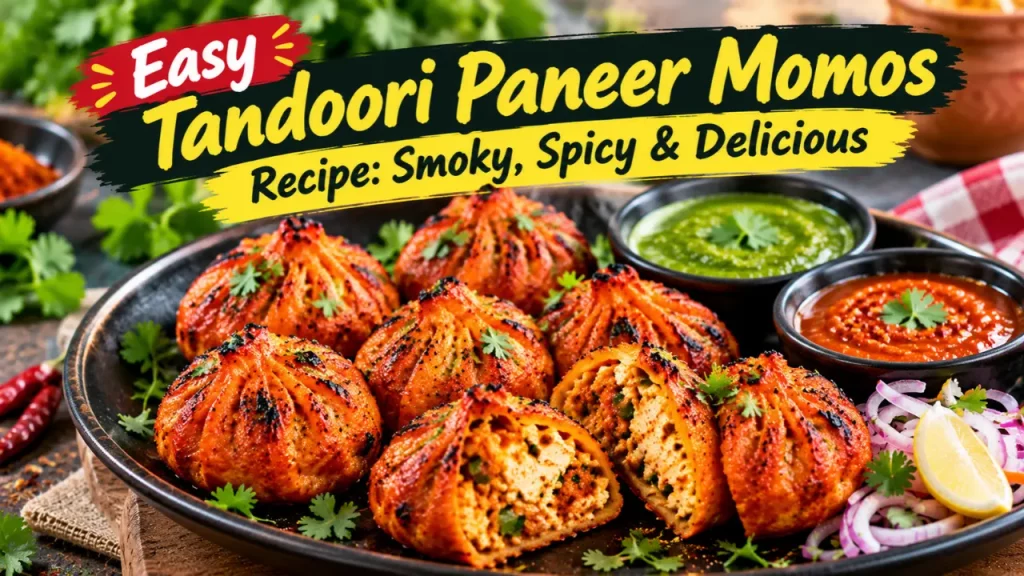
You pull the tray out of the oven, proud of the orange-red char marks, and then you bite in. Warm water floods out. The filling has slumped into a paste at the bottom of the wrapper. The smoke smell you were chasing never showed up at all. You check the recipe again, certain you followed it exactly, and you still can’t figure out what went wrong.
This is the part nobody explains clearly: a tandoor does three things at once — blistering dry heat, open smoke, and quick moisture evaporation — and your pan, oven, or air fryer can only copy one of those at a time. Once you understand which job is failing, the fixes are simple.
Why the filling turns watery or falls apart
Paneer is mostly trapped water and milk fat held together by a loose protein mesh. The moment you marinate it in yogurt and spices, then blast it with heat, that mesh breaks down fast, and the water has nowhere to go but out through the wrapper.
Store-bought paneer is usually the culprit. Commercial blocks are often pressed less firmly than homemade paneer, so they carry more residual whey. If you press a cube between two fingers and it leaves your hand wet, that block will weep during grilling no matter how good your marinade is.
Three things actually fix this. First, crumble or grate the paneer and pat it dry with a clean towel before mixing in the marinade, rather than marinating whole cubes. Second, thicken the hung curd you use in the marinade by straining it for at least thirty minutes so it clings instead of pooling. Third, keep your grilling time short and hot rather than long and moderate — a quick blast sears the surface and locks moisture in, while a slow cook simply steams the water out before any char forms.
Can you prep ahead or freeze shaped momos
Yes, but the dough, the filling, and the shaped momo all behave differently once frozen, and treating them the same way is where people lose texture.
Dough freezes the best of the three. Wrapped tightly, it holds its stretch for weeks and only needs a slow thaw in the fridge before rolling. Filling is the riskiest to freeze raw, because paneer’s water content means ice crystals form inside it, and when it thaws those crystals melt into exactly the kind of excess moisture that makes wrappers gummy. If you must freeze filling, drain it hard after thawing and squeeze it in a towel before using it.
Shaped, uncooked momos freeze reasonably well if you flash-freeze them uncovered on a tray first, so the wrappers firm up before they touch each other. Steam them straight from frozen rather than thawing first — thawing lets the wrapper absorb condensation and turn gluey before it ever reaches the grill.
Is raw-charcoal smoking actually safe indoors
The classic dhungar method — a hot coal dropped into a bowl of ghee set inside the dish — is the step most recipes treat as optional flair. It deserves more scrutiny than that.
Charcoal combustion produces polycyclic aromatic hydrocarbons, a group of compounds formed whenever fat drips onto an open flame or smolders near one. A study measuring charcoal-grilled fish in Japan found that charcoal grilling sharply increased PAH content compared with raw samples, shifting the dominant compounds toward phenanthrene, fluoranthene, and pyrene, and pushed health-risk estimates above recommended limits. Separate sampling near an outdoor charcoal grill found that just one hour standing near the smoke delivered a PAH dose comparable to eating 50 to 150 grams of the grilled food itself, through inhalation and skin contact alone, not eating.
That second finding matters specifically for the dhungar step, because it happens inside your kitchen, over an open dish, right under your face, not outdoors with airflow carrying smoke away.
The smoke you add on purpose for flavor is the same category of compound that studies keep finding in grilled food’s residue, so treating it as a free flourish rather than an occasional indulgence misses the point entirely.
You don’t need raw charcoal to get a convincing smoky note. Smoked paprika stirred into the marinade gives a dry, earthy smoke flavor without any combustion at all. A few drops of liquid smoke do the same job in seconds. Charring a quartered onion or a few dried red chilies directly on a gas flame, then blitzing it into the marinade, gives a genuine burnt-edge flavor without an open coal sitting in your dish. All three sidestep the indoor dhungar step entirely.
Who should think twice before making this
If you don’t own a steamer or a tight-lidded pan that can hold steam, skip straight to buying pre-steamed wrappers or using a makeshift colander-over-pot setup, because momos grilled from raw dough never cook through properly and the filling stays unsafe in the center.
If your paneer is visibly wet or soft to the touch, either switch to a firmer homemade block or plan on extra draining time, because no marinade recipe fixes a moisture problem at the source.
And if you or someone you’re cooking for already eats a lot of grilled or barbecued food, it’s worth knowing the broader research context, even though it’s observational and can’t prove cause and effect for any one dish. A case-control study on Long Island found that women with the highest combined exposure to PAH sources, including grilled and smoked food, showed higher breast cancer incidence than those with lower exposure, and a related analysis of the same population found postmenopausal women eating the most grilled or smoked meat over their lifetime had about 47 percent higher odds of breast cancer than those eating the least. These are population-level, observational findings about lifetime grilled meat intake broadly, not about momos specifically, but they’re a reasonable reason to treat deep char as a flavor choice to use occasionally, not a nightly habit.
Shelf life and reheating without the rubber texture
Cooked tandoori paneer momos hold their texture for about two days refrigerated in a sealed container before the wrapper starts drying at the edges and the paneer firms up unpleasantly. Reheating in a microwave is the fastest way to ruin them, since it drives out whatever moisture survived grilling. Instead, steam leftovers for two to three minutes to rehydrate the wrapper, then finish with a thirty-second pass in a hot dry pan or air fryer to bring back a bit of the char. That two-step reheat is the closest you’ll get to fresh without redoing the whole marinade.
- Dry your paneer and thicken your curd before marinating to stop leaking
- Freeze dough and shaped uncooked momos, not raw filling, for the best texture later
- Swap raw indoor charcoal for smoked paprika, liquid smoke, or charred onion
- Reheat with steam first, then a quick hot pan, never a straight microwave blast
- Skip heavy charring if you already eat a lot of grilled food or have no steamer on hand
The single biggest fix in this whole recipe isn’t a marinade tweak at all — it’s accepting that a home kitchen can’t replicate a tandoor’s heat and smoke simultaneously, so you choose one tool for char and a separate, safer tool for smoke, instead of forcing both out of a hot coal in a bowl.
Sources
- Effect of charcoal grilling on polycyclic aromatic hydrocarbons in edible fish in Japan (2022)
- Barbecue Fumes: An Overlooked Source of Health Hazards in Outdoor Settings? (2015)
- Exposure to multiple sources of polycyclic aromatic hydrocarbons and breast cancer incidence (2016)
- Cooked meat and risk of breast cancer — lifetime versus recent dietary intake (2007)

Tom Fletcher
The latest from the Australian and global BBQ scene — comps, cooks and culture.