Creamy Pumpkin Pasta: The Cozy Fall Dinner You’ll Want to Make Again
Real calorie, sodium and fat numbers for pumpkin pasta, plus how to store, reheat, and fix it without the sauce breaking or tasting flat.
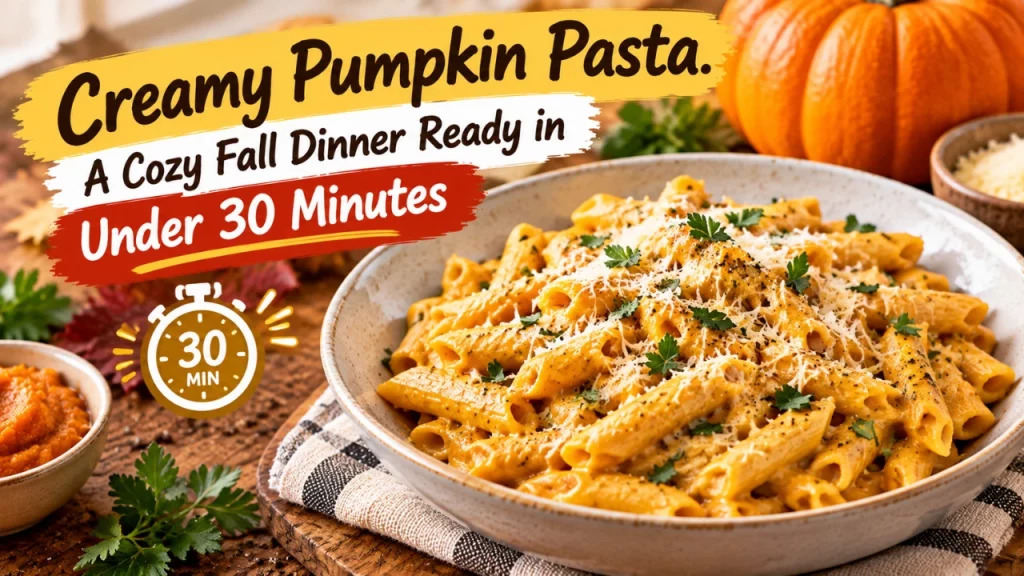
Most people assume that if a dinner has pumpkin in it, the nutrition label barely matters — pumpkin sounds like a vegetable, pasta sounds like a side dish, and the whole bowl reads as a lighter version of alfredo. That assumption falls apart as soon as you actually weigh out the cream, the Parmesan, and the salt most recipes call for “to taste.” It falls apart again the next day, when the leftovers come out of the fridge looking curdled instead of glossy. The real story of creamy pumpkin pasta is a choice between two different bowls, with two different nutrition profiles, two different leftover behaviors, and two different problems to solve.
The Classic Cream-and-Parmesan Bowl
A standard serving built from roughly 2 ounces of dry pasta, a quarter cup of heavy cream, an ounce of grated Parmesan, and a quarter cup of canned pumpkin puree lands around 600 to 650 calories, 30 to 35 grams of fat, and 18 to 20 grams of saturated fat, before you count the salt added during cooking. That saturated fat figure matters because heavy cream alone carries roughly 36 grams of fat per 100 grams, about 23 grams of it saturated, and Parmesan adds another 29 grams of fat per 100 grams, around 19 grams saturated. Sodium is the bigger surprise: Parmesan runs about 1,529 milligrams of sodium per 100 grams, which means a single ounce contributes somewhere near 400 to 430 milligrams before you’ve added any salt to the pot or the sauce.
The saturated fat question is genuinely unsettled, not settled against cream, as the “avoid saturated fat” instinct implies. A Multi-Ethnic Study of Atherosclerosis analysis following 5,209 adults found that higher dairy saturated fat intake was associated with a 21 percent lower risk of cardiovascular events per 5 grams a day, while saturated fat from meat moved risk in the opposite direction. A broader review of dairy fat and cardiovascular evidence reported that most observational studies found no link between dairy intake and heart disease risk, regardless of whether the dairy was low-fat or whole. A 2020 state-of-the-art review in the Journal of the American College of Cardiology went further, arguing that whole-fat dairy shouldn’t be singled out for further restriction. Against that, a review of saturated fat replacement strategies and a review of randomized trials on dietary fat both found that swapping saturated fat for whole grains, plant protein, or polyunsaturated oils measurably lowered cardiovascular risk. Translation: a cream-based sauce is not a dietary emergency, but it isn’t nutritionally neutral either, and the research genuinely disagrees on how much it matters.
The Dairy-Free, Low-FODMAP Bowl
Swap the cream for full-fat coconut milk and the Parmesan for a cashew-based cream, and the saturated fat number doesn’t drop as much as people expect. Coconut milk carries about 24 grams of fat per 100 grams, with roughly 21 grams of it saturated — proportionally higher than heavy cream. Cashews, by contrast, run closer to 44 grams of fat per 100 grams but only about 8 grams saturated, so a cashew-heavy sauce pulls the saturated fat total down meaningfully, while a coconut-milk-heavy sauce does not. Sodium drops sharply either way, since coconut milk and cashews both sit under 15 milligrams of sodium per 100 grams, compared with Parmesan’s 1,529. A dairy-free bowl built mostly on cashew cream, light on coconut milk, typically lands around 480 to 550 calories and 8 to 12 grams of saturated fat per serving — a real reduction, not a marketing one.
The onion and garlic in most pumpkin pasta recipes are a separate problem for FODMAP-sensitive or IBS readers, since both are high in fermentable fructans regardless of how little is used. The practical fix is garlic-infused oil in place of minced garlic, since the fructans that trigger symptoms aren’t oil-soluble, paired with the green tops of scallions instead of onion for aromatic depth without the bulb.
| Per serving | Classic cream and Parmesan | Dairy-free, cashew-forward |
|---|---|---|
| Calories | 600–650 | 480–550 |
| Total fat | 30–35 g | 18–22 g |
| Saturated fat | 18–20 g | 8–12 g |
| Sodium (before added salt) | 450–500 mg | 80–120 mg |
| Fiber (from pumpkin) | 2–3 g | 2–3 g |
Canned Pumpkin Isn’t Always the Same Pumpkin
Fresh cooked pumpkin runs about 20 calories and roughly 1 gram of fiber per 100 grams, with almost no sodium. Plain canned pumpkin puree, without added salt, actually concentrates the fiber to around 3 grams per 100 grams and nudges calories up to about 34, because canning removes water. That’s a meaningful upside for canned puree, not a downside — but some brands add salt during processing, which can push sodium from near-zero up into the double digits per 100 grams. Checking the label for “added salt” versus “100% pumpkin” matters more than most recipes let on, especially for anyone managing a low-sodium diet.
Keeping It Appetizing on Day Two
Refrigerated pumpkin pasta turns gummy because the starch in the noodles keeps absorbing liquid from the s

Tom Fletcher
The latest from the Australian and global BBQ scene — comps, cooks and culture.