Creamy Chicken Gnocchi Soup: An Easy One-Pot Fall Dinner
Why gnocchi soup curdles, breaks, or turns gluey on reheat — and the fat ratios, thickeners, and swaps that fix it for good.
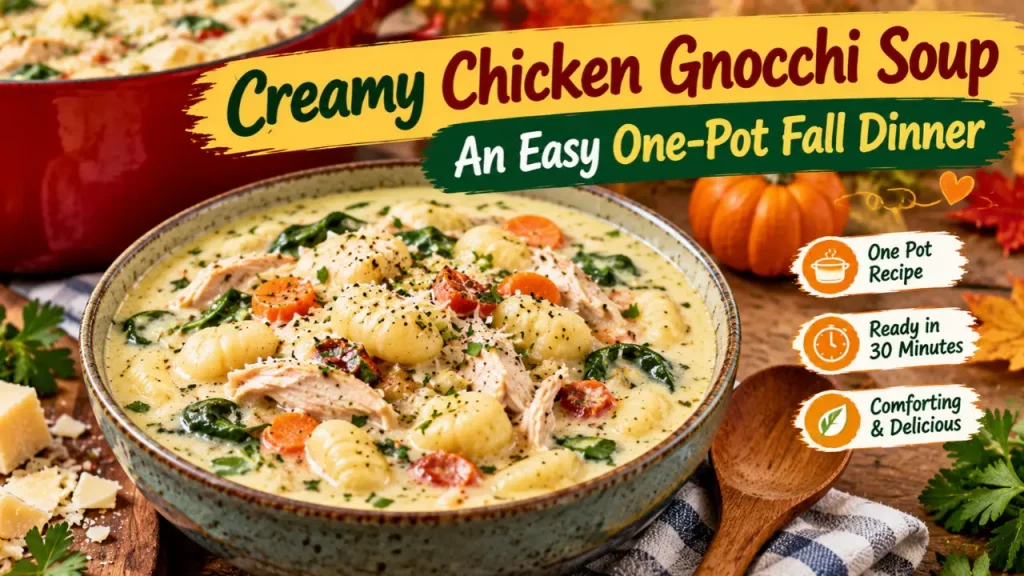
You made the soup on Sunday. It was glossy, rich, the gnocchi tender little pillows floating in a cream sauce that tasted like it came from a restaurant kitchen. By Tuesday’s lunch reheat, the broth has split into greasy droplets, there are rubbery curds clinging to the chicken, and the gnocchi have gone from pillowy to dense and waterlogged. Nothing about the microwave or the stovetop should have changed the recipe that much — except it did, and there’s a reason, not bad luck.
Creamy chicken gnocchi soup is genuinely one of the easier one-pot fall dinners to throw together, and rotisserie chicken is a legitimate shortcut that skips a whole cooking step. But “easy” and “forgiving” aren’t the same thing. The dairy, the starch, and the gnocchi in this soup are all chemically unstable under heat, and once you understand why, you can engineer around it instead of hoping it works out.
Why does the cream in chicken gnocchi soup curdle in the first place?
Cream curdles when the proteins in it, mainly casein, clump together instead of staying suspended evenly through the liquid, and that clumping is driven by a combination of heat, acid, and salt concentration working against whatever fat is available to keep things separated. Fat globules physically get in the way of proteins bumping into each other and sticking. Low-fat dairy has fewer of those globules per cup, so its proteins are more exposed and more likely to seize up the moment they hit a hot, salty, slightly acidic broth, like one built on chicken stock and a splash of white wine or a squeeze of lemon some recipes use for brightness. Heavy cream rarely curdles in this kind of soup because it is carrying enough fat to keep the proteins insulated from each other even near a boil. Milk, on the other hand, curdles easily under the exact same conditions, which is the real mechanism behind the common advice to add cream at the end over low heat — it isn’t a ritual, it’s buying the proteins less exposure to the conditions that make them clump.
What’s the minimum dairy fat percentage that keeps the soup silky?
As a practical rule, dairy products sitting around 10 percent fat or higher behave far more predictably than anything below that line. Half-and-half, generally in the 10 to 12 percent fat range, is the realistic floor for a soup that needs to simmer, sit, and get reheated without splitting. Whole milk, at roughly 3 to 4 percent fat, is the riskiest common swap — it can work if it’s stirred in off the heat and the soup is never brought back to a hard simmer, but it has very little margin for error. Heavy cream, typically in the high 30s to 40 percent fat range, is the most stable choice by a wide margin, which is exactly why restaurant versions default to it even though it’s the richest option on the shelf.
| Dairy | Typical fat range | Curdling risk in hot soup |
|---|---|---|
| Heavy cream | 36-40% | Very low |
| Half-and-half | 10-12% | Low to moderate |
| Whole milk | 3-4% | High |
| 2% milk | 2% | Very high |
Is a roux-based soup more forgiving to reheat than a cornstarch-thickened one?
Yes, a flour-and-butter roux generally holds its texture through reheating better than a cornstarch slurry does. Cornstarch thickens through a starch gel that is sensitive to prolonged heat and to being stirred or reheated repeatedly — it can thin back out, a process sometimes called “breaking,” leaving you with a watery bowl even though the soup looked properly thick the day before. A roux, built from flour cooked into fat before the liquid goes in, creates a more stable network of starch and fat together, so it tends to reheat closer to its original consistency over several days in the fridge. The tradeoff is that a roux needs a minute or two of actual cooking to lose its raw-flour taste, while cornstarch is a last-minute, no-cook thickener. If you’re making this soup specifically because you want good leftovers through the week, the roux route is the better bet.
What actually happens to the gnocchi when you reheat it?
Gnocchi keeps absorbing liquid every time it’s heated, which is why a soup that was perfectly balanced on day one can turn gluey and dense by day three. Potato gnocchi is mostly starch, and starch granules continue swelling as long as they’re sitting in hot liquid, well past the point where the dumpling was originally cooked through. The fix isn’t a trick, it’s sequencing: cook the gnocchi separately and add it to individual bowls just before serving, rather than letting it simmer in the pot with the rest of the leftovers. That one change does more for texture over a week of reheats than any seasoning adjustment.
Who should think twice before making this soup as written?
Three groups in particular should pay attention before ladling out a full bowl. People managing sodium intake should know that chicken broth, parmesan, and bouillon bases all stack sodium on top of each other, and a soup like this can add up quickly across a few servings, so using a low-sodium broth and salting at the end by taste rather than by habit matters more here than in a drier dish. People who are lactose intolerant will feel this one directly, since both the cream and any parmesan contribute lactose, though hard aged cheeses carry much less lactose than fresh dairy and are usually better tolerated in small amounts. People avoiding gluten need to treat the gnocchi itself as the main obstacle, not just the flour in the roux, because traditional potato gnocchi is bound with wheat flour.
What swaps actually hold their texture, and what ruins it?
Lactose-free whole milk or cream substitutes with added fat work well because they preserve the fat percentage that prevents curdling, while simply thinning the soup with water or stock does not, since that lowers fat concentration and invites the same splitting problem described earlier. For gluten, a certified gluten-free gnocchi made from potato and rice flour, or a cornstarch-based roux instead of a wheat-flour one, swaps out the gluten without changing the thickening mechanism much. For sodium, the single biggest lever is the broth itself; reducing or skipping the parmesan garnish matters far less than switching to a reduced-sodium base.
How does the gnocchi itself compare to cauliflower gnocchi or rice as a swap?
Cauliflower-based gnocchi carries noticeably less digestible starch than potato gnocchi, since cauliflower is mostly water and fiber rather than starch, which generally makes it a lower glycemic-load option, though it also won’t hold up to long simmering as well and tends to go mushy faster. Rice, meanwhile, is a starch swap rather than a low-carb one — short-grain rice added to this soup will behave more like a classic chicken and rice soup, with a similar starchy thickening effect to gnocchi but without the dumpling texture, and it will continue absorbing broth on reheat in much the same problematic way gnocchi does.
Once you treat the dairy, the thickener, and the dumplings as three separate engineering problems instead of one recipe to follow blindly, this soup stops being a one-night wonder and starts being something you can actually meal-prep. What’s the trickiest part of this soup you’ve run into at home — the cream splitting, the gnocchi turning gummy, or something else entirely?

Mick Hudson
Low-and-slow recipes, rubs, sauces and fire management from our pitmaster team.