Bacon-Wrapped Jalapeño Poppers: The Irresistible Appetizer Everyone Will Love
The real risks, timing tricks and heat science behind bacon-wrapped jalapeño poppers that most recipe posts skip entirely.
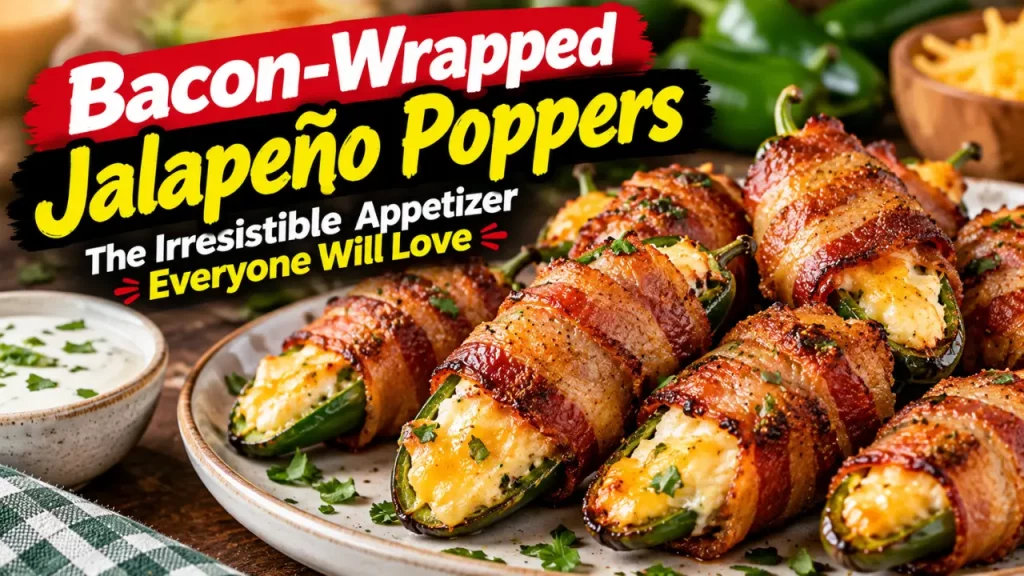
Most people assume the point of wrapping a jalapeño in bacon is to tame the pepper’s heat, figuring the fat acts like a blanket that smothers the spice. Walk through why that’s only half true, and a few other assumptions about this party-table staple start to wobble too — including whether the bacon actually finishes cooking the way you think it does, and whether “everyone” really does love them.
The short version: the heat lives mostly in the pith, the bacon mutes but doesn’t erase it, and the biggest practical risk isn’t the spice at all — it’s serving bacon that looks done but isn’t.
The Heat Is Concentrated in the Seeds
Recipe cards almost universally tell you to scrape out the seeds to cut the heat, and that’s not wrong, but it’s incomplete. The compound responsible for jalapeño heat, capsaicin, is produced mainly in the white pithy ribs that run along the inside of the pepper, not in the seeds themselves. Seeds pick up heat mostly because they sit against that pith and absorb some capsaicin by contact. So a popper made from a pepper that’s been deseeded but still has its ribs intact will still carry real heat, while one that’s been fully deribbed — seeds or no seeds — will be noticeably milder. If you’re cooking for a mixed crowd and want a genuinely mild batch, scraping with a spoon until the inside walls look smooth and pale, not just pulling out the visible seed cluster, is the step that actually matters.
Wrapping in Bacon Tames the Spice
There’s a kernel of truth here worth keeping. Capsaicin is fat-soluble, not water-soluble, which is why a glass of water does little to cool a burning mouth but a spoonful of fat or dairy helps. Bacon’s rendered fat performs a similar, if modest, buffering role as it cooks into and around the pepper and the cream cheese filling usually tucked inside. But “tames” is doing a lot of work in that sentence. The fat coats the mouth and slows how quickly capsaicin reaches receptors — it doesn’t neutralize the compound. A naturally hot pepper wrapped in bacon is still a hot pepper; the bacon just smooths the delivery. People who are sensitive to spice should not treat the bacon wrap as a safety net.
Everyone Will Love Them
This is the part most coverage skips entirely because it’s an unprovable marketing line, not a culinary fact. Poppers sit at the intersection of three things some guests actively avoid: pork, dairy, and capsaicin. Anyone keeping halal or kosher, anyone who’s dairy-free, and anyone with a low spice tolerance is excluded by the dish’s basic architecture, not by a bad batch. If you’re hosting a genuinely mixed group, the realistic claim isn’t that everyone will love them — it’s that poppers are a strong crowd-pleaser for the subset of guests who eat pork and dairy and enjoy some heat. A side tray of seeded, mild poppers made with a plant-based cream cheese substitute closes most of that gap without much extra effort.
You Can Assemble Them Hours Ahead and They’ll Taste the Same
Make-ahead advice is everywhere, and it’s mostly fine for texture but glosses over a real food-safety point. Raw bacon wrapped around a dairy filling sitting at room temperature for an extended stretch is the kind of combination that should go back in the refrigerator, not sit on a counter “to save time later.” Assembling poppers a day in advance and refrigerating them, uncovered on a tray or loosely covered, actually works in the dish’s favor — the bacon has time to dry slightly on the surface, which helps it crisp rather than steam in the oven. What doesn’t work is assembling them and leaving them out before cooking; treat raw bacon-wrapped poppers the same way you’d treat any raw-meat-plus-dairy prep and keep them chilled until they go into the oven.
The Bacon Needs to Be Fully Cooked Before Serving
This sounds obvious, yet it’s the single most common failure point in home kitchens, and recipe posts rarely explain why. Bacon wrapped tightly around a pepper cooks unevenly: the side touching the baking sheet renders and crisps, while the side facing up or tucked against the next popper stays pale and underdone even after the visible parts look browned. Because the filling is hidden and the pepper itself gives visual cover, it’s easy to pull a tray that looks finished while several pieces still have soft, undercooked bacon on the hidden side. The fix isn’t a specific oven temperature so much as a specific check: flip or rotate the poppers partway through cooking, and cut into at least one from the middle of the tray before declaring the batch done. Toothpicks holding the bacon in place should be removed or counted so none end up on a plate.
Deep-Frying Is the Only Way to Get Crispy Bacon
Plenty of older recipes insist on frying, but home ovens, broilers and air fryers all render bacon fat perfectly well, and each comes with its own tradeoff rather than a single “best” method.
| Method | Typical result | Main risk |
|---|---|---|
| Oven baking on a rack | Even crisping, fat drips away | Slower; needs a wire rack to avoid steaming |
| Broiler | Fast, deeply browned exterior | Easy to burn the exposed side while the hidden side stays underdone |
| Air fryer | Crisp on all sides with less fat pooling | Batch size is small; overcrowding causes uneven cooking |
| Pan-frying seam-side down | Good initial sear, holds the wrap shut | Hardest to judge doneness without cutting one open |
None of these is unsafe or inferior across the board — the right choice depends on batch size and how much hands-on attention you want to give the tray. A rack set inside a baking sheet is the one addition that improves almost every method, since it lets rendered fat drip away instead of letting the poppers sit and partly fry in their own grease on one side.
The appeal of bacon-wrapped jalapeño poppers is real: salt, fat, char and heat in one bite is a combination that works for a reason. But the dish rewards a little more attention than the usual recipe write-up suggests — deribbing matters more than deseeding, the bacon buffers heat rather than removing it, and the biggest practical hazard at the table is an underdone strip of pork hiding behind a nicely browned pepper, not the spice level at all.

Mick Hudson
Low-and-slow recipes, rubs, sauces and fire management from our pitmaster team.