These 10 Hidden-Gem Coffee Drinks of 2026 Are Too Good to Overlook
Here's the caffeine, sugar, and health math behind 2026's trendy coffee drinks — and exactly who should order something else.
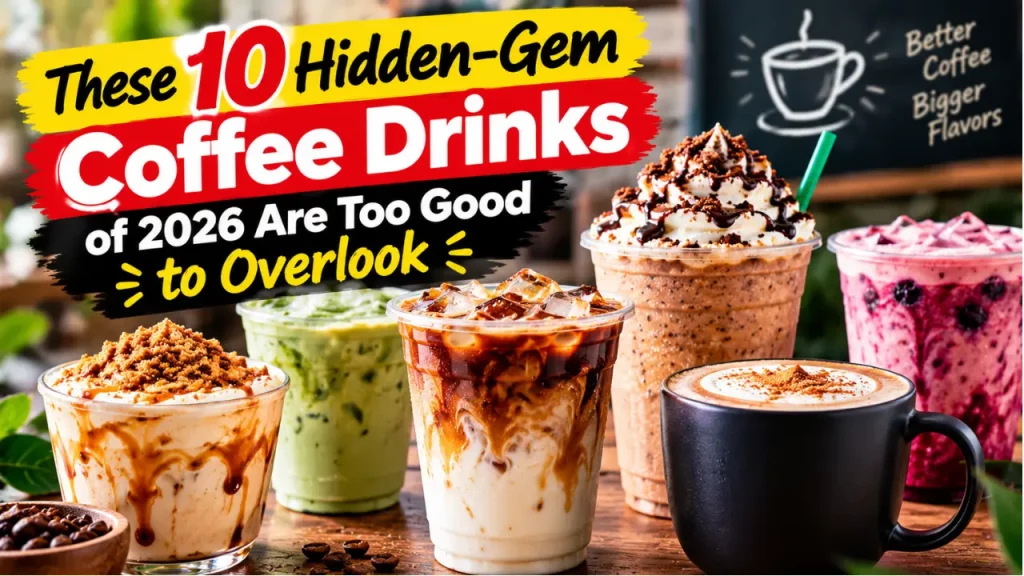
Ask most people what the risky part of their coffee order is, and they’ll point at the coffee itself — the caffeine, the acid, the thing a doctor once warned them about. That assumption doesn’t hold up well once you actually look at what’s happening in a cup.
You’ve probably already seen the roundups of 2026’s buzziest coffee drinks — the global-inspired lattes, the spiced pours, the citrus espresso tonics, the nitro cold brews. What those lists skip is the part that actually matters once the drink is in your hand: how much caffeine you’re really getting, how much sugar is hiding in it, and whether the “functional” additions are backed by anything.
The Coffee Part Usually Isn’t the Problem
Plain coffee, in moderate amounts, has a surprisingly decent track record. A large NHANES analysis of 8,789 adults aged 50 and older found that drinking two cups or fewer of coffee a day was linked to lower odds of bone thinning at the femoral neck, with an odds ratio of 0.83 — roughly 17% lower odds compared with people who didn’t drink coffee that way. Separately, a nationally representative study of 4,510 adults found that coffee drinkers had lower liver stiffness measurements than non-coffee-drinkers, using the same 2017-2018 NHANES data and a stiffness cutoff of 9.5 kPa to flag fibrosis risk.
Neither study proves coffee fixes your bones or your liver — both are observational, meaning other habits could explain some of the link. But it does mean the coffee itself isn’t usually what should worry you in these ten drinks. What’s added to it is.
Caffeine Isn’t the Same Drink to Drink
Nitro cold brew and flash-chilled coffee get marketed as upgrades, and in terms of taste and smoothness, fair enough. But cold brew methods generally extract more caffeine per ounce than a quick espresso pull, and a citrus espresso tonic built on a double shot delivers a very different jolt than a matcha-leaning latte, where the caffeine comes from tea leaves rather than coffee beans at all.
That matters most if you’re pregnant, breastfeeding, or just caffeine-sensitive. A cold brew-based hidden gem and an espresso-tonic hidden gem are not interchangeable just because they’re both on the same trend list. If you’re watching total caffeine for the day, ask what the drink is actually built on before you order it — cold brew, espresso, or tea — not just what it’s flavored like.
Some of These Are Dessert Wearing a Coffee Costume
Here’s where the “hidden gem” framing falls apart. Spiced, syrup-heavy, globally-inspired lattes are often built for indulgence, not nutrition, and the sugar load can rival an actual dessert. That’s not a moral failing — it’s just useful to know before you drink one at 3 p.m. and wonder why you’re wired at midnight.
There’s a real connection between sugary caffeinated drinks and sleep. In an analysis of 18,779 US adults, people who slept five hours or less a night consumed 21% more sugar-sweetened beverages than people getting seven to eight hours, and the effect was driven specifically by caffeinated sugary drinks. The study can’t prove the drinks caused the short sleep or vice versa, but the pairing of sugar and caffeine late in the day is worth being honest with yourself about if your sleep is already shaky.
If you’re managing blood sugar, the syrupy spiced lattes and citrus tonics with added sweetener are the ones to treat like an occasional treat, not a daily habit — regardless of how limited-edition they sound.
The real risk in any of these ten drinks almost never comes from the coffee itself — it comes from everything added to turn a cup of coffee into a dessert, a supplement, or a protein shake, and that’s exactly where the evidence gets thin.
What Mushroom Coffee’s Claims Actually Rest On
Mushroom coffee gets sold on the idea that reishi, lion’s mane, or chaga sharpen your focus or support immunity. The closest real evidence is a small, double-blinded, placebo-controlled study that tested a caffeine-containing adaptogenic herbal shot against a matched caffeine-only shot and a placebo in 30 people who normally drink little caffeine. It found the adaptogenic version changed how caffeine affected mood and attention compared with caffeine alone.
That’s genuinely interesting — but it’s a single small trial of a specific herbal shot, not a mushroom latte, and it says nothing about immune function. If a mushroom coffee is marketed for immune support or long-term cognitive benefits, that claim is running well ahead of what’s actually been tested.
Protein Coffee: Useful Habit or Stomach Gamble
Proffee gets talked about as a functional upgrade, but two separate issues get buried under “tangy or lumpy.” First, texture: coffee’s hydroxycinnamic and chlorogenic acids bind directly to whey and soy protein hydrolysates. Lab work found these compounds bound at levels of 12.87 to 15.15 grams per 100 grams of protein hydrolysate, and even after digestion, only 0.06 to 1.14 grams per 100 grams were actually available for absorption. In plain terms, mixing coffee’s polyphenols with protein powder changes both texture and how much of coffee’s natural compounds you actually get.
Second, satiety and muscle goals: that binding research doesn’t tell you whether proffee helps you eat less later or recover better after a workout — it only tells you the chemistry gets more complicated once protein powder and coffee polyphenols meet in the same cup. If you have a dairy sensitivity or a touchy gut, a protein coffee is also just a dairy-and-fiber-powder combination added to an already acidic drink, which is a reasonable thing to test cautiously rather than assume is fine.
Who Should Skip What
If you’re pregnant, treat any cold brew-heavy or double-espresso hidden gem, plus unregulated mushroom or adaptogen blends, with real caution — dosing and safety data for herbal additions in pregnancy are thin. If you have IBS or a dairy sensitivity, be wary of protein-powder coffees and heavy-cream global lattes. If your sleep is already poor, skip the syrup-loaded caffeinated drinks after midafternoon. And if you’re managing blood sugar, the dessert-level lattes are the ones worth ordering smallest, least often, and least sweetened.
The One Takeaway
Order by what’s actually in the cup, not by how new the drink sounds. A modest, lightly sweetened coffee — nitro, flash-chilled, or plain — still holds up fine against the evidence. The syrupy, protein-loaded, or mushroom-branded versions aren’t automatically bad, but they’re the ones that deserve a second look based on your own health, not the trend cycle.
Sources
- Interactions of hydroxycinnamic acids from green coffee with protein hydrolysates (2016)
- Sleep duration and sugar-sweetened beverage consumption in US adults (2016)
- Coffee drinking and odds of osteopenia/osteoporosis in NHANES (2024)
- Coffee consumption and lower liver stiffness, nationally representative study (2022)
- Caffeine-containing, adaptogenic-rich drink and cognitive performance, randomized trial (2020)

Tom Fletcher
The latest from the Australian and global BBQ scene — comps, cooks and culture.