Celebrate National Mushroom Day with 7 Delicious Dinner Recipes
Matching the right mushroom to each dinner, plus the vitamin D, raw-safety, and antioxidant science most roundups skip.
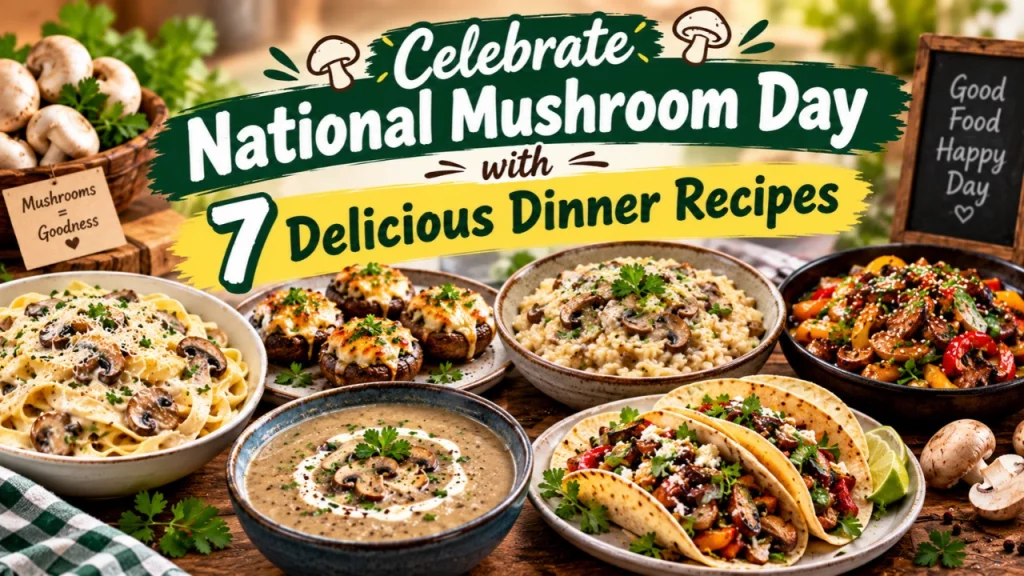
If you’re planning to mark the day with mushroom pasta, stroganoff, stir-fry, soup, tacos, risotto, and stuffed portobellos, here’s a question worth asking before you shop: does it actually matter which mushroom you buy, or is a mushroom just a mushroom once it hits the pan?
It matters more than most dinner roundups let on. The seven classic mushroom dinners already circulating this week for National Mushroom Day are a fine starting point, and the basics about mushrooms being low-calorie, umami-packed sources of B vitamins, selenium, and potassium are well established. What gets skipped is which variety actually fits each dish nutritionally, whether it’s safe to taste-test raw mushrooms while you cook, how much vitamin D mushrooms genuinely deliver, and who should be more careful with them than the average recipe card admits.
Which mushroom should actually go in each of the seven dinners?
The variety changes both the eating experience and what you’re getting nutritionally, because several of the “different” mushrooms sold at the grocery store are actually the same species at different stages of maturity.
| Dinner | Best variety | Why this one |
|---|---|---|
| Creamy mushroom pasta | Cremini | A young Agaricus bisporus with deeper flavor than white button, firm enough to hold its shape in sauce |
| Mushroom stroganoff | Portobello | A fully mature Agaricus bisporus; its large surface area browns into a meaty, savory base that stands in for beef |
| Mushroom stir-fry | Shiitake | Firm texture survives high heat without turning mushy, and its flavor holds up against soy and garlic |
| Mushroom soup | White button | The mildest of the Agaricus bisporus group, so it enriches broth without overpowering other ingredients |
| Mushroom tacos | Oyster | Shreds into strands that mimic pulled meat and readily absorbs taco seasoning |
| Mushroom risotto | Porcini (dried) | Concentrated flavor from drying means a small amount deepens the rice without needing a meat stock |
| Stuffed portobello | Portobello | The wide, deep cap is structurally built to hold a filling |
Is one mushroom nutritionally “the best”?
No single variety wins across the board; it depends what you’re optimizing for, and the strongest human evidence actually clusters around the Agaricus bisporus family — the species behind white button, cremini, and portobello. A scoping review of human and animal research on Agaricus bisporus found beneficial associations with metabolic syndrome, immune function, gastrointestinal health, and cancer outcomes, tied to compounds including ergosterol, ergothioneine, flavonoids, glucans, and chitin. The review’s authors were clear that the strongest human evidence, by far, is for improving vitamin D status — not for the other outcomes, which lean more heavily on lab and animal data. That matters because shiitake, oyster, and porcini get far less of this kind of scrutiny in human studies, so claiming any of them is “healthier” than the common button mushroom overstates what’s actually been tested.
Is it actually safe to eat mushrooms raw?
Mostly yes in small amounts, but cooking is still the safer default, which is something recipe roundups tend to skip entirely. Raw button, cremini, and portobello mushrooms naturally contain trace compounds that cooking helps break down, which is part of why culinary traditions almost universally cook this mushroom family rather than eating it raw by the plateful. A few raw slices on a salad aren’t a documented hazard for most healthy adults, but there’s no nutritional upside that offsets skipping the cooking step, since sautéing also concentrates flavor and makes the cell walls easier to digest. If you like raw mushrooms, keep portions modest; if you’re cooking for kids, pregnant people, or anyone immunocompromised, cook them through.
How much vitamin D do mushrooms really provide?
Almost none, unless the mushrooms were deliberately exposed to UV light — and that distinction is the single biggest thing most “mushrooms have vitamin D” claims leave out. Mushrooms are, as one review puts it, the only vitamin D source in the produce aisle, but that’s only true in a meaningful way for mushrooms treated with ultraviolet light during or after growing, because UV exposure converts a compound in the mushroom (ergosterol) into vitamin D2. Standard mushrooms grown in the dark contain only trace amounts. The vitamin D humans make in skin from sunlight and get from oily fish is D3, while the form in mushrooms and yeast is vitamin D2, which the body still has to convert: the liver turns it into 25-hydroxyvitamin D, and the kidneys then activate it into the hormone form that regulates calcium and phosphate. The 2020 scoping review on Agaricus bisporus noted that UVB-exposed mushrooms can raise and maintain blood vitamin D levels in people, and that this is the outcome with the strongest human evidence of any mushroom health claim. Neither review reports that ordinary home sautéing or boiling destroys the vitamin D formed by UV treatment — the concern isn’t cooking, it’s buying mushrooms that were never UV-exposed in the first place. Check the label for “UV-treated” or “vitamin D” mushrooms if that’s your goal; a standard carton of white buttons won’t deliver it.
Does how you cook mushrooms change their antioxidant content?
It likely does, but the honest answer is that the research so far is more about identifying the compound than measuring exactly how much survives each cooking method. Ergothioneine, an antioxidant found almost uniquely in mushrooms, is one of the bioactive compounds highlighted in the Agaricus bisporus review as a likely contributor to the mushroom’s health associations, alongside ergosterol and flavonoids. What the current evidence doesn’t yet spell out, at least in the reviews available, is a side-by-side comparison of how much ergothioneine survives sautéing versus boiling versus eating mushrooms raw. Until that data exists, the safest practical takeaway is to cook mushrooms briefly over high heat rather than boiling them for long periods in a large volume of water, since prolonged boiling is the method most likely to leach water-soluble compounds out of any vegetable.
Who should actually be cautious with mushrooms?
People managing irritable bowel syndrome are the clearest case, because mushrooms contain mannitol, a FODMAP carbohydrate that can trigger symptoms in sensitive guts. A randomized controlled trial of IBS patients in Western China found that a low-FODMAP diet meaningfully eased symptoms: symptom severity scores dropped 37.5% at two weeks and 44.2% at four weeks in the diet-only group, compared with 51.4% and 62.0% in a probiotics group and 34.1% and 40.4% in a group combining both approaches. That’s a trial focused on overall diet pattern rather than mushrooms specifically, but it’s a reminder that mushroom-heavy dinners like stroganoff or risotto could be worth moderating during an IBS flare. Separately, because vitamin D from mushrooms depends on liver and kidney conversion steps, anyone with kidney disease or a condition affecting calcium metabolism should talk to a doctor before leaning on UV-treated mushrooms as a vitamin D strategy rather than assuming more is automatically better.
Sources
- Effect of low-FODMAPs diet and probiotics on IBS symptoms, randomized controlled trial (2024)
- Vitamin D and Vitamin D from Ultraviolet-Irradiated Mushrooms, review (2016)
- Vitamin D for skeletal and non-skeletal health, review (2019)
- Health effects and bioactive components in Agaricus bisporus mushrooms, scoping review (2020)

Tom Fletcher
The latest from the Australian and global BBQ scene — comps, cooks and culture.