Apple Fritters with Maple Glaze — Crispy, Sweet & Ready in 35 Minutes
Why fritters turn greasy or raw-centered despite following the recipe, and how to fix it using oil recovery time, not a fixed temperature.
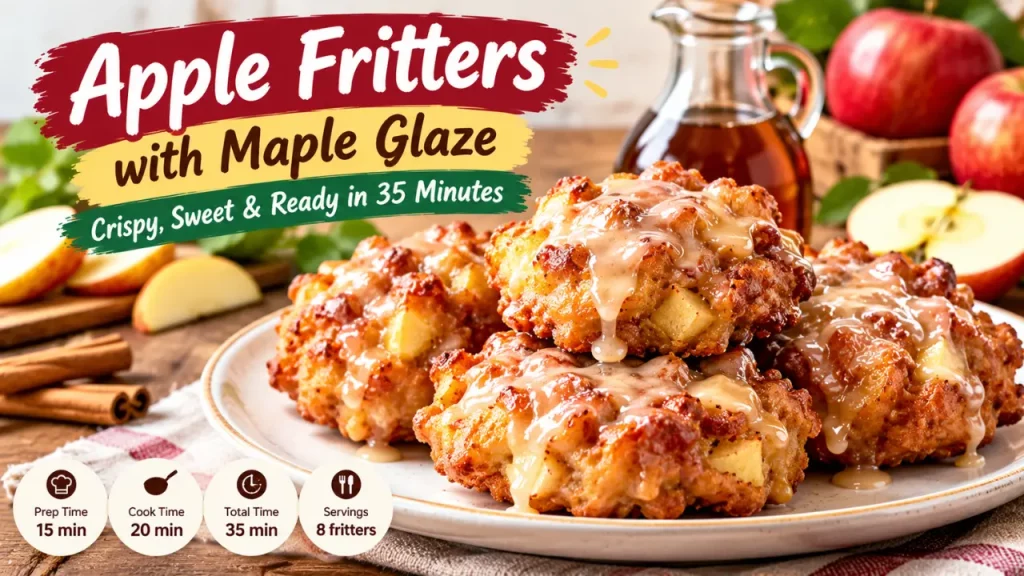
Why does the same fritter recipe give you a golden, crisp batch on Tuesday and a greasy, raw-centered one on Thursday, even though you measured everything the same way? The answer isn’t in the ingredient list. It’s in what happens to the oil and the batter in the ninety seconds between dropping scoops in and pulling them out, and almost nothing written about this recipe explains that part. The quick version: this is a no-yeast batter, built for speed rather than bakery chew, studded with a firm tart apple like Granny Smith, fried in small batches around 175°C/350°F, and finished with a powdered-sugar-and-maple-syrup glaze that needs a few minutes to set. Everything past that point is where most kitchens go wrong.
Myth: Hitting 350°F Once Means You’re Set for the Whole Batch
Oil temperature isn’t a switch you flip and forget. The moment cold, wet batter hits hot oil, energy pours out of the oil to boil off surface moisture and cook the fritter’s exterior, which is exactly the heat-and-mass transfer process described in a review of frying technologies applied to fresh foods. That transfer is why a thermometer reading of 350°F before the first batch can sag noticeably by the time the third batch goes in, especially in a narrow pot where the batter-to-oil ratio is high. A fritter dropped into oil that has quietly slid to 300°F doesn’t fry, it soaks: the crust sets too slowly, the exterior stays pale and limp, and oil keeps migrating inward the whole time, which is the mechanism behind greasy fritters more than any single ingredient mistake. The fix isn’t a magic number, it’s a recovery check between batches. After pulling a batch, raise the burner slightly and wait until the oil’s bubbling returns to the same vigor it had on the first drop, not just until the thermometer needle crosses a line, because thermometers lag behind the oil’s actual surface temperature. If you only have two batches left and the oil is still recovering, fry one fritter at a time instead of crowding a half-recovered pot.
Myth: Any Firm Tart Apple Behaves the Same Way in the Fryer
“Use a firm, tart apple” is honest advice, but firm and tart aren’t the same as dry, and apples vary in how much water they release once their cells are cut and heated. A chunk that weeps liquid into the batter as it sits changes the batter’s hydration after you’ve already portioned it, which is why two bowls made from the same recipe can fry at different rates. The practical move is to treat apple prep as a variable, not a constant: pat diced apple pieces dry on a towel before folding them in, and if the batter looks noticeably looser after the apples have rested in it for a few minutes, add a spoonful more flour rather than frying it as-is. A batter that slumps instead of holding a scoop shape will spread thin in the oil, cook through fast, and brown before the center sets, which produces the exact raw-centered result cooks blame on temperature when the real culprit is apple runoff.
Myth: More Stirring Makes a Sturdier, More Reliable Batter
This is where the dough-versus-batter distinction actually matters, and it’s rarely explained. Wheat flour’s structure comes from two proteins, glutenin and gliadin, which link into gluten strands when flour is hydrated and agitated; all-purpose flour carries roughly 10.9 grams of protein per 100 grams and 3.09 grams per 28 grams, according to USDA nutrient data for enriched, bleached all-purpose flour. In bread dough, kneading is the whole point, it builds a stretchy gluten network that traps gas and gives chew. In a quick fritter batter, that same protein network is something you want to leave barely formed. Overmixing develops gluten strands that tighten as they fry, producing a dense, rubbery bite instead of a tender one, which is why “stir until just combined” isn’t a lazy shortcut, it’s the mechanism that keeps a no-yeast fritter from turning into a chewy puck. If your batter feels elastic or springs back when poked, it’s already overmixed and no amount of fry-time adjustment will fix the texture.
Myth: Fritters Are Only Good the Day They’re Fried
A fritter loses its crust overnight because the oil trapped near the surface and the moisture from the apple inside both migrate and redistribute once the fritter cools, softening the exterior. Reheating in a microwave makes this worse, since it adds moisture back through condensation. Reheating in a 180°C oven or a toaster oven for a few minutes instead drives surface moisture back off and lets the exterior re-crisp, which is a far better match for how the fritter got crisp in the first place than any shortcut appliance. Glazed fritters reheat less cleanly than unglazed ones, since the sugar coating can weep as it warms, so if you’re planning to store leftovers, it’s worth holding back glaze on a portion and adding it fresh after reheating.
Myth: One Fritter Is a Harmless Treat, No Exceptions
This recipe is not built for everyone, and no fritter article says so plainly. Flour alone contributes meaningfully to the calorie and carbohydrate load before oil or sugar enter the picture: 100 grams of all-purpose flour carries 366 kcal, 77.3 grams of carbohydrate, and 1.48 grams of fat, per USDA FoodData Central. Frying adds substantially more fat on top of that baseline, since fried foods absorb oil during cooking, a point made directly in the frying technology review, which also flags acrylamide formation as a known tradeoff of deep-frying starchy batters. Layer a powdered-sugar maple glaze on top and you have a dessert that’s a poor fit for anyone managing blood sugar closely, and a food worth limiting for anyone cutting fried foods for other reasons. There’s a separate caution worth naming: a small animal study in hamsters found that oil reused repeatedly through multiple frying cycles raised plasma triacylglycerols by 51% with corn oil and 35% with lard compared to fresh oil, alongside reduced gut microbial diversity, according to research on thermally-oxidized frying oils. That’s animal data, not a human guideline, but it’s a reasonable argument for not reusing fritter oil for batch after batch across multiple cooking sessions. And on texture: if what you actually want is the dense, yeasty chew of a bakery apple fritter, this no-yeast quick-batter approach was never going to deliver it, no matter how carefully you manage oil temperature, since that chew comes from a risen, kneaded dough, not a stirred batter.
Sources

Mick Hudson
Low-and-slow recipes, rubs, sauces and fire management from our pitmaster team.