High-Protein Bean Brownies: 11g Protein Each, No Flour or Added Sugar
The 11g protein claim is real, but most of it comes from powder, not beans — here's the full math on sugar, sodium, and who should skip this recipe.
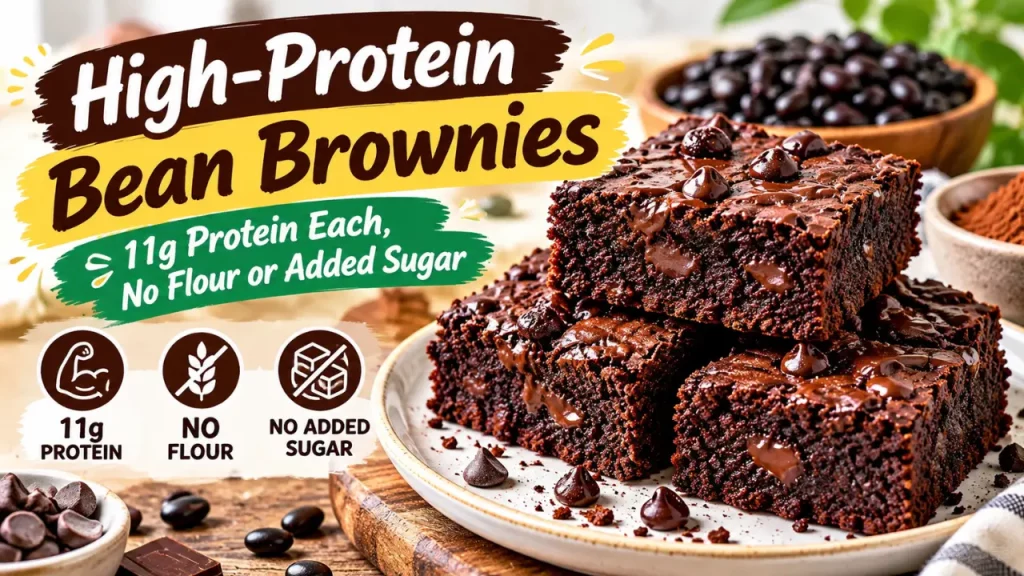
Picture the ingredient list on one of these brownies: black beans first, dates and banana next, protein powder somewhere near the bottom. It’s a natural assumption that whichever ingredient sits at the top of the list is doing the most nutritional work, so a can of black beans gets the credit for turning a brownie into a protein food. The actual math tells a different story.
Most of the 11 grams of protein in a flourless black bean brownie comes from the scoop of protein powder stirred into the batter, not from the can of beans underneath it.
Myth: The Beans Are Supplying Most of the Protein
A half-cup of black beans, which is roughly what ends up divided across a pan of eight to ten brownies, contributes somewhere around 2 to 3 grams of protein per serving once it’s portioned out. That is a real number, but it is nowhere near 11. To see how much bean-forward cooking can realistically deliver, a 2025 food science paper built a soup powder out of squash, green banana, black beans, and coconut and measured the finished blend directly: a soup powder nutrition and glycemic index study using black beans found that 100 grams of the formulated powder, in which black beans made up 34% of the mixture, contained 10.87 grams of protein. That is beans working alongside three other ingredients, concentrated into a dried powder, still landing under 11 grams per 100 grams. A brownie batter with wet beans, mashed banana, and dates — none of which are dried or concentrated — is not going to out-protein that formulation on beans alone. The double-digit protein number on a bean brownie is coming almost entirely from the added protein powder, which typically supplies 15 to 25 grams per scoop by itself. The beans are there for texture and fiber, not for the protein count printed on the label.
Myth: No Added Sugar Means Low Sugar
“No added sugar” is accurate and also easy to misread. Dates are concentrated dried fruit, and bananas ripen into a batter specifically because their starches convert to sugar. Neither contributes an empty calorie the way table sugar does, but both raise total carbohydrate and sugar content meaningfully. The same soup powder research is useful here for scale: a formulation built from squash, green banana, black beans, and coconut carried 58.80 grams of total carbohydrates per 100 grams, alongside 13.13 grams of fat and 10.78 grams of crude fiber. The point of that study was precisely to test glycemic impact in a formulation marketed as health-supportive, because legumes and fruit together still produce a meaningful glycemic load even without table sugar. A brownie sweetened with dates and banana deserves the same scrutiny: it is lower in added sugar, not necessarily low in sugar or carbohydrate overall, and nobody publishing the 11-gram protein number is pairing it with a calorie or sugar count.
Myth: Rinsing Canned Beans Solves the Sodium Problem
Rinsing canned beans for thirty seconds under running water does real work — it washes away surface sodium from the canning liquid and softens the “tinny” flavor people associate with canned legumes. What it does not do is return the beans to the sodium level of beans cooked from dry with no salt added. Canned beans are processed with salt as part of preservation, and rinsing removes only what sits on the surface, not what the beans have absorbed internally during canning. For most people this is a non-issue; a brownie is not a salty food. But for anyone specifically tracking sodium — managing blood pressure, kidney function, or a low-sodium diet prescribed by a doctor — a “rinsed” can is a meaningfully different product from dried beans cooked without salt, and recipes built around canned beans should be flagged for that audience rather than assumed sodium-neutral.
Myth: If You Have IBS, Beans Are Just a Texture Issue
Black beans and dates are both classic high-FODMAP foods, and that matters for a specific group of readers regardless of how well the beans are disguised in a brownie. Irritable bowel syndrome affects an estimated global prevalence of up to 10%, according to a review on low-FODMAP and Mediterranean diet integration, which describes the low-FODMAP approach as a first-line strategy for reducing gastrointestinal symptoms specifically by minimizing fermentable carbohydrates — the category that legumes and dried fruit fall squarely into. The same review raises a real trade-off: strict long-term FODMAP restriction can compromise nutritional adequacy and gut microbial diversity, which is why the paper argues for integrating Mediterranean-style, legume-inclusive eating rather than cutting beans out permanently. The practical takeaway for a brownie recipe is narrower than a blanket warning: someone without IBS has little reason to worry, but someone actively managing IBS symptoms through a low-FODMAP phase should treat a black-bean-and-date dessert as a likely trigger food, not a safe treat just because it’s flourless and sugar-free.
Myth: Any Protein Powder Works the Same Way Nutritionally
Recipe writers tend to discuss protein powder choice only in terms of texture — whey isolate baking up rubbery, plant blends staying softer. That conversation skips a more important difference: protein quality and absorption speed are not identical across powder types. Whey and casein are complete proteins that the body absorbs efficiently, with whey digesting fast and casein slower, which is part of why whey tends to firm up when baked. Single-source plant powders, such as straight pea or rice protein, are typically missing or low in at least one essential amino acid on their own, which is why well-formulated plant blends combine multiple plant sources to approximate a complete amino acid profile. For someone using these brownies as a genuine protein-replacement food rather than an occasional treat, the brand and blend of powder used changes not just how the brownie bakes, but how usable that protein actually is once eaten — a distinction the texture conversation never addresses.
Myth: This Recipe Works as a Protein Source for Everyone
Put together, the honest profile of a bean brownie is: a dessert with meaningful fiber and modest natural sugar, carrying a protein count that is mostly a function of added powder rather than the beans themselves, with no published calorie or total sugar figure, a sodium level higher than home-cooked unsalted beans, and a FODMAP load that is fine for most people and genuinely risky for those managing IBS. That makes it a reasonable snack for someone who already eats enough protein and wants a lower-sugar dessert, and a poor primary protein source for anyone relying on it to hit a specific daily gram target, watching sodium or blood sugar closely, or managing diagnosed IBS. The recipe isn’t dishonest — it’s just incomplete without this part of the math.
Sources

Mick Hudson
Low-and-slow recipes, rubs, sauces and fire management from our pitmaster team.