18 Daniel Fast Recipes That Make 21 Days Feel Easy!
The protein and calorie math behind a 21-day Daniel Fast, who it shortchanges, and how to fix week 2 before fatigue sets in.
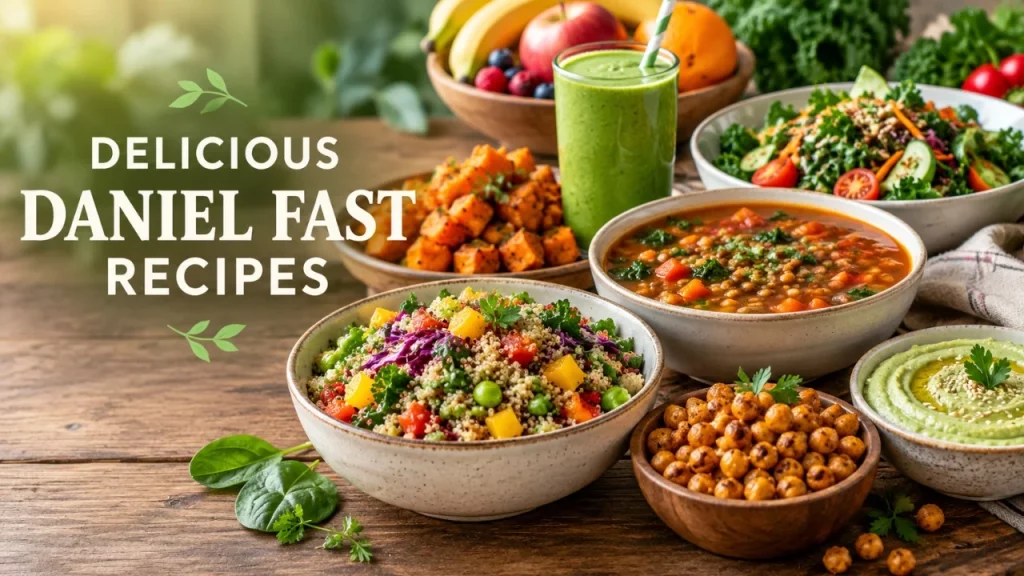
Here is the number almost nobody mentions before week one starts: in dietary modeling of plant-based substitution patterns, total protein intake dropped in both a careful and a less careful version of the switch, with the steepest declines showing up in adults over 70, according to a Dutch dietary modeling study. If a well-designed, nutrient-conscious plant swap can’t reliably hold protein steady, a 21-day fast built on repeating the same 18 recipes needs a harder look than “beans have protein, you’ll be fine.”
These 18 recipes can absolutely make the 21 days feel easy to plan — the shopping list is short, the prep is simple, and the meals repeat in a predictable loop. What they don’t automatically do is guarantee enough protein or calories for every body that attempts them. That gap is fixable, but only if you catch it by week two instead of guessing at day ten.
Do these 18 recipes actually cover a full 21 days without a calorie gap?
For many adults, no — not without portion adjustments. A typical Daniel Fast day built from these recipes leans on cooked lentils, beans, rice, and quinoa, and the math is worth doing in grams rather than vibes. A cup-sized portion of cooked lentils (about 198 g) runs roughly 230 kcal and 18 g of protein. The same volume of cooked black beans (about 172 g) adds about 227 kcal and 15 g of protein. A cup of cooked brown rice (195 g) contributes around 218 kcal but only 5 g of protein, and cooked quinoa (185 g) adds about 222 kcal and 8 g of protein. Stack a breakfast, lunch, and dinner built mainly from these four staples and you land near 900 kcal before counting vegetables, oil, or fruit — meaning a full day, with sides added in, often lands somewhere around 1,200 to 1,600 kcal. Most adults maintain weight somewhere between 2,000 and 2,500 kcal a day, so that’s a real shortfall, not a rounding error.
How much protein does a typical Daniel Fast day really provide?
Usually somewhere between 45 and 60 grams, which sits right at the edge of adequate for an average adult and short of what anyone with elevated needs requires. Using the staples above, a day of lentils, beans, rice, and quinoa in realistic recipe portions totals roughly 46 g of protein before vegetables and nuts, which add only small amounts. The standard adult protein recommendation works out to about 0.8 g per kilogram of body weight — around 56 g for a 70 kg adult — so the fast sits close to that baseline on a good day. But a randomized trial testing caloric restriction in adult women prescribed a 25% calorie deficit alongside 1.2 g of protein per kilogram of body weight daily — about 84 g for that same 70 kg person — specifically to protect lean mass during weight loss, according to a controlled trial on caloric restriction and fat loss. That’s a 30-plus-gram gap between what several of these recipes deliver and what preserves muscle during a calorie-reduced stretch. It’s also why the fatigue some people report by day ten often isn’t imagined.
The real question isn’t whether these recipes contain plant protein — they do — it’s whether the same portions that felt sufficient on day one still match what your body is asking for by day fifteen, and for most people they quietly stop matching.
How much weight should you expect to lose in 21 days, and is that healthy?
Expect something modest, and treat anything beyond that as a signal to eat more, not a bonus. The 25% deficit trial referenced above ran for 12 weeks, not 21 days, so it can’t predict an exact pound count for a three-week fast — but it’s useful for scale. A similarly sized deficit sustained for three weeks instead of twelve would be expected to produce a fraction of that trial’s fat loss, with a noticeably larger share of any early drop coming from water and glycogen changes tied to lower sodium and carbohydrate intake in the first several days. People who lose quickly and heavily in week one are rarely burning that much body fat that fast; they’re often simply eating 600 to 1,000 kcal less than they were before the fast began, which is a bigger deficit than anyone intended when they picked a recipe because it “looked like a normal meal.”
Who should not attempt all 18 recipes exactly as written?
Three groups in particular need to modify before day one, not after symptoms show up. Athletes in training have protein needs well above the 45-60 g a typical fast day supplies, and without deliberately doubling legume and grain portions, performance and recovery will suffer during a 21-day stretch. People managing type 2 diabetes with medication timed to meals need a conversation with whoever manages their prescriptions, not necessarily avoidance of the fast itself — legume-heavy eating is actually associated with up to a 30% lower risk of developing type 2 diabetes and meaningful reductions in HbA1c in a review of plant-based patterns and type 2 diabetes, and legume intake has been linked to improved glucose tolerance in human studies summarized in a narrative review on legumes and glycemic control — but a sudden shift toward larger, more frequent fiber loads can change how fast glucose rises after a meal, which matters if insulin or other medication is dosed around the old eating pattern. Third, anyone with IBS or a sensitive gut should expect that jumping straight into daily double portions of beans and lentils, the exact fix needed for the protein gap above, can trigger bloating or cramping if fiber is increased abruptly rather than gradually across the first week.
Are headaches and fatigue in week one a sign the fast is failing?
Usually not — but the cause matters because the fix is different. A headache that shows up on day two or three and fades by day four or five, especially with irritability or trouble concentrating, lines up with caffeine withdrawal timing, not food inadequacy; riding it out or tapering caffeine beforehand solves it. Fatigue that persists past day seven, especially paired with lightheadedness, shakiness between meals, or noticeably smaller portions than usual, points toward the calorie and protein shortfall described above. The fix for the first is patience. The fix for the second is a bigger lunch, not more willpower.
How should portions change across the 21 days instead of just repeating the same meals?
Treat week two as the checkpoint, not day one. If energy, hunger, or workout performance has dropped by the start of week two, increase the legume and grain portion in each recipe by roughly a quarter to a half — moving a lentil dish from one cup to one and a half cups, for example, adds about 115 kcal and 9 g of protein with almost no extra prep. Add a handful of nuts or seeds to grain bowls for another protein boost without changing the recipe’s spirit. People with higher protein targets should build toward 80-90 g a day rather than the 45-60 g a typical rotation provides. Those managing blood sugar should ask whether legume portions and timing can stay consistent day to day, since steady patterns are easier to manage around medication than variable ones. The 18 recipes are a fine structure; the quantities inside them are the part worth adjusting as the three weeks go on.
Sources
- Plant-Based Nutrition and Type 2 Diabetes Mellitus (Nutrients, 2026)
- The Effects of Continuous vs. Intermittent Caloric Restriction on Fat Loss (Nutrients, 2026)
- Shifting to Plant-Based Protein Diets Alters Nutrient Adequacy Across Age Groups (Nutrients, 2026)
- Legume intake on gut microbiome and glycemia in type 2 diabetes management (Frontiers in Nutrition, 2026)

Mick Hudson
Low-and-slow recipes, rubs, sauces and fire management from our pitmaster team.