Sabudana Vada Recipe for Fasting: Crispy, Non-Oily Vadas That Stay Whole (Vrat-Friendly)
The exact oil temperature, fry time, and reheat method that stop sabudana vadas from bursting, hardening, or going soggy by evening.
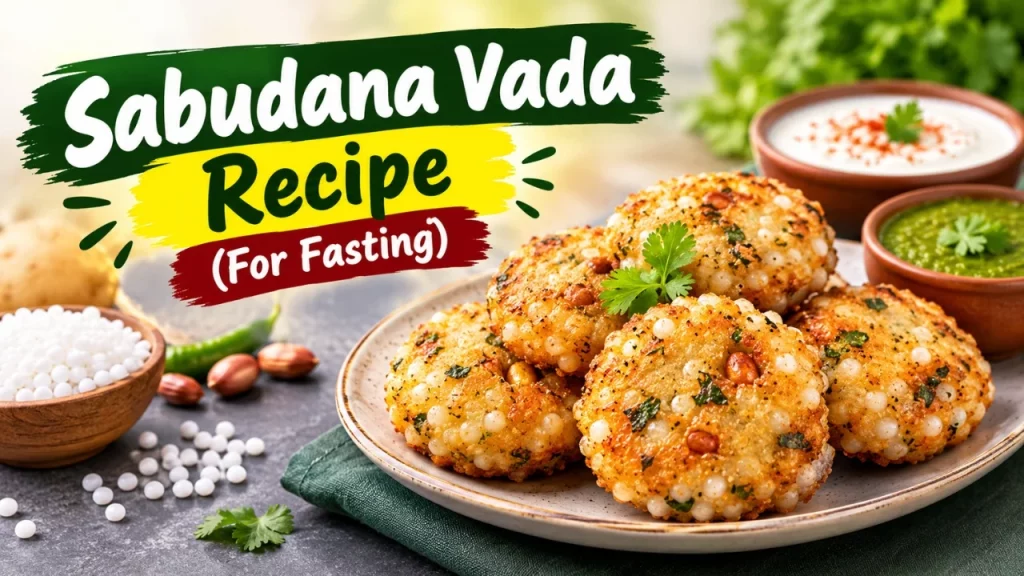
You fried the first batch too hesitantly and three vadas split open in the oil, leaking starch into a cloudy mess. The next batch you fried hotter and faster to compensate — those came out dense and chewy, almost rubbery, by the time they cooled. By evening, the ones that survived are sitting in a tiffin box for the temple or the office, and you already know what you’ll find when you open it: a soft, oil-stained bottom instead of the crunch you worked for. None of this is bad luck. It’s starch chemistry, and once you know the two or three numbers that actually matter, it stops happening.
Step 1: Hit 170–180°C before the first vada goes in
“Medium flame” means something different in every kitchen. What doesn’t change is the starch. Sabudana pearls are almost pure tapioca starch, and starch granules swell and gelatinize — absorb water, soften, and eventually rupture — once they’re heated past a certain point. If your oil is too cool (below roughly 160°C), the vada sits in the oil absorbing it slowly while the inside stays raw and wet; that trapped moisture turns to steam, expands, and the patty bursts. If the oil is too hot (above about 190°C), the outside sets into a hard shell in seconds while the centre is still gelatinizing and pushing out — same burst, different cause. The workable window, confirmed by what actually survives intact in most home fryings, is 170–180°C (340–355°F). A cube of bread or a pinch of the mixture should rise to the surface within 4–5 seconds at that heat.
Tip: No thermometer? Drop a tiny ball of the mixture in — if it sinks and stays down, the oil’s too cool; if it browns in under 20 seconds, it’s too hot.
Step 2: Fry in two short stages, not one long one
Fry the vadas 3–4 minutes at 170–180°C until pale gold and just firm, then lift them out and let them rest for 2 minutes. Fry a second time for 60–90 seconds at the same or slightly higher heat. This two-stage fry pushes out surface moisture in the first pass and seals a thin, dry crust in the second, without ever cooking the centre at the extreme heat that causes splitting.
Tip: Don’t crowd the oil — each vada needs space, or the oil temperature drops instantly and you’re back in burst territory.
Step 3: Rest on a wire rack, never a stacked plate or paper towel
This is where most “crispy” vadas quietly go soft before anyone even eats them. A hot vada keeps releasing steam from its interior for several minutes. Stack it on a plate or wrap it in paper towel and that steam has nowhere to go — it condenses back onto the surface, and the starch there resorbs the moisture. A rack with air circulating underneath lets the steam escape instead of settling back in.
Tip: Leave at least a finger’s width of gap between vadas on the rack.
Step 4: Store for hours without sealing in moisture
For a puja or a day out, pack vadas only once they’re fully cool — warm vadas in a closed box create the same steam-trap problem as the stacked plate. Use a container with some ventilation (a loosely closed lid, or a cloth-lined box rather than an airtight one) and keep peanuts, potato, and sabudana mixture balanced so the filling isn’t wetter than the crust can handle. A drier mixture at the mixing stage pays off hours later, not just at fry time.
Tip: Carry curd or chutney separately and add it just before eating — sauce against a warm crust is the fastest route to soggy.
Step 5: Reheat in dry heat, never a microwave
This is the part most fasting-day advice skips entirely. A microwave reheats by exciting water molecules inside the food — which re-wets the starch and gives you that rubbery, slightly gummy bite. An oven or air fryer at 180–190°C for 4–5 minutes works through dry convective heat, re-crisping the existing crust instead of steaming the inside. Starch that has cooled and set (a process called retrogradation, where starch chains realign into a firmer structure) doesn’t fully reverse in a microwave’s short, moist heat — dry heat does a better job of loosening that structure at the surface while leaving the firmer interior intact.
Tip: If you only have a microwave, do 20 seconds there, then finish in a hot dry pan for 1–2 minutes per side to restore the crust.
Step 6: Freeze raw patties for Navratri batch-cooking
Shape the vadas, lay them flat on a tray without touching, and freeze until solid before bagging — this stops them fusing into one block. Fry straight from frozen; don’t thaw first, or the outer layer turns wet before it hits the oil. Start at the lower end of 170°C for an extra minute to let the centre catch up, then finish at 180°C for the crust. This way you can prep a week’s worth before a multi-day fast and fry fresh batches daily.
Tip: Fully fried and cooled vadas also freeze, but they lose more crispness on reheating than raw frozen patties fried fresh.
Step 7: Know the blood sugar trade-off before you fast on it
Sabudana is treated as a fasting staple because it’s grain-free, but tapioca starch itself isn’t automatically gentle on blood sugar. A small controlled study using a specially engineered blend of tapioca flour and corn starch — not plain soaked pearls — measured a glycemic index of 27 alone and 30.3 mixed into a drink, which is low, but that ingredient had been deliberately modified for slow digestion, unlike the sabudana pearls in your kitchen (glycemic index of a modified tapioca-based ingredient, 2019). In bread studies, plain or lightly processed tapioca starch has pushed the predicted glycemic index up toward 70–87, only dropping below 55 when the starch was chemically modified into a resistant form (tapioca-based resistant starch and bread glycemic index, 2024; tapioca starch and red lentil flour bread study, 2026). Separately, lab work converting tapioca starch into resistant starch through enzyme treatment and cooling only managed a slight glycemic index reduction in bread, and this was a small, early-stage study, not a test on humans eating vadas (resistant starch from tapioca, enzyme and retrogradation study, 2026). None of this evidence tested sabudana vada directly, but together it says the tapioca in your pearls behaves like a fast-digesting carbohydrate unless specially processed — something worth factoring in if you’re managing diabetes or prediabetes and fasting on sabudana meals for multiple days running.
Crispness and bursting are controlled by the same thing — how much surface moisture the starch is holding when it meets heat, both in the fryer and later in storage.
Common Mistakes
- Frying on a flame that drifts below 160°C “to be safe,” which guarantees oil absorption and bursting.
- Packing vadas while still warm, trapping steam that softens the crust within the hour.
- Reheating in a microwave and blaming the recipe for the rubbery texture.
- Thawing frozen patties before frying instead of frying them straight from the freezer.
- Treating sabudana as automatically “safe” for blood sugar without checking how much and how often it’s eaten across a multi-day fast.
Quick tip: keep a kitchen thermometer clipped to the pan for the first batch of the season — once you’ve seen what 170–180°C actually looks like in your oil, you won’t need it again.
Sources
- Glycemic Index of Slowly Digestible Carbohydrate Alone and in Powdered Drink-Mix (2019)
- Functional Optimization of a Novel Gluten-Free Bread Made with Tapioca Starch and Red Lentil Flour (2026)
- The Impact of Selected Ingredients on the Predicted Glycemic Index and Technological Properties of Bread (2024)
- Resistant starch type 3 prepared with Corynebacterium glutamicum glycogen debranching enzyme and its application in bread (2026)

Tom Fletcher
The latest from the Australian and global BBQ scene — comps, cooks and culture.