9 Easy Navratri Vrat Meal Ideas for Breakfast, Lunch and Dinner
Here are the 9 classic Navratri vrat meals ranked by what actually keeps blood sugar steady versus what spikes and crashes you.
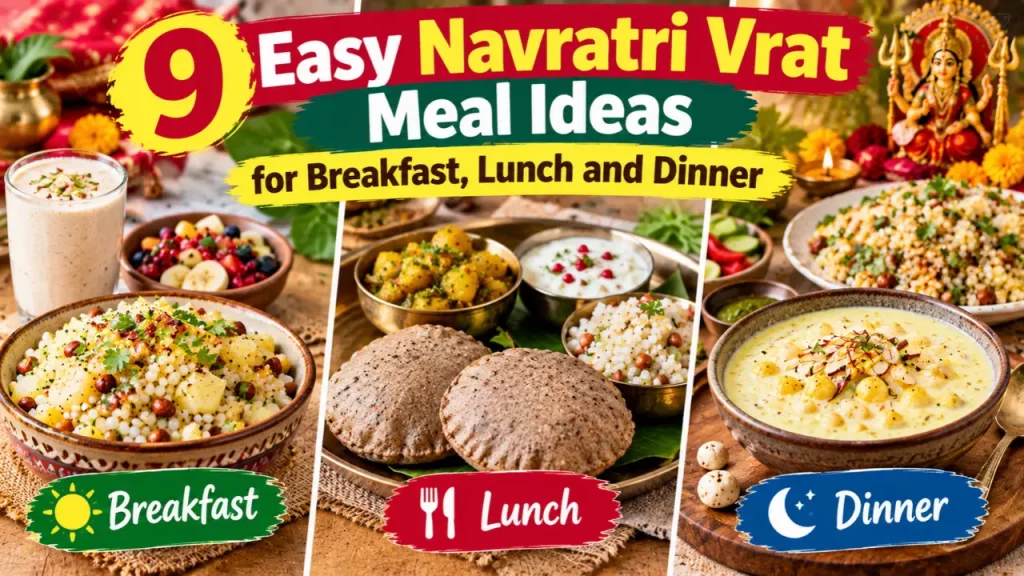
Not all nine days of vrat food are created equal, and the dish that fills you up fastest is often the one that drops you hardest two hours later.
Every Navratri list gives you the same nine dishes: sabudana khichdi, kuttu puri, rajgira paratha, samak rice pulao, makhana kheer, sabudana vada, kuttu dosa, singhare halwa, and sama idli. What almost nobody tells you is that these nine meals are not nutritionally interchangeable. Some are built around starch with almost nothing to slow it down. Others happen to be naturally balanced. Below is each one, broken down by what actually happens in your body, and who specifically should think twice.
1. Sabudana Khichdi — the starch without brakes
Sabudana is processed tapioca pearls, which means it is almost entirely starch with no meaningful protein and very little fibre to slow digestion. Eaten alone, it digests fast, pushes blood glucose up quickly, and then leaves you reaching for tea and biscuits within two hours because there is nothing in the bowl to hold the energy release steady. The fix is not to avoid it but to never eat it plain: fold in roasted peanuts and a side of curd, both of which add protein and fat that blunt how fast the starch hits your bloodstream.
2. Kuttu Puri with Aloo Sabzi — the allergy risk nobody flags
Kuttu (buckwheat) is a gluten-free pseudocereal, but it is one of its own major allergens, separate from wheat. A review of buckwheat allergy notes that a component called Fag e 2 is recognised by IgE antibodies in up to 90% of people who are symptomatic, and reactions range from hives to life-threatening anaphylaxis. A separate laboratory study identified a second allergen, an oleosin called Fag t 6 in buckwheat seeds, which reacted strongly with serum from half of twenty buckwheat-allergic patients tested, in a small study. That protein’s heat-stability point was measured at roughly 64.65°C, below typical deep-frying temperatures, so it is genuinely unclear whether frying fully destroys it. If you have never knowingly eaten kuttu before, this is not the week to try a large puri batch untested.
3. Rajgira Paratha with Curd — a quietly good pairing
Amaranth flour behaves differently from sabudana and kuttu because it brings more protein and fibre to the plate on its own. Pairing it with curd, already a standard vrat add-on, means this meal rarely needs a fix. It is one of the steadier options across all nine days, especially for lunch when you need a longer stretch of stable energy before dinner.
4. Samak Rice Pulao with Paneer — the most complete meal on the list
Samak (barnyard millet) cooked as a pulao with vegetables and finished with paneer is structurally the closest thing to a normal balanced lunch, because it combines a slow-digesting grain with a genuine protein source in the same bowl rather than as an afterthought. This is the meal to lean on if you are managing blood sugar through all nine days, since it does not rely on willpower to add protein separately — it is already there.
5. Makhana Kheer — dessert, not a meal
Makhana (fox nuts) simmered in milk with sugar is often eaten as a full meal replacement during vrat, but the added sugar and milk fat push this toward dessert territory. It works fine as a once-a-day treat but should not substitute for an actual protein-containing dinner, particularly for anyone managing glucose.
6. Sabudana Vada — the double hit
This is sabudana’s starch problem plus deep frying, which slows gastric emptying briefly but does nothing to change the underlying glucose spike and adds a heavy fat load on an already low-fibre day. Of all nine dishes, this is the one with the least nutritional defence. If you crave it, treat it as a small side, not the main plate, and always pair it with a protein side like curd or paneer tikka.
7. Kuttu ka Dosa with Peanut Chutney — the better version of #2
Fermented or thinned kuttu batter made into a dosa, served with peanut chutney, is a smarter format than puri because peanut adds protein and fat alongside the buckwheat. The allergy caution from section 2 still applies in full. Worth noting from a separate food chemistry study on wheat protein cross-reactivity: using sera from twelve wheat-allergic patients, researchers found negligible cross-reactivity between wheat and buckwheat, while wheat, barley and rye showed high cross-reactivity due to more than 50% sequence identity. In plain terms, true buckwheat allergy is its own separate condition, not a side effect of wheat sensitivity. If someone reacts to kuttu atta and also has a known wheat allergy, trace wheat contamination during milling is the more likely culprit, not a biological cross-reaction, which matters when choosing packaged kuttu flour. A related review on wheat and buckwheat allergy diagnostics also stresses that avoidance remains the only reliable management strategy for either allergy, so if in doubt, skip both grains this week rather than guess.
8. Singhare ke Atte ka Halwa — fine occasionally, not daily
Water chestnut flour halwa is ghee- and sugar-heavy by design. It is a reasonable once-or-twice treat across nine days but a poor everyday breakfast, since it offers the same spike-and-crash pattern as sabudana without even the starch’s filling bulk.
9. Sama Rice Idli with Coconut Chutney — the steadiest breakfast option
Steamed rather than fried, paired with coconut chutney and ideally a side of curd, this is arguably the best breakfast on the list for anyone trying to avoid a mid-morning crash, because the cooking method itself avoids added fat spikes while the grain still offers more structure than sabudana.
| Meal | Built-in protein source? | Fried? | Best avoided by |
|---|---|---|---|
| Sabudana khichdi | No | No | Diabetics, PCOS (unless paired with peanuts/curd) |
| Kuttu puri | No | Yes | Anyone untested for buckwheat allergy |
| Rajgira paratha + curd | Yes | No | Few restrictions |
| Samak pulao + paneer | Yes | No | Few restrictions |
| Makhana kheer | Partial (milk) | No | Diabetics as a meal replacement |
| Sabudana vada | No | Yes | Diabetics, anyone avoiding fried food |
| Kuttu dosa + peanut chutney | Yes | Light | Buckwheat-allergic individuals |
| Singhare halwa | No | No (ghee-heavy) | Diabetics, thyroid patients watching weight |
| Sama idli + coconut chutney | Partial | No | Few restrictions |
Quick tip: if you are diabetic, have PCOS, or manage thyroid-related weight sensitivity, build every meal around the “protein first” rule rather than avoiding specific dishes outright — a spoon of curd or a handful of peanuts next to sabudana or singhare halwa changes how your body handles the starch far more than cutting portion size does.
On the iron and fibre question: skipping legumes and leafy greens for nine days is a real gap on paper, since most of these nine dishes lean on refined flours, tubers and dairy rather than pulses. For most healthy adults, a short nine-day window is unlikely to cause a measurable deficiency, but anyone already managing iron-deficiency anaemia should ask a doctor before fasting this way, since the evidence here does not extend to that specific clinical group.
The nine dishes are not equally risky, and they were never meant to be treated as interchangeable. Pair the starch-heavy ones deliberately, treat kuttu as a genuine allergen rather than just another flour, and let samak pulao with paneer or sama idli do the heavy lifting on the days you need to actually get through work, errands, or a full fast.
Sources

Mick Hudson
Low-and-slow recipes, rubs, sauces and fire management from our pitmaster team.