Sweet Tea Sugar-Free: Truth or Myth? A Clear Guide to Zero-Sugar Iced Tea!
Zero-sugar tea really has no sucrose, but four groups need to check the sweetener and the dose, not just the label.
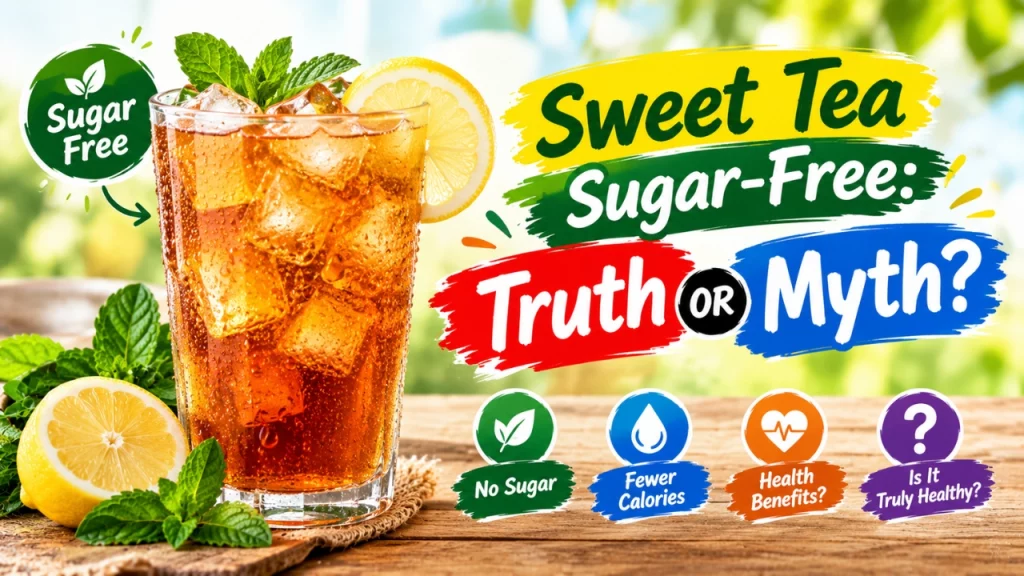
Sugar-free iced tea is exactly what it says on the can — zero sucrose, near-zero calories — but “sugar-free” is not the same as “no effect on your body.” The confusion isn’t about the label being false. It’s about what the label doesn’t tell you: which sweetener is doing the work, how much of it you’re drinking relative to your body weight, and whether your gut, your pregnancy, your child’s size, or your insulin regimen changes the answer.
For most healthy adults having a glass with lunch, the difference between sweet tea and zero-sugar tea really is just the sugar. But the sweeteners replacing that sugar are not interchangeable, and treating “sugar-free” as a single safe category hides real, measurable differences.
The Case for Zero-Sugar Tea
The strongest argument for diet tea is what it removes: sucrose itself. In a randomized crossover trial comparing sweetened soft drinks, the plain sucrose beverage produced the sharpest glucose and insulin spikes of any drink tested, with a significant rise at 30 minutes. The sucrose-plus-stevia version, by contrast, actually produced a glucose-lowering effect of -12.5 mg/dL at 60 minutes compared with the sucrose-only drink. A separate meta-analysis of 26 studies and 1,439 participants found stevia consumption associated with a modest but statistically significant blood-glucose reduction (weighted mean difference -3.84, 95% CI -7.15 to -0.53), though the authors rated the certainty of that evidence as low. That’s a real, if cautious, point in favor of stevia-sweetened tea for people managing glucose day to day.
The Case for Caution
The counter-argument isn’t that sweeteners are dangerous — it’s that “no blood sugar effect” is not the same as “no hormonal or metabolic effect.” A review of sucralose research looked at 16 studies on insulin response: 8 found an increased response after sucralose, 7 found none, and only 1 found a favorable change. Of 8 studies on insulin sensitivity specifically, 6 reported a decrease. That’s not a consensus against sucralose, but it is proof the “zero effect” claim is contested, not settled. A small crossover trial of saccharin in nine healthy young men found a measurable glucose difference at 15 minutes (117.0 mg/dL after sucrose versus 95.4 mg/dL after 240 mg of saccharin), showing even non-caloric sweeteners provoke a fast physiological response, just a different shaped one. And a broader review of sweetener metabolism lays out why: sweeteners can interfere with learned glucose-regulation responses, alter gut microbiota, and still trigger insulin secretion through sweet-taste receptors lining the digestive tract — independent of any calories entering the blood.
The real variable in a “sugar-free” drink isn’t whether sugar is present — it’s which molecule stands in for it, how your gut and hormones respond to that specific molecule, and how much of your body weight that dose represents.
| Sweetener | Typical adult ADI (mg per kg body weight/day) | What the evidence shows | Who should pay closer attention |
|---|---|---|---|
| Sucralose | 5 mg/kg/day | Mixed insulin-sensitivity findings across 16 studies; roughly half show adverse signals | People with insulin resistance or on insulin, gut-sensitive individuals |
| Stevia (steviol glycosides) | 4 mg/kg/day | Modest glucose-lowering in meta-analysis; glucose dip seen in crossover trial | Generally the more favorable choice for diabetics, still capped by dose |
| Saccharin | 15 mg/kg/day | 240 mg dose altered glucose within 15 minutes in a small male cohort | Pregnant women, per longstanding advisory caution |
| Aspartame/Acesulfame-K blends | 50 mg/kg (aspartame) / 15 mg/kg (Ace-K) | Tested alongside sucrose/stevia in hormone-response trial | Children, who reach the per-kg ceiling on far less tea |
| Monk fruit extract | No numeric ADI established | Not directly tested in the cited trials | No specific flagged group, but untested doesn’t mean unlimited |
Run the math and the gaps become concrete. A 70 kg adult hits the sucralose ADI around 350 mg a day and the saccharin ADI around 1,050 mg. A 20 kg child reaches those same ceilings at roughly 100 mg and 300 mg — a third of the adult amount, from drinks often sized the same as an adult’s. That’s the actual reason children shouldn’t be treated as small adults when it comes to diet tea: their threshold isn’t lower because their body is “more sensitive” in some vague sense, it’s lower because the ADI is a per-kilogram number and they weigh less.
Gut-sensitive drinkers face a different mechanism entirely. Many zero-sugar teas blend high-intensity sweeteners with sugar alcohols like erythritol for mouthfeel. Under long-standing EU food labeling rules, any product delivering more than 10 grams of sugar alcohols per 100 grams must carry a laxative-effect warning — a regulatory threshold that exists precisely because bloating, gas, and diarrhea are common at that dose in sensitive guts, even though the sweetener itself is calorie-free. If you have IBS or a diagnosed gut sensitivity, that 10-gram mark, not the “sugar-free” claim, is the number worth tracking on the label.
Then there’s the group almost no article addresses: people actively retraining their preference for less-sweet food. The metabolic review points out that non-nutritive sweeteners can interfere with the learned responses that normally link sweetness to incoming calories. Drinking intensely sweet-tasting tea every day, even at zero calories, may keep your palate calibrated to that level of sweetness rather than helping it reset — working against exactly the habit change many people reach for diet tea to support.
Quick tip: if you’re pregnant, choosy about sucralose or insulin-sensitive, pick stevia-sweetened tea over saccharin or sucralose blends where possible, keep sugar-alcohol content under roughly 10 grams per serving, and treat a 12-ounce glass as one sweetener “unit” rather than assuming unlimited refills are automatically harmless just because the label says zero sugar.
For people on insulin specifically, the stakes are practical, not theoretical: the hormone trial found the sucrose/stevia drink produced a sustained rise in pancreatic polypeptide peaking at +73.4 pg/mL at 120 minutes, a hormonal shift distinct from glucose that current insulin-dosing guidance doesn’t account for. None of this means diet tea is unsafe. It means the four groups named here — gut-sensitive drinkers, taste-retrainers, pregnant women, and children — are the ones for whom the sweetener identity and the gram or milligram amount actually change the advice, while everyone else can treat “sugar-free” close to its face value.
Verdict
Sugar-free iced tea is truth, not myth, on the calorie and sucrose count. It becomes myth only when people assume the zero-sugar label also means zero physiological footprint. Pick stevia over saccharin or sucralose if you’re pregnant or insulin-sensitive, check sugar-alcohol grams if your gut reacts to anything, and remember that a child’s safe amount is a fraction of an adult’s — not because kids are fragile, but because the math is per kilogram, every time.
