Walnuts vs Pumpkin Seeds vs Figs: Which Superfood Deserves a Spot in Your Daily Diet?
The real answer depends on absorption limits, sugar spikes, and who should skip each one — not just the macros on the label.
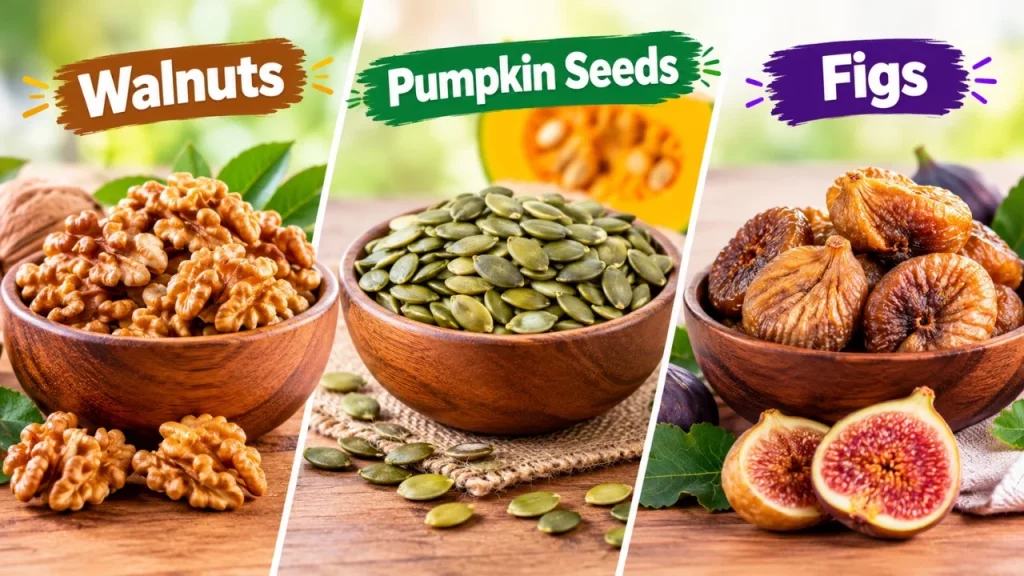
What if the superfood you’ve been eating for its “main benefit” barely delivers that benefit at all? That’s not a trick question. It’s what happens when you look past the marketing numbers on walnuts, pumpkin seeds, and figs and into the biochemistry of what your body actually does with them.
All three get praised for one headline trait — walnuts for omega-3, pumpkin seeds for zinc and iron, figs for fibre and natural sweetness. But headline traits and delivered traits aren’t the same thing. Here’s where each one actually stands once you account for absorption, blood sugar, and who should be cautious.
Walnuts: the omega-3 claim is mostly aspirational
Walnuts contain alpha-linolenic acid, a plant omega-3 called ALA. The problem is that your body can’t use ALA directly for the heart and brain benefits omega-3 is famous for. It has to convert ALA into EPA and DHA first, and in humans that conversion is inefficient — only about 5 to 10 percent of the ALA you eat actually becomes usable EPA or DHA. The rest is burned for energy like any other fat.
So when you eat roughly 28 grams of walnuts and get around 2.6 grams of ALA, you’re realistically converting somewhere between 0.13 and 0.26 grams into the active forms your cardiovascular system responds to. That’s a fraction of what a modest serving of fatty fish delivers directly as preformed EPA and DHA. Walnuts aren’t useless for omega-3 — they’re just overstated as a standalone source. If heart and brain omega-3 is genuinely your goal, pairing walnuts with a fish or algae-based source closes the gap; relying on walnuts alone does not.
Pumpkin seeds: the zinc and iron numbers come with an asterisk
Pumpkin seeds look great on paper — roughly 8.5 grams of protein, 2.17 milligrams of zinc, and 2.3 milligrams of iron per 28 grams, plus a solid dose of magnesium. But seeds, nuts, and legumes all carry phytic acid, a natural compound that binds minerals like zinc and iron in the gut and blocks a meaningful portion of them from being absorbed.
This matters specifically for anyone tracking zinc or iron intake carefully — people on zinc or iron supplements, those managing anemia, or anyone counting on pumpkin seeds as a primary mineral source. The listed 2.17 milligrams of zinc isn’t what ends up circulating in your blood; phytic acid binding means your actual absorbed amount is lower, sometimes substantially so. Soaking, roasting, or sprouting seeds reduces phytic acid somewhat, but it doesn’t eliminate the effect. If you’re relying on pumpkin seeds to hit a mineral target prescribed by a doctor, that’s a real gap between the label and your bloodstream.
Figs: sugar density and two overlooked risks
Dried figs get credit for fibre, and they deserve it. But they’re also a concentrated sugar source — roughly 28 grams of dried figs carries around 12 grams of natural sugar packed into a small, easy-to-overeat portion, which is a meaningfully faster carbohydrate hit than the same weight in walnuts or pumpkin seeds, both of which are low in sugar and higher in fat and protein that slow digestion. If you’re watching blood sugar, dried figs behave more like concentrated fruit candy than a neutral snack, and portion size matters more here than with the other two.
There are two risks specific to figs that rarely get mentioned. First, dried figs contain oxalates, compounds that bind calcium and contribute to calcium oxalate kidney stones — the most common stone type, accounting for close to 80 percent of all kidney stone cases. A small pilot study comparing urine samples from patients with calcium oxalate kidney stones and healthy controls found distinct differences in urinary microbial and metabolic profiles between the two groups, reinforcing that what’s happening in the urinary tract of stone formers is biologically different, not just a matter of hydration. That study was small — 12 stone patients versus 10 controls — and it didn’t test figs directly, but it supports why anyone with a history of calcium oxalate stones is routinely advised to watch oxalate-rich foods, and dried figs sit on that list.
Second, many commercially dried figs are treated with sulfur dioxide or sulfite preservatives to keep their colour and extend shelf life. For most people that’s irrelevant. For the subset with sulfite sensitivity, it can trigger headaches, flushing, or in asthmatic individuals, breathing difficulty. Unsulfured dried figs exist but are less common on shelves, so if you’re sensitive, the label is worth checking every single time.
The actual daily combo, gram for gram
Here’s what a realistic day looks like if you take the standard advice literally and eat all three recommended portions together.
| Food | Serving | Calories | Key nutrient delivered | Caveat |
|---|---|---|---|---|
| Walnuts | 28 g | ~185 | ~0.13-0.26 g usable omega-3 after conversion | ALA conversion is only 5-10% |
| Pumpkin seeds | 28 g | ~158 | Zinc and iron, partially blocked | Phytic acid reduces absorption |
| Dried figs | 28 g (~2 figs) | ~70 | ~12 g natural sugar, fibre | Oxalates, possible sulfites |
Stack all three and you’re looking at roughly 413 calories total, which fits easily into most daily calorie budgets as a snack layer rather than a meal replacement. The nutritional logic holds up fine at this portion size — the issue was never the calorie math, it was the assumption that the headline nutrient arrives at full strength and suits everyone equally.
Quick recap
- Walnuts: real omega-3 source, but only 5-10% of ALA converts to usable EPA/DHA in humans — pair with fish or algae oil for the full benefit.
- Pumpkin seeds: genuinely high in zinc and iron on paper, but phytic acid blunts absorption, which matters most if you’re on mineral supplements.
- Dried figs: good fibre, but concentrated sugar per 28 grams, plus oxalates relevant to kidney stone formers and sulfites relevant to sulfite-sensitive people.
- Eating all three recommended portions in one day totals around 413 calories — the amount is fine, the fit to your body depends on which caveat applies to you.
The one takeaway: none of these three foods is a universal winner, because each one’s biggest selling point comes with a built-in asterisk that depends on your own biochemistry and health history — so the right choice isn’t which superfood sounds best, it’s which caveat doesn’t apply to you.
Sources

James Carter
The EverBBQ editorial desk — covering BBQ news, features and everything off the grill.