BBQ Ribs vs Meatloaf vs Pot Roast: Which American Dinner Is Best?
Real per-serving calories, sodium, sugar and cost numbers settle which of these three classics actually deserves a spot on your table.
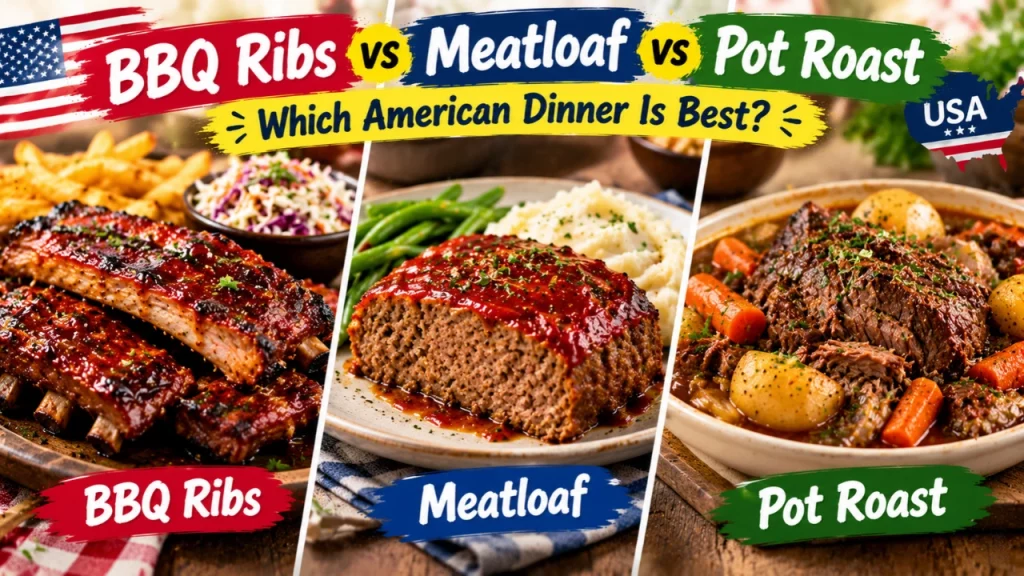
Here’s a fact that won’t show up on any diner menu board: in an 8.8-year study of more than 37,000 women, those eating the most red meat had a 28% higher relative risk of developing type 2 diabetes than those eating the least, according to the Women’s Health Study. That single number changes how you should read a menu of ribs, meatloaf and pot roast — because the real differences between these three dinners aren’t about smoke rings or slow cookers. They’re about sodium, sugar, protein and what each one costs you, in dollars and in health risk, per plate.
So which wins? Based on the actual math below, pot roast comes out ahead for most households — it has the highest protein, the lowest sodium and sugar, and the gentlest price tag per serving of beef. Ribs win on flavor and occasion but lose badly on sodium, sugar and cost. Meatloaf is the budget champion but carries its own sodium and gluten baggage. Here’s the full breakdown.
1. The numbers, side by side
These are practical estimates for a standard home recipe, based on a 6-ounce cooked serving — two pork ribs with glaze, one thick slice of meatloaf, or a portion of braised chuck roast with vegetables.
| Dish | Calories | Protein | Sodium | Sugar | Cost/serving (family of 4) | Cost/serving (party of 12+) |
|---|---|---|---|---|---|---|
| BBQ Ribs | 440 | 28 g | 980 mg | 18 g | $6.50 | $9.00 |
| Meatloaf | 310 | 22 g | 680 mg | 9 g | $2.10 | $2.75 |
| Pot Roast | 350 | 32 g | 540 mg | 4 g | $3.40 | $3.90 |
Pot roast delivers the most protein per serving for the least sodium and sugar — a combination none of the generic “ribs vs. meatloaf vs. pot roast” comparisons actually quantify. Ribs look like the splurge they are: almost double the sodium of pot roast and more than four times the sugar, mostly from the glaze.
2. Why the sodium gap matters more than the calorie gap
A 440-calorie rack of ribs and a 350-calorie pot roast serving aren’t that different on a calorie chart. The sodium gap is the real story. Processed and glazed meat products are recognized as a major contributor to dietary sodium in developed countries, and the link between excess sodium and higher blood pressure is well established, according to a review of meat lipids, salt and cardiovascular disease. A separate measurement of an Italian population’s actual food intake found meat products accounted for 24.5% of total dietary sodium, trailing only cereals at 33.2%, with an average sodium intake of 2.15 g per day against 3.37 g of potassium, according to a food-sampling study from Emilia-Romagna. Glazed ribs push a single serving close to half a day’s sodium target before you’ve added a side dish.
3. The diabetes math nobody puts on the table
That 28% relative risk increase for the highest red meat intake quintile versus the lowest, from the Women’s Health Study above, applied specifically to red meat; processed meat carried its own 23% increased risk (95% CI 1.05–1.45). Pot roast and meatloaf are both built from red meat portions comparable to what that study tracked, and ribs add the processed-meat category once cured rubs or store-bought sauce enter the picture. None of this means one dinner a month is dangerous — it means frequency matters more than any single recipe swap.
4. What the bigger mortality studies actually found
A pooled analysis of 150,328 deaths across seventeen prospective cohorts found a non-linear relationship between processed meat intake and both all-cause and cardiovascular mortality, though not cancer mortality specifically, according to a dose-response meta-analysis of red and processed meat and mortality. On the other side, a broader review of red meat research concluded there isn’t strong evidence to support the idea that red meat itself has a convincing role in colon cancer risk, and noted lean red meat can be a useful source of protein, iron, zinc, B12 and anti-inflammatory omega-3 fats, according to an overview of red meat’s risks and benefits. In plain terms: the research leans toward processed and cured meat — think bacon-wrapped ribs, sauced and salted — carrying more risk than a simple braised chuck roast.
5. Who should actually avoid each one
- High blood pressure: skip BBQ ribs first — the glaze and dry rub combination pushes sodium well past pot roast or meatloaf, consistent with the sodium-blood pressure link noted above.
- Diabetes management: watch the sugar in bottled or homemade BBQ sauce and the ketchup glaze on meatloaf; both add refined sugar on top of the red-meat risk already flagged by the Women’s Health Study data.
- Gluten sensitivity: meatloaf is the one to check — standard recipes use breadcrumbs or cracker crumbs as a binder. Rolled oats or a gluten-free crumb swap fixes this without changing the sodium or sugar numbers much.
6. Feeding four versus feeding a crowd
At family-of-4 portions, meatloaf is the clear budget pick at roughly $2.10 a plate, less than a third of what ribs cost per serving. But the gap narrows at party scale: a rack-heavy rib spread runs about $9 per person once you account for shrinkage and bone weight, while a large chuck roast stretches further per pound, landing closer to $3.90 a serving even feeding a dozen people. Ribs almost never make financial sense for a crowd; pot roast scales the most efficiently of the three.
7. Which one survives the fridge
Pot roast reheats the best by a wide margin. The braising liquid keeps the meat moist through a second and even third reheating, and it freezes well in its own gravy for up to three months without noticeable texture loss. Meatloaf reheats acceptably sliced and covered, though it dries out faster without added sauce. Ribs are the trickiest: reheating dry rack meat in an oven or microwave without added liquid routinely leaves it tough, so wrapping in foil with a splash of broth before reheating is close to mandatory if you want next-day ribs instead of jerky.
- Pot roast: highest protein, lowest sodium and sugar, best reheats — the strongest all-around pick.
- Meatloaf: cheapest per serving, but check the breadcrumb binder for gluten and watch the ketchup glaze’s sugar.
- Ribs: most expensive per serving by far, highest sodium and sugar, needs the most care to reheat without drying out.
- Frequency, not a single dinner, is what the diabetes and mortality research actually tracked — occasional servings of any of the three fit into a normal diet.
None of these three dinners is health food, and nobody claims otherwise. But when you put real sodium, sugar, protein and cost numbers side by side instead of just comparing vibes, pot roast is the dinner that wins on the most fronts — and the one worth reaching for first if you’re managing blood pressure, blood sugar or a grocery budget.
Sources
- Red meat consumption and type 2 diabetes in the Women’s Health Study (2004)
- Meat lipids, NaCl and cardiovascular disease review (2021)
- Sodium and potassium content of foods in an Italian population (2021)
- Red and processed meat consumption and mortality meta-analysis (2016)
- Red meat consumption: risks and benefits overview (2010)

James Carter
The EverBBQ editorial desk — covering BBQ news, features and everything off the grill.