What’s the Signature Food of Every US State? Iconic Dishes From Lobster to Green Chile
When food lists disagree on a state's signature dish, here's how to tell survey opinion from culinary fact, and which one to trust.
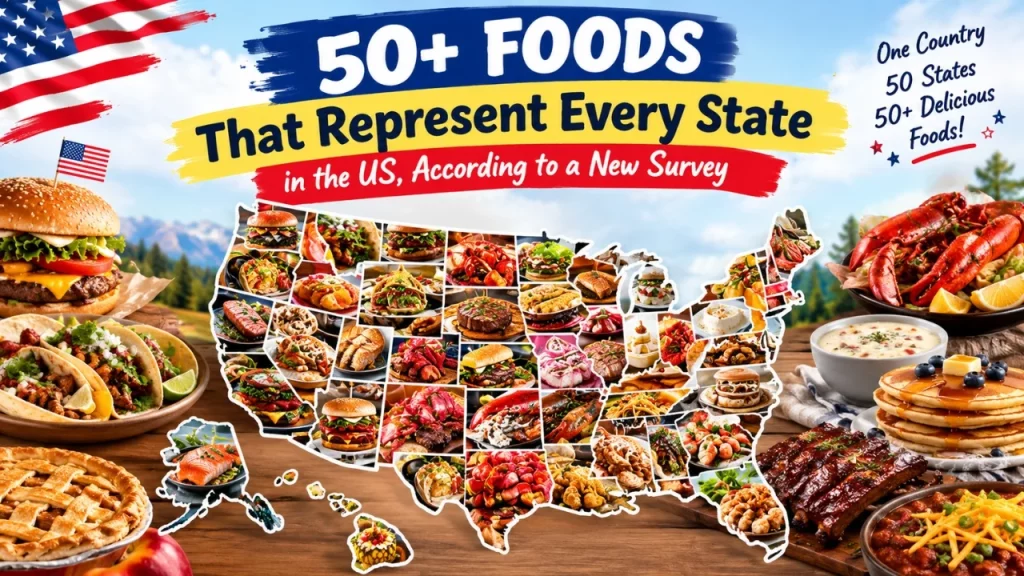
You’d assume every state has one obvious, agreed-upon food. Ask anyone and they’ll say Maine means lobster, Louisiana means gumbo, done. But pull up three different “signature food of every state” lists side by side and you’ll find they argue with each other constantly, sometimes about the exact same state, sometimes in ways that cancel each other out entirely.
The honest answer is that “signature food” means three different things depending on who’s asking, and most lists quietly pick whichever one makes a better headline.
The California Problem
Nowhere is the contradiction more obvious than California. One recent survey-based list names Mexican food as the state’s signature dish. Another popular ranking goes with the classic American burger, pointing to California’s drive-in and fast-food history. A third leans into coastal identity and picks shrimp tacos. A fourth, aimed at a wellness-minded audience, says avocado toast is the real California signature.
None of these are wrong, exactly. That’s the problem. California has deep, genuine Mexican and Mexican-American food traditions going back long before statehood. It also invented the modern fast-food burger chain. It also has a coastline that produces excellent seafood. It also has more avocado farms than any other state and a brunch culture that made avocado toast famous nationwide. Four answers, four facts, zero consensus.
Maryland shows the opposite failure mode. Ask almost anyone and they’ll say blue crab, specifically crab prepared Chesapeake-style with Old Bay seasoning. That answer shows up constantly in local culture, in state symbolism, in restaurant menus. Yet at least one broad national list skips Maryland’s food identity almost entirely, folding it into a generic “mid-Atlantic seafood” category or leaving it out of the spotlight dishes altogether. The state with arguably the strongest, most unanimous food identity in the country sometimes gets the least specific treatment, simply because crab doesn’t photograph as “surprising” as green chile or deep dish.
Where Sources Actually Agree
Not every state is contested. It helps to sort states into two honest buckets instead of pretending all fifty have equally solid food identities.
Strong, near-unanimous states: Maine (lobster), Louisiana (gumbo, and soul food broadly across the South), New Mexico (green chile, usually on a cheeseburger), Maryland (blue crab), and a handful of others where history, geography, and modern survey answers all point the same direction. If three unrelated lists agree without prompting, that’s a real signal, not a coincidence.
Weak or contested states: California, as shown above, but also places like New York, where the answer splits between pizza, bagels, and the more generic “melting pot” label depending on the source. Texas splits between barbecue and chili. Ohio and several Midwestern states often just get grouped under “comfort food” because no single dish clearly dominates the conversation. If you see a state described with a vague category instead of a named dish, that’s usually the list’s polite way of admitting there’s no strong consensus.
When Opinion Meets Law
Here’s something almost none of these lists mention, and it’s the one place a reader can get an actual fact instead of a vote: many states have legislated official foods. These aren’t survey results. They’re laws passed by state legislatures, which makes them a different category of evidence entirely.
Texas, for example, legally designated chili con carne as its official state dish decades ago, settling the barbecue-versus-chili debate with a statute rather than a poll. Oklahoma went further and passed an entire official state meal into law, covering everything from chicken-fried steak to pecan pie to black-eyed peas, an unusually detailed legislative menu. Louisiana has formally recognized gumbo as its official state cuisine. Several states have designated official state fruits, pies, or muffins through the same process, from peach and blueberry designations to apple-based baked goods.
These laws don’t necessarily reflect what people eat most often, and they’re sometimes the product of a single schoolchild’s petition or a lobbying push from a local industry. But they’re documented, dated, and public record. When a survey and a culinary history disagree, a state food law is the closest thing to a tiebreaker you’ll find, because it’s neither opinion nor marketing. It’s a fact you can point to.
The Tourist-Plate Test
There’s a separate question none of these lists ask directly: do people who actually live there still eat this food regularly, or has it become something that mostly exists for visitors?
Lobster in Maine passes this test easily. It’s expensive, but it’s a real, ongoing part of the state’s economy and diet, not a performance for out-of-towners. Green chile in New Mexico passes too. Locals put it on nearly everything, year-round, long before it became an internet-famous burger topping.
Avocado toast in California does not pass the same test in the same way. It’s a real food people eat, but it’s closer to a lifestyle trend that got attached to the state’s agricultural strength than a dish with generational roots there. That doesn’t make it fake, but it does make it a different kind of answer than lobster or crab. If you’re planning a trip and want to taste something “authentic,” the tourist-plate test matters more than any single ranking. Ask whether the dish shows up in home kitchens and diners on a random Tuesday, not just on a visitor’s checklist.
A Decision Rule You Can Actually Use
So what do you trust when the sources genuinely conflict? It depends on what you actually want.
- Want to know what locals talk about and crave right now? Trust the survey. It captures current public perception, even if that perception shifts year to year.
- Want to know what’s historically documented and rooted in the state’s food culture for generations? Trust culinary history over any single poll.
- Want a clean, citable fact instead of a vote? Look for an official state food law. It won’t always match popular opinion, but it can’t be argued with the way a survey can.
- Planning to travel and eat like a local? Run the tourist-plate test. Pick the dish that shows up in everyday meals, not just souvenir shops.
The takeaway is simple: a “signature food” list isn’t lying to you when it contradicts another one, it’s just answering a slightly different question, so figure out which question you’re actually asking before you pick a dish to trust.

James Carter
The EverBBQ editorial desk — covering BBQ news, features and everything off the grill.