Mackerel vs. Salmon vs. Sardines: Which Fish Packs the Most Omega-3s?
The real answer depends on species, wild vs. farmed, and the can — not just which fish you pick.
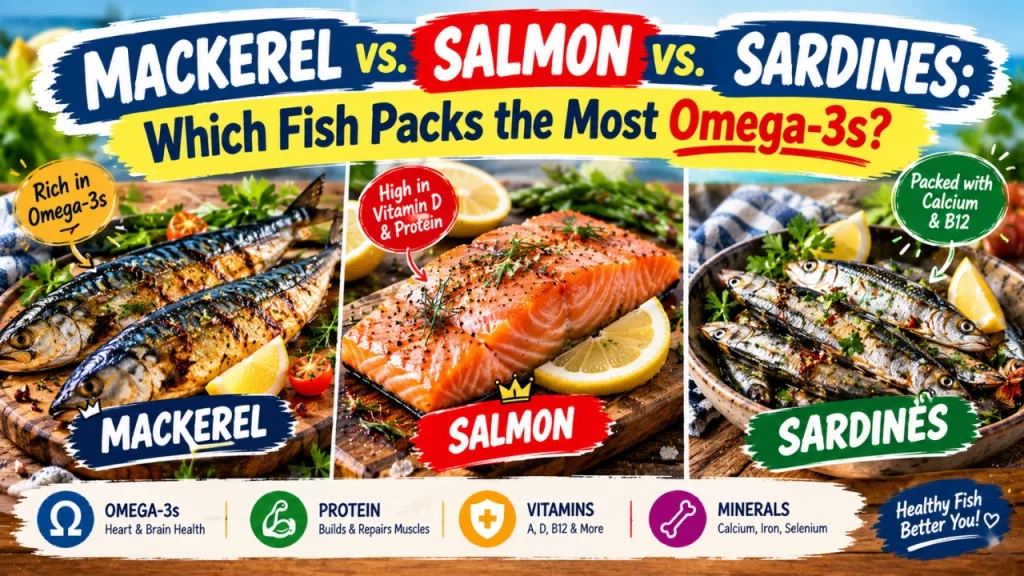
You’re at the fish counter, or maybe just staring into the pantry at three cans — mackerel, salmon, sardines — trying to decide which one actually earns its reputation as an omega-3 powerhouse. The nutrition label on the can doesn’t settle it, because the fillet in your hand isn’t the same fish as the one in the study everyone quotes, or the one your neighbor swears by. You end up buying all three out of indecision, which, it turns out, might be the most defensible move available.
- There is no single “winner” — omega-3 content swings so much by species, wild vs. farmed status, and season that a ranking based on one example of each fish can flip with a different example.
- Oily, small, cold-water fish as a category (mackerel, sardines, herring, wild salmon) reliably beat lean white fish, but the three contenders in this matchup often land closer together than headlines suggest.
- Farmed salmon’s omega-3 level depends heavily on what it was fed, which most shoppers have no way of checking at the counter.
- Canned versions carry real trade-offs — sodium, bones, skin, and packing liquid — that change what you’re actually eating, separate from the omega-3 question entirely.
What the comparison is actually comparing
“Mackerel vs. salmon vs. sardines” sounds like it’s pitting three fixed quantities against each other, but each name covers a cluster of very different fish. Mackerel might mean Atlantic mackerel, king mackerel, or Spanish mackerel — species with different fat content and, in king mackerel’s case, enough mercury concern that health agencies advise limiting it. Salmon might mean wild-caught sockeye, farmed Atlantic salmon, or canned pink salmon, each with a different fat profile because fat content tracks with diet, water temperature, and how much the fish swims. Sardines are usually more consistent as a category, but even they vary by catch season and size.
This matters because most articles comparing these fish quote a single figure for “salmon” as if it were one thing, when a fatty wild sockeye and a lean farmed fillet raised on a low-fat feed can differ meaningfully in oil content. The honest answer to “which fish has more omega-3” is: it depends which salmon, which mackerel, and which sardine you’re actually holding.
Why the ranking keeps shifting
Omega-3 content in fish is a byproduct of diet and environment, not a fixed trait of the species. Fish don’t make omega-3 fatty acids themselves; they accumulate them by eating algae or smaller fish that ate algae. A wild fish foraging in cold, nutrient-rich water for its natural diet tends to build up more of these fats than a farmed fish raised on a formulated feed, unless that feed is specifically enriched with fish oil or algal oil to compensate — which many farms now do, with varying success.
Season changes things too. Fish often carry more fat, and therefore more omega-3, right before spawning or migration, and less afterward. A mackerel caught in autumn can differ from the same species caught in spring. Sardines follow a similar pattern tied to their feeding cycles. None of this shows up on a grocery store label, which typically just says “Atlantic mackerel” or “wild sockeye salmon” with no indication of catch season or feed source.
Processing adds another layer. Canning, smoking, and the choice of packing liquid (oil, water, or tomato sauce) can all shift the measurable fat content, sometimes adding fat from the canning oil itself rather than from the fish.
What this means for your plate
If you’re choosing between these three fish purely to maximize omega-3 intake, chasing a precise ranking is less useful than it sounds, because the specific fillet or can you buy may not match whatever example a chart is built on. What’s more reliable is the broader pattern: all three are classified as fatty, cold-water fish, and all three consistently outperform lean white fish like cod, tilapia, or haddock on omega-3 content, often by a wide margin. The real competition isn’t mackerel versus salmon versus sardines — it’s any of the three versus the lean fish that too often gets picked instead out of habit or price.
There are also practical differences that matter more than a few grams either way. Sardines and canned mackerel are usually eaten with bones and skin intact, which adds calcium and vitamin D that boneless salmon fillets don’t provide in the same way. Canned fish in general tends to run higher in sodium than fresh fillets, which matters for anyone watching blood pressure. And larger mackerel species carry enough mercury that pregnant women and young children are generally advised to choose smaller fish — sardines and smaller Atlantic mackerel — over king mackerel specifically.
| Factor | Mackerel | Salmon | Sardines |
|---|---|---|---|
| Main source of variability | Species (Atlantic vs. king vs. Spanish) | Wild vs. farmed, and feed quality | Catch season, relatively consistent otherwise |
| Mercury concern | Low for Atlantic, higher for king mackerel | Generally low | Generally low |
| Usually eaten with bones/skin | Sometimes (canned) | Rarely (fresh fillet) | Usually |
| Common sodium concern | Higher if canned | Lower if fresh, higher if canned | Higher, especially canned in oil |
What to do with this
Instead of hunting for a definitive ranking, treat mackerel, salmon, and sardines as three reliable doors into the same room. Rotating between them covers you against the variability each one carries on its own — a farmed salmon fillet from a poorly fed operation, a king mackerel with mercury concerns, a sardine tin heavy on sodium. Buying wild over farmed when it’s affordable, checking the species name rather than just the generic label, and favoring water-packed or lightly sauced cans over oil-packed when sodium or added fat is a concern will do more for your actual intake than memorizing which fish wins on a chart built from one unverifiable example of each. The fish aisle doesn’t need a winner. It needs a rotation.

Tom Fletcher
The latest from the Australian and global BBQ scene — comps, cooks and culture.