American Cheese vs Cottage Cheese: Which Is Healthier and Tastier?
The slice-vs-scoop math, hidden sodium traps, and who should skip each cheese entirely — the comparison most articles skip.
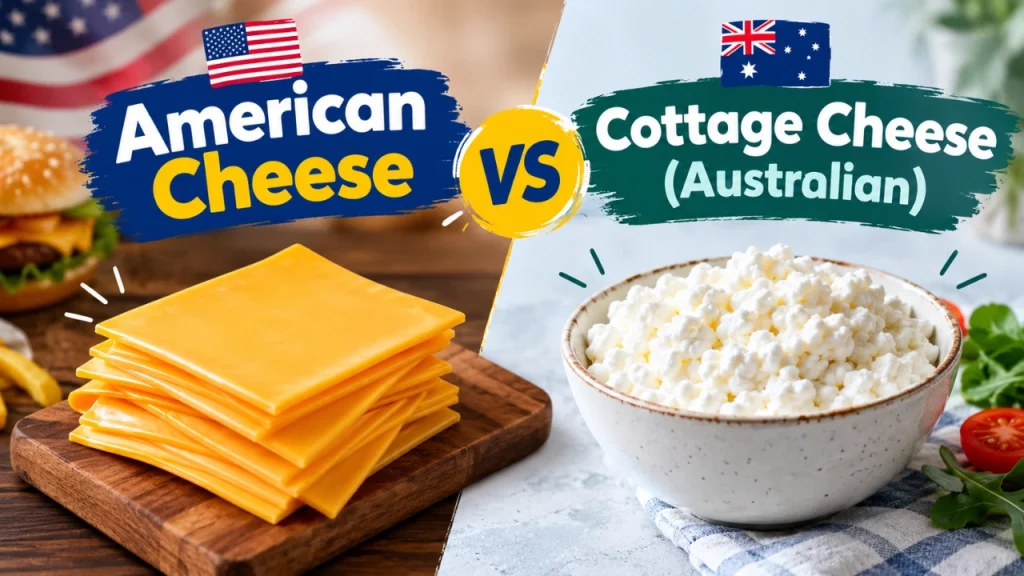
Ask anyone which is the “better” cheese and most people answer instantly: cottage cheese, obviously. It sits next to the egg whites and spinach in every diet plan, while American cheese waits in the deli case looking like dessert for a sandwich. That ranking only holds up if you compare the two foods gram for gram in a lab, not the way anyone actually eats them. A slice of American cheese weighs about 21 grams. A real-world serving of cottage cheese is a half-cup, roughly 113 grams — five times as much food. Once you adjust for that, the “obvious” winner gets a lot less obvious.
American Cheese: The Slice
One individually wrapped slice of American cheese (about 21 grams) typically carries around 70 calories, 4 grams of protein, 300 to 340 milligrams of sodium, and roughly 100 to 120 milligrams of calcium, depending on the brand. Because it’s eaten as a single, pre-portioned unit, it’s almost impossible to accidentally overeat in one sitting. The sodium load is baked into the processing — American cheese is an emulsified cheese product, and salt and sodium citrate are part of what keeps it smooth and meltable. But the portion control built into “one slice” means the absolute sodium hit per eating occasion is usually modest compared to what people assume.
Cottage Cheese: The Scoop
Here is where the comparison most people make falls apart. A half-cup of regular cottage cheese (113 grams) runs about 110 calories, 12 grams of protein, 60 to 70 milligrams of calcium, and — this is the part that rarely gets mentioned — 380 to 460 milligrams of sodium in many standard brands. That’s more sodium than a slice of American cheese, from a food people think of as the “clean” choice. A no-salt-added version of the same half-cup serving can drop to as low as 15 to 20 milligrams of sodium, so the brand on the shelf matters as much as the food category itself. And many people don’t stop at a half-cup; a full cup (226 grams) is a common bowl size, which doubles every number above, including the sodium.
| Serving (as eaten) | Calories | Protein | Sodium | Calcium |
|---|---|---|---|---|
| American cheese, 1 slice (21g) | ~70 | ~4g | ~300-340mg | ~100-120mg |
| Cottage cheese, regular, 1/2 cup (113g) | ~110 | ~12g | ~380-460mg | ~60-70mg |
| Cottage cheese, no-salt-added, 1/2 cup (113g) | ~90-100 | ~12g | ~15-20mg | ~60-70mg |
| Cottage cheese, regular, 1 cup (226g) | ~220 | ~24g | ~760-920mg | ~120-140mg |
The calcium line deserves its own pause. Cottage cheese is often reached for as a calcium source alongside its protein, but a half-cup supplies less calcium than a single slice of American cheese. Most of the calcium in milk leaves with the whey during the cheesemaking process, and cottage cheese is a fresh, unaged curd cheese that retains relatively little compared with aged or processed cheeses. If calcium is the actual goal, neither cheese is doing much heavy lifting, and cottage cheese does noticeably less than people assume.
Sodium Math for Blood Pressure, Not Just the Label
For anyone managing hypertension, the sodium comparison isn’t academic. The DASH-Sodium trial, one of the most cited controlled feeding studies on this question, found that cutting sodium from a high to an intermediate level lowered systolic blood pressure by 2.1 mm Hg, with larger drops at the lowest sodium level tested. A later analysis of the same trial found the effect wasn’t uniform: older adults (ages 55 to 76) saw roughly twice the blood pressure drop from sodium reduction compared with adults under 41, and the benefit was smaller for people already eating the DASH-style diet rich in low-fat dairy. A further breakdown by baseline blood pressure confirmed that people who started with higher blood pressure benefited the most from combining sodium reduction with the DASH diet. Practically, this means a sodium-sensitive or hypertensive adult over 50 has more at stake from a 400-milligram cottage cheese bowl than a 25-year-old does — and that the “healthy” label on cottage cheese can be misleading if the sodium content isn’t checked brand by brand. A broader nutrition review also notes that adequate potassium and calcium intake, not sodium restriction alone, may matter more for population-level blood pressure control, which is a reminder that this isn’t a simple one-nutrient story for everyone.
Who Should Actually Avoid Each One
Lactose intolerance and FODMAP sensitivity point in cottage cheese’s direction, not American cheese’s. Cottage cheese is a fresh curd that hasn’t gone through the long aging process that breaks down lactose, so it retains more of it than many aged or heavily processed cheeses. People with IBS following a low-FODMAP approach are often advised to treat cottage cheese as a moderate-lactose food and test their tolerance, while small amounts of processed cheese tend to be better tolerated.
Casein allergy is the one place both cheeses fail equally. American cheese’s “processed” image sometimes leads people to assume it’s less of a dairy product, but it’s still built on cheese and milk proteins, casein included. Anyone with a diagnosed milk protein allergy needs to avoid both, not swap one for the other.
Cottage cheese’s protein is almost entirely casein, which digests slowly and releases amino acids gradually — different from the faster-digesting whey and protein blends found in many processed cheese products. That slower release is one reason cottage cheese is popular as a bedtime or pre-workout-recovery snack; it isn’t inherently better or worse than American cheese’s protein, just a different release pattern, which matters more for athletes timing protein around training than for casual snacking.
There’s also a food-safety angle rarely discussed: a study on reduced-sodium probiotic cottage cheese formulations found that lower-sodium versions supported more growth of Listeria monocytogenes than standard formulations when stored under temperature abuse conditions. This was a lab-based food-science study, not a clinical trial, but it’s a relevant flag for pregnant women, older adults, or immunocompromised people choosing low-sodium cottage cheese — refrigeration discipline matters more with the reduced-salt versions.
The Verdict
Per 100 grams, cottage cheese wins on calories and fat, and that comparison isn’t wrong — it’s just not how either food is eaten. At realistic serving sizes, a slice of American cheese is the lower-sodium, lower-calorie, higher-calcium option, while a half-cup or full cup of cottage cheese delivers more protein but often matches or beats American cheese on sodium, depending on the brand. The honest answer is that neither cheese is unconditionally healthier; the better choice depends on your serving size, your blood pressure history, your digestive tolerance for lactose, and what you’re using the calcium or protein for. Use the slice for portion control and melting; use the no-salt-added scoop for protein without the sodium surprise.
Sources
- Effects on blood pressure of reduced dietary sodium and the DASH diet (2001)
- A further subgroup analysis of DASH diet and sodium levels on blood pressure (2004)
- Effects of Sodium Reduction and the DASH Diet in Relation to Baseline Blood Pressure (2017)
- Diet, blood pressure and hypertension (2000)
- Growth potential of Listeria monocytogenes in probiotic cottage cheese formulations with reduced sodium content (2016)

Tom Fletcher
The latest from the Australian and global BBQ scene — comps, cooks and culture.