Eat These 7 Foods to Support Stronger Joints as You Age
Which joint-friendly foods have real human trial evidence, at what dose, and why osteoarthritis, rheumatoid arthritis and gout each respond differently.
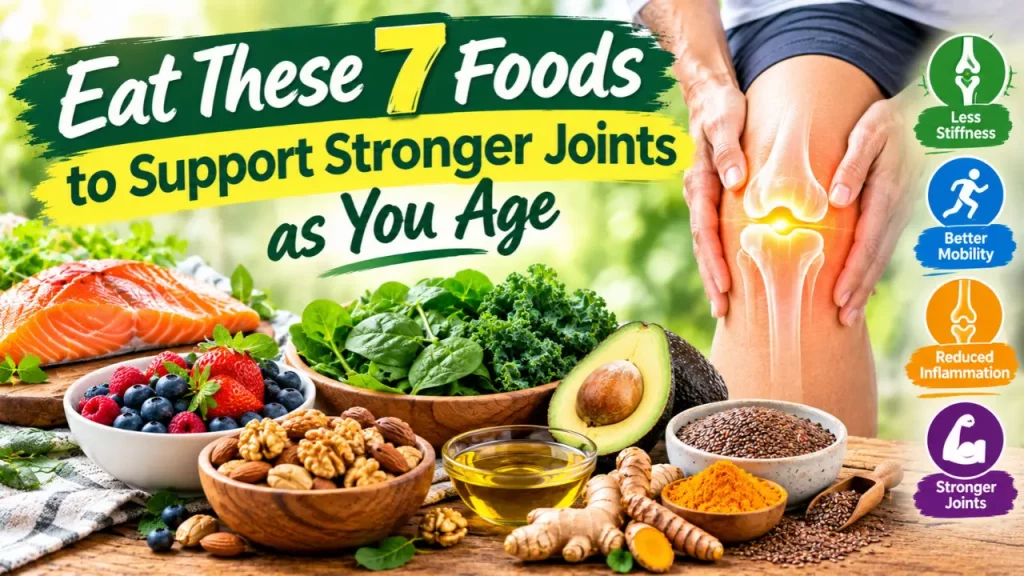
The assumption behind most joint-pain advice is that any anti-inflammatory food will help any aching joint, as long as you eat enough of it often enough. Fish, olive oil, berries, nuts, broccoli, dairy, lean protein — eat the list, feel better. What actually happens when these foods are tested in people with real joint disease is messier, and in a few cases surprising enough to change how much of something you’d bother buying.
More fish oil is always better for aching knees
This is the one claim with genuine human trial data behind it, and the data does not say what you’d expect. A randomised, double-blind trial of 202 people with knee osteoarthritis compared a high dose of fish oil, 4.5 grams of omega-3 fatty acids daily, against a low dose of just 0.45 grams daily, both given as 15 mL of oil for two years. The low-dose fish oil knee osteoarthritis trial found the low-dose group actually reported greater improvement in pain and function scores at two years than the high-dose group, and there was no difference between groups in cartilage volume, the structural outcome researchers hoped high doses would protect. A companion analysis of the same 202 participants, the fish oil and bone mineral density trial, found no difference in bone density between the high and low dose groups after two years either. So the human evidence for fish oil in osteoarthritis is real, but it points toward modest, low-gram amounts rather than megadosing, and it says nothing about bone protection.
Vitamin D deficiency is quietly behind your joint pain
This is partly true, but only at specific deficiency levels and in specific people. A five-year population study of 769 adults aged 50 to 80 found that 4.2% had moderate vitamin D deficiency at baseline, defined as blood 25-hydroxyvitamin D between 12.5 and 25 nmol/L, and this group showed measurable changes in knee and hip pain over the following years in the vitamin D and joint pain cohort study. That is an observational study, not a trial where supplements were given, so it shows association rather than proof that correcting the deficiency fixes the pain. A separate, small trial of 60 women starting letrozole for breast cancer, a drug known to cause joint aches, gave 50,000 IU of vitamin D3 weekly; women who reached higher blood levels reported less disability from joint pain at four weeks in the vitamin D supplementation and letrozole-related joint pain trial. That dose and that population, women on a specific cancer drug, do not automatically translate to someone with ordinary knee osteoarthritis and normal vitamin D levels. A broader review on vitamin D deficiency in older adults notes that many common medications interfere with vitamin D metabolism through liver enzyme pathways, so older adults on multiple prescriptions may need their levels checked rather than guessed at.
Olive oil and broccoli’s compounds act like a mild ibuprofen in your body
Oleocanthal in olive oil and sulforaphane in cruciferous vegetables are both compounds that, in laboratory and cell experiments, block some of the same inflammatory pathways as anti-inflammatory drugs. That part of the story gets repeated often. What gets left out is that neither compound has been shown, in a randomised trial of people eating them at normal dietary amounts, to reduce measured joint pain or stiffness the way the fish oil trials measured outcomes with the WOMAC questionnaire. The evidence for these two foods is real at the cell level, but it has not yet been scaled up to a human clinical trial in arthritis patients, which is a different standard than “shown to calm inflammation in a dish.”
These same foods help every kind of arthritis equally
Every trial discussed above tested knee osteoarthritis, the wear-and-pattern joint damage common with age, or joint aches caused by a cancer drug. None of them tested rheumatoid arthritis, which is an autoimmune disease where the body attacks its own joint lining, or gout, which is caused by uric acid crystal buildup rather than mechanical wear or general inflammation. That distinction matters because a food that calms general inflammatory signalling in osteoarthritis is not automatically tested against an autoimmune flare, and some of the very foods praised here carry separate warnings for gout specifically: oily fish is high in purines, which can raise uric acid and trigger gout flares in people prone to them. Anyone with rheumatoid arthritis or gout should treat these seven foods as general health support, not as a substitute for disease-specific treatment, since the human trial evidence here simply does not cover those conditions.
Stacking all seven foods only helps, never hurts
Dose and combination matter more than people assume. The osteoarthritis trial above used 4.5 grams of omega-3 daily as its high dose, well above what most people get from food, and high-dose fish oil can thin the blood; anyone on warfarin or other blood thinners should check with a clinician before supplementing at gram-level doses, since the combined effect on bleeding risk is a real concern, not a theoretical one. Vitamin K rich cruciferous vegetables can also interfere with warfarin dosing by working against the drug’s mechanism, so a sudden increase in broccoli or kale intake needs to be flagged to whoever manages that prescription. And as the vitamin D review notes, older adults on multiple medications may absorb or metabolise supplemental vitamin D differently, so a standard dose is not guaranteed to raise blood levels the way it did in a 60-person trial of otherwise healthy women.
Quick tip: if you want to test whether fish oil is doing anything measurable for knee pain, track WOMAC-style symptoms yourself for at least three months at a modest dose, since the strongest trial evidence here favored a low dose over two years, not a short burst of high-dose oil.
Which of these seven foods were you already eating for your joints, and did you ever check whether the amount you eat matches what was actually tested?
Sources
- Fish oil in knee osteoarthritis: a randomised clinical trial of low dose versus high dose (2016)
- Supplementation with omega-3 fish oil has no effect on bone mineral density in adults with knee osteoarthritis (2016)
- Moderate vitamin D deficiency is associated with changes in knee and hip pain in older adults (2014)
- Effect of vitamin D supplementation on joint pain and fatigue in women starting letrozole (2010)
- Vitamin D Deficiency in Older Patients: Sarcopenia, Drug Interactions, Management (2021)

James Carter
The EverBBQ editorial desk — covering BBQ news, features and everything off the grill.