Burger King Big Fish vs Long John Silver’s Fish Sandwich: Which One Is Healthier?
The real answer depends on serving size, sodium per bite, and whether your goal is weight loss or blood pressure control.
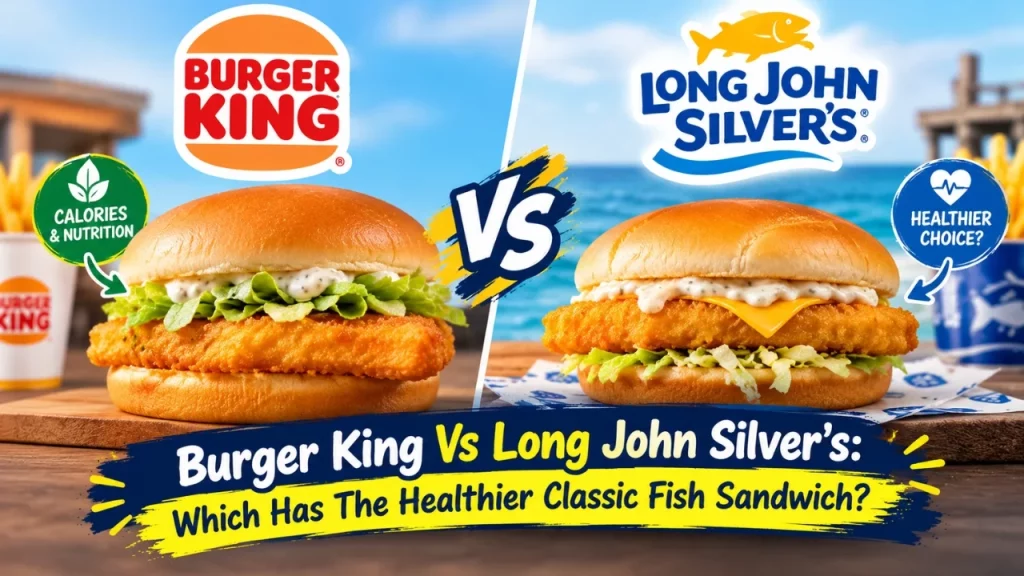
The drive-thru line splits into two lanes in your head before it ever splits on the pavement. One window hands over a crisp, golden patty stacked with lettuce and tartar sauce on a soft bun. The other hands over a longer, thinner fillet in a crackly batter, no frills, wrapped in paper that already looks a little translucent with oil. Both promise “fish.” Both promise something lighter than a burger. Neither nutrition label tells you the one thing that actually explains the gap between them.
Which Sandwich Is Actually Healthier?
Neither one is healthy in the way a plate of baked salmon is healthy, but if you have to pick, the better choice depends entirely on what you’re optimizing for. A dieter counting calories and a person managing high blood pressure can end up with opposite answers, because the two sandwiches are built differently per gram, not just per item. Calorie, fat, sodium percentage, and protein comparisons have already been run elsewhere; what actually decides the winner for your specific situation is the math underneath those headline numbers.
Is the Calorie Gap Just About Serving Size?
Largely, yes. Fast-food fish sandwiches are not built to a single standard weight, so a lower calorie count on one sandwich can simply mean a smaller patty and a smaller bun rather than a lighter recipe. This is the part that generic comparisons skip: a sandwich that looks “healthier” on a receipt because it has fewer total calories may have nearly identical oil, batter, and sauce ratios per ounce as its rival. The honest way to judge a recipe, not a portion, is to think in terms of calories per 100 grams or calories per ounce of actual food, not per branded item, because branded items are not standardized portions the way a cup of rice or an ounce of cheese is.
What Does the Sodium-to-Calorie Ratio Really Tell You?
It tells you how heavily salted the food is relative to how much of it you’re actually eating, which is a better clue to processing than sodium alone. A sandwich can carry a lower sodium number simply because it is a smaller sandwich, while still delivering more salt per bite than its larger rival. When sodium climbs faster than calories do, it usually signals more batter, more brine-cured fish, or more sauce layered onto a modest amount of actual seafood. Chains rarely publish a clean grams-of-fish figure, which is exactly why the ratio matters more than either number alone: it exposes whether you’re eating a reasonably sized piece of fish with some seasoning, or a smaller piece of fish doing a lot of work to taste like a full meal.
Which One Is Worse If You Have High Blood Pressure?
For someone managing hypertension, the sandwich with the higher sodium-to-calorie ratio is the worse choice, even if its total calorie count looks modest. Blood pressure management is about sodium load per eating occasion, not about calories at all, so a smaller, saltier sandwich can be the riskier order despite looking like the “diet” option on a menu board. If you have hypertension, the practical move is to check which sandwich’s sodium number is highest relative to its own serving weight, skip the tartar sauce entirely, and treat whichever one you choose as the single salty item in that day’s meals rather than one of several.
Which One Is Worse for Weight Loss?
For weight loss, the calculus flips toward raw calorie and fat density rather than sodium. Frying method matters here in a way that goes beyond either sandwich’s label: a prospective cohort study of 106,966 postmenopausal women followed for an average of 18 years found that eating at least one serving of fried food per day, compared with none, was linked to an 8 percent higher rate of all-cause mortality, and eating fried chicken at least once a week was linked to a 13 percent higher rate. That study wasn’t about fish sandwiches specifically, and it can’t prove fried food caused those deaths rather than just traveling alongside other habits, but it’s a reasonable warning that the batter and oil in either sandwich are doing more nutritional damage than the fish itself ever will. For a calorie-focused dieter, the better sandwich is whichever one is smaller and less battered per ounce, independent of its marketing as the “lighter” option.
Does Pollock vs Cod Change the Nutrition Picture?
Somewhat, but less than the frying method does. Lean whitefish like pollock and cod are both low-fat, modest sources of omega-3s compared with fattier fish such as salmon or tuna, so switching between them changes the nutrition profile only slightly. What changes more is how the fish was cooked before it reached your tray. A systematic review covering 714,526 people across 24 studies found that nonfried fish consumption was associated with a reduced risk of cardiovascular disease events and heart attack, while fried fish consumption was associated with an increased risk of the same outcomes. A separate cohort study of 16,479 adults found that eating fried fish two or more times a week was linked to a higher rate of cardiovascular events over about five years of follow-up. Neither Burger King’s Big Fish nor Long John Silver’s sandwich is baked or broiled, so both sit on the wrong side of that line, regardless of which whitefish was used. A study following 4,775 older adults for 12 years even found that tuna and other broiled or baked fish, specifically not fried fish or fish sandwiches, correlated with higher blood omega-3 levels and a 27 percent lower risk of ischemic stroke; fried fish sandwiches didn’t earn that same benefit at all, which is worth knowing before anyone assumes a fish sandwich carries the same heart protection as a piece of grilled salmon (cardiovascular health study on fish and stroke risk). It’s also worth noting that more omega-3 isn’t automatically a win for every health goal: one observational study of older adults found higher EPA and DHA intake was associated with slightly lower bone mineral density in the femoral neck, a small and unproven link, but a reminder that “more fish oil” isn’t a universal fix (cardiovascular health study on fish intake and bone density).
What Happens When You Add Tartar Sauce or Cheese?
It erases most of the gap between the two sandwiches. Both are typically served with tartar sauce by default, and Burger King’s version commonly includes cheese, and both additions are mayonnaise-based, meaning added fat and calories with essentially no protein or fish benefit in return. Ordering either sandwich “as advertised” rather than comparing bare fillets is the realistic scenario for most people, so the sandwich that looked lighter on paper can end up calorie-for-calorie similar to its rival once the standard sauce and cheese are factored back in.
Who Should Pick Which Sandwich?
Someone managing blood pressure should choose based on sodium relative to serving size and skip the sauce, since salt load is their main risk. Someone focused on weight loss should choose based on total calories and fat per ounce, and treat the fried batter on either sandwich as the real target for portion control. Someone hoping a fish sandwich will deliver heart-healthy omega-3 benefits should recalibrate their expectations entirely, since the frying method appears to cancel out much of that advantage in the research so far. Both sandwiches remain occasional fast-food items rather than heart-healthy staples, no matter which one wins on paper.
Sources
- Fish Consumption and Cardiovascular Health: A Systematic Review (2021)
- Fish consumption, bone mineral density, and risk of hip fracture among older adults (2010)
- Fish consumption and stroke risk in elderly individuals (2005)
- Association of fried food consumption with all cause, cardiovascular, and cancer mortality (2019)
- Dietary fried fish intake increases risk of CVD: the REGARDS study (2016)

Mick Hudson
Low-and-slow recipes, rubs, sauces and fire management from our pitmaster team.