USA vs. Australia: American Catfish vs. Australian Barramundi — Which Fish Is Better for Dinner?
Barramundi costs 2-3x more mostly because of farming and freight, not wildness — and Costco's is farmed, not wild.
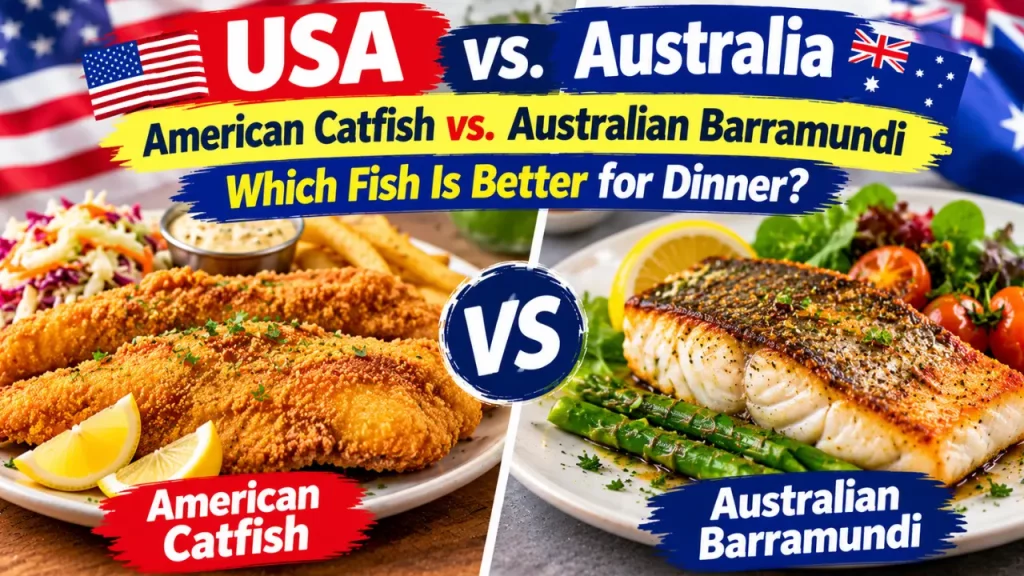
The barramundi fillet sitting in a Costco freezer case usually costs two to three times more per pound than a bag of catfish fillets right next to it in a different aisle — and the surprising part is that the price gap has almost nothing to do with one fish being “wild” and the other being “farmed.” Both are typically raised in ponds or tanks. The price difference comes down to something far less glamorous: how far the fish travels and how efficiently it’s grown.
- Barramundi commonly runs two to three times the price per pound of catfish at U.S. grocery chains, driven mainly by import logistics and lower farming volume, not wild sourcing.
- Costco’s barramundi is farmed, not wild-caught — most barramundi sold anywhere in the U.S. is farmed, including the premium-priced versions.
- USDA data on farmed catfish nutrients show 1.59 g saturated fat and 119 mg sodium per 100 g before any breading or frying is added — numbers that matter more once a fillet hits hot oil.
- Barramundi is barely stocked outside specialty and big-box stores in most U.S. regions, so “which fish is better for dinner” often comes down to which one is actually in your store tonight.
The Quick Answer: It Depends on Your Kitchen, Not Your Taste Buds
If the plan is frying at home tonight, catfish wins on cost and on tradition — it’s the fish American fryers were built around, it’s cheap enough to buy in bulk, and most grocery stores carry it without a special trip. If the plan is a low-effort weeknight dinner — pan-sear, bake, or broil with minimal cleanup — barramundi tends to win on convenience of cooking (it holds together well and doesn’t need breading) but loses on price and, in many parts of the country, on availability. Neither fish is simply “better.” They solve different Tuesday-night problems.
Price Per Pound: Why Barramundi Costs So Much More
Catfish farming in the U.S. is a mature, high-volume industry concentrated in the Mississippi Delta, with decades of infrastructure built specifically to keep retail prices low. Barramundi, by contrast, is mostly farmed overseas or in smaller domestic operations, then shipped frozen across long distances before it reaches a U.S. freezer case. That extra freight, smaller production scale, and the “premium import” positioning it gets on store shelves are the real reasons it commonly costs two to three times as much per pound as catfish — not superior nutrition or wild status. A shopper comparing price tags side by side is mostly paying for distance and scarcity, not a meaningfully different fish.
Is Costco’s Barramundi Wild or Farmed?
This is one of the most commonly misunderstood labels in the seafood aisle. Barramundi sold at Costco, like nearly all barramundi available anywhere in U.S. retail, is farmed rather than wild-caught. Wild barramundi exists — it’s a popular sport and table fish in Australia — but almost none of it is exported to U.S. grocery chains in meaningful volume. So when a shopper pays a premium price expecting a wild-caught upgrade, what they’re actually buying is a farmed fish grown in recirculating tanks or ocean pens, shipped frozen. That’s not necessarily a quality downgrade — farmed barramundi is generally consistent and mild — but it means the higher price tag is not buying “wild,” it’s buying import logistics and brand positioning.
What the Numbers Say for Gout and Heart-Health Readers
Neither fish is a red-meat-level purine bomb, but the details that matter for a gout or cholesterol-conscious reader usually get skipped in general comparisons. The one dataset available here with verified numbers is USDA’s entry for farmed catfish, cooked by dry heat: per 100 g, catfish carries 7.19 g total fat, 1.59 g of that saturated, and 119 mg sodium, alongside 18.4 g protein. Per a smaller 28 g (1 oz) portion, that scales down to 2.04 g total fat, 0.45 g saturated fat, and 33.7 mg sodium. Those saturated fat and sodium figures are moderate on their own — the real concern for heart-health readers isn’t the raw fillet, it’s what happens after it’s breaded and fried, which stacks added fat and sodium on top of these baseline numbers.
Barramundi doesn’t have a verified USDA entry alongside catfish in this comparison, so any specific saturated fat or sodium number for it should be treated with caution rather than taken as fact from a database. What can be said honestly is that barramundi is widely prepared without breading — grilled, pan-seared, or baked — which sidesteps the added fat and sodium that come with a fried preparation entirely, regardless of the fish’s own baseline numbers. For a reader managing cholesterol or sodium intake, the cooking method is doing at least as much work as the fish itself.
Who Should Think Twice Before Frying Catfish Regularly
Catfish itself, unfried, is a reasonably lean protein source based on the USDA numbers above. The caution isn’t really about the fish — it’s about the habit of frying it often. A standard breaded-and-fried preparation adds oil-absorbed fat and a flour-and-salt coating on top of the fillet’s own 119 mg sodium per 100 g, which adds up quickly for anyone tracking sodium for blood pressure reasons or saturated fat for cholesterol management. Someone eating fried catfish as a weekly habit is accumulating considerably more sodium and fat than someone eating the same fish baked or grilled. This isn’t an argument against catfish — it’s an argument for watching the frying habit specifically, which general fish-nutrition articles tend to gloss over by quoting only the raw fillet numbers.
Can You Actually Find Barramundi Near You?
Despite growing buzz, most Americans still don’t regularly cook barramundi, mainly because it isn’t stocked consistently outside larger supermarket chains, warehouse clubs like Costco, and specialty seafood counters. In much of the country, particularly outside major metro areas, catfish remains the default affordable whitefish in the freezer case, while barramundi shows up occasionally as a frozen import rather than a weekly staple. For a reader planning dinner tonight rather than hunting across three stores, that availability gap is often the deciding factor long before price or nutrition even enters the conversation.
Recap
- Barramundi’s higher price (often 2-3x catfish) comes mainly from farming scale and import freight, not wild sourcing.
- Costco’s barramundi is farmed, matching nearly all U.S. retail barramundi — “premium” doesn’t mean wild here.
- Per USDA data, catfish has 1.59 g saturated fat and 119 mg sodium per 100 g raw-cooked, before breading adds more.
- Frying habits matter more than the raw fish for sodium- or cholesterol-conscious readers; barramundi’s common non-fried prep sidesteps that issue.
- Barramundi’s real weeknight downside for most Americans is availability, not quality.
Sources
- USDA FoodData Central: Fish, catfish, channel, farmed, cooked, dry heat (2019 data release)

Tom Fletcher
The latest from the Australian and global BBQ scene — comps, cooks and culture.