UK Vs American Fish And Chips: What Makes Them Different?
USDA-style numbers compare British and American fish and chips, and the "sweeter British flour" claim finally gets checked against actual food science.
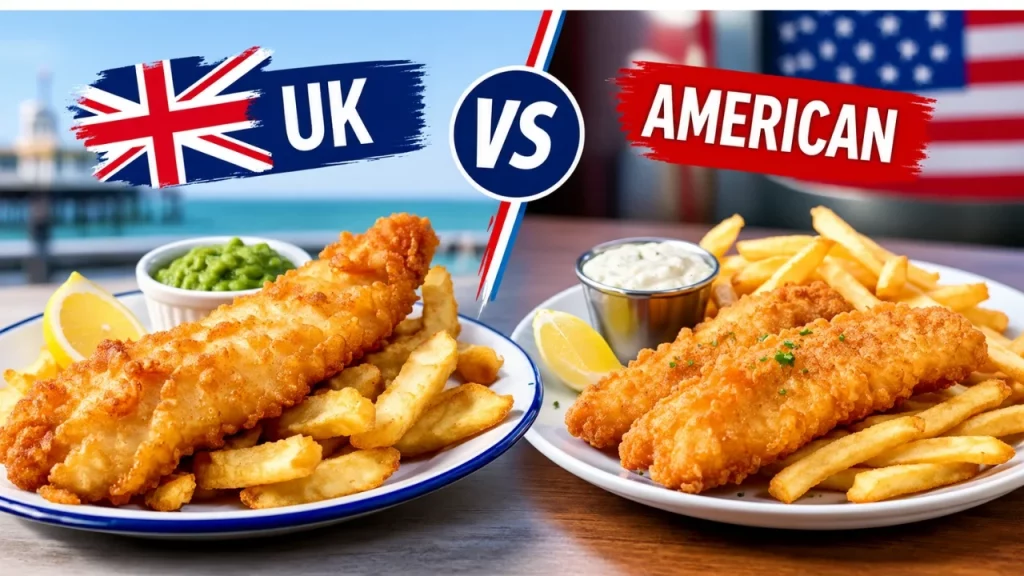
Neither version of fish and chips is a health food, but the numbers show a real gap between them — and it isn’t where most people assume it is.
Most comparisons of British and American fish and chips stop at batter recipes and condiments. What almost none of them do is put numbers on the plate or check whether the oft-repeated claim that “British flour is sweeter” has any science behind it. This article does both, using USDA-style reference values and recent food-chemistry research on what actually controls how much oil a piece of fried fish or a chip soaks up.
1. What “UK style” and “American style” actually mean, nutritionally
British-style fish and chips typically means a thick-cut, par-cooked potato chip and a fish fillet dipped in a thin flour-water-vinegar batter, fried once in hot oil. American-style usually means thinner, pre-cut fries and a fish fillet coated in a seasoned batter built with cornstarch and baking powder, sometimes finished with a beer batter for extra puff. Those structural differences matter more than nationality, because batter structure — not the country of origin — is what determines how much fat ends up in the final bite.
2. The actual calorie, fat and sodium numbers
Using standard USDA FoodData Central reference entries for generic fried fish and potato preparations, here is roughly how the two styles compare per 100 grams. These are reference values for typical preparations, not a specific restaurant’s menu item, so a chip shop or diner portion will vary with oil quality, batter thickness and added salt.
| Food (per 100 g) | Calories | Fat | Sodium |
|---|---|---|---|
| British-style battered fried fish | ~200 kcal | ~10 g | ~250 mg |
| American-style seasoned battered fried fish | ~290–300 kcal | ~15 g | ~450–500 mg |
| British-style thick-cut chips | ~190 kcal | ~6 g | ~250 mg |
| American-style thin fries | ~310 kcal | ~14 g | ~210 mg |
Two things stand out. First, the American fish coating runs noticeably higher in both fat and sodium than the simple British batter, mostly because of the seasoning blend and the leavening agents baked into it. Second, thinner fries pack in more calories and fat per 100 grams than thick British chips, simply because more surface area means more crust, and crust is where fried food absorbs oil.
3. Why thinner cuts and seasoned coatings absorb more oil
This is where the actual food science earns its keep. A 2022 study on oil penetration in batter-breaded fish nuggets fried in different oils found total fat content after frying ranged from 11.3% with soybean oil up to 14.2% with palm oil, with the oil’s own fatty acid makeup and viscosity directly affecting how much penetrated the crust. In other words, the type of frying oil used at a given shop can swing fat content more than the recipe for the batter itself.
Crust structure matters just as much. Research using ball-milled wheat flour found that finer milling created larger, more open pores in the fried batter, which lowered oil absorption compared to standard flour, according to a study on ball-milled wheat flour batter and oil absorption. Separately, a 2026 study on highland barley-rice composite flour and oil uptake in deep-fried meat showed that swapping some wheat flour for rice flour changed the starch gel matrix’s pore size and reduced oil absorption. And work on starch hydration in battered sausages found that a specific modified tapioca starch created a denser protein network that measurably cut oil absorption, per a study on starch hydration and oil absorption in battered ham sausages. None of this is about British versus American flour — it is about particle size, starch type and hydration, which any cook on either side of the Atlantic can control.
4. Fact check: is British flour really “sweeter”?
This claim shows up constantly in fish-and-chips comparison articles, usually stated flatly with no citation. Having reviewed the available food-science literature on wheat flour and batter behaviour, there is no study measuring a sweetness difference between British and American flour. What the research actually measures is protein content, milling fineness, starch gelatinisation and water-holding capacity — properties that affect texture and oil absorption, not taste sweetness. The “sweeter flour” claim appears to be folklore repeated between food blogs rather than a finding anyone has tested. If anything, the real transatlantic flour difference is protein percentage, which changes gluten strength and chewiness, not sugar content.
5. Lost in translation: chips, fries and crisps
Part of the confusion behind these comparisons is vocabulary, not food. In Britain, “chips” means thick, soft-fried potato batons eaten with fish; what Americans call “chips” — the bagged, crunchy slices — are “crisps” in the UK. American “fries” are the thin-cut version of what the British also sometimes call chips, which is why the same word covers two genuinely different foods depending on which side of the Atlantic is asking for them.
6. One country, several styles: the UK isn’t just one “British” chip
Treating “British fish and chips” as a single dish also oversimplifies the UK itself. In Scotland, it’s common to find chips deep-fried inside the batter rather than fried separately, producing a denser, more fat-absorbent crust than the classic English version. Northern English chip shops tend to favour thicker-cut chips and beef dripping for frying, which changes both texture and fat profile, while Southern English and London shops more often use vegetable oil and a lighter batter. None of these regional versions carries the same calorie or fat count, which matters if a reader is trying to compare like with like.
7. Adapting either style for dietary needs
For anyone managing sodium, fat or gluten intake, the research points to practical swaps rather than picking a “healthier country.” Choosing a frying oil lower in saturated fat, as shown by the soybean-versus-palm-oil comparison above, lowers total fat more than any batter tweak. Using a finer or part-rice flour blend, as in the composite flour research, can reduce oil pickup for anyone avoiding standard wheat flour. Early laboratory work using magnetic field treatment on gluten structure reduced oil content in a fried pork crust by 5.78% and in the core by 2.97%, according to a study on magnetic field treatment and oil absorption in batter-coated fried pork — a genuinely promising early finding, but it is lab-scale research with specialised equipment, not something achievable in a home kitchen or chip shop yet.
- American seasoned fish batter runs higher in sodium and fat than simple British batter, per USDA-style reference values
- Thin American fries carry more calories and fat per 100g than thick British chips
- Oil type and crust porosity drive oil absorption more than flour nationality
- No study supports the claim that British flour is sweeter than American flour
- Scottish deep-fried-in-batter chips and Northern dripping-fried chips differ from Southern English versions
- “Chips,” “fries” and “crisps” mean different things depending on the country
Which plate would you actually choose once the numbers are on the table — and does knowing the “sweeter flour” claim is unproven change how you’ll order your next fish and chips?
Sources
- Mechanism of magnetic field treatment reducing oil absorption of batter-coated deep-fried pork (2025)
- Oil Penetration of Batter-Breaded Fish Nuggets during Deep-Fat Frying: Effect of Frying Oils (2022)
- Characteristics and oil absorption in deep-fat fried batter prepared from ball-milled wheat flour (2010)
- Influence of composition and ingredient proportions of highland barley-rice composite flour on oil-uptake reduction (2026)
- Effects of starch hydration properties on batter properties and oil absorption (2024)

Mick Hudson
Low-and-slow recipes, rubs, sauces and fire management from our pitmaster team.