Tacos vs Doner Kebabs vs Gyros: Which Street Food Should You Try?
Real calorie, sodium and processed-meat numbers show which street food actually wins — and it isn't close.
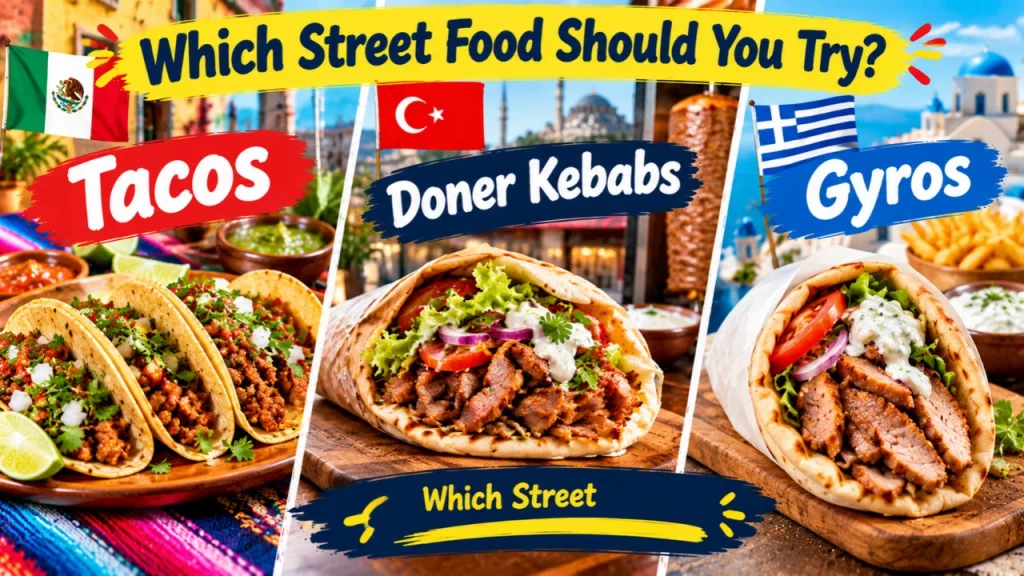
If you only remember one number tonight, make it this one: a loaded doner can carry close to a full day’s sodium in a single wrap.
You’re standing at a food truck window at 11pm, or scanning a lunch menu with twenty minutes left on your break. Nobody hands you a nutrition label. So here’s the answer, with numbers, instead of vibes.
The side-by-side nobody shows you
Portion sizes vary wildly by vendor, but typical street servings cluster around ranges that are worth comparing directly. Here’s roughly what you’re eating in one standard serving of each.
| Street food | Calories (approx.) | Sodium (approx.) | Saturated fat (approx.) |
|---|---|---|---|
| Doner (bread, meat, sauce) | 750–900 kcal | 1,500–2,000 mg | 12–18 g |
| Gyro (pita, meat, tzatziki) | 500–650 kcal | 900–1,200 mg | 8–12 g |
| 3 street tacos (tortilla, meat, salsa) | 450–600 kcal | 700–900 mg | 5–9 g |
Those are ballpark figures, not lab measurements — a single vendor’s doner could easily sit higher or lower. But the pattern holds across most versions you’ll actually find on a street corner: doner runs heaviest, gyro sits in the middle, tacos come in lightest, mostly because of bread volume and sauce quantity.
Why doner gets singled out as “unhealthy”
This claim shows up constantly online with almost no explanation. Here’s the actual case against it.
First, the meat itself. Doner meat is typically compressed, seasoned, and reformed from trimmings rather than cut whole — closer in processing to deli meat than to a grilled steak. That matters because a dose-response meta-analysis of prospective cohort studies on red and processed meat found a non-linear relationship between processed meat intake and both all-cause and cardiovascular mortality, across more than 150,000 deaths tracked in the pooled data. Processed meat behaved differently — and worse — than unprocessed red meat in that analysis.
Second, the bread. Doner flatbread is large and dense, and that bulk is where a big chunk of the sodium and calories hide before the meat or sauce even enter the picture.
Third, the sauces. Garlic, chili, and yogurt-based sauces are poured on generously, and salt is doing a lot of the flavor work in all three. A trial testing a browser tool that flags high-sodium groceries and suggests swaps — the SaltSwitch sodium and blood pressure intervention — exists precisely because sodium creeps into processed and sauced foods invisibly, and people with hypertension often have no idea how much they’re consuming in a single meal.
The real problem with a doner isn’t the meat on its own or the bread on its own — it’s that both are oversized and salted, and they arrive together in one sitting.
Who should actually steer clear
Not everyone needs to avoid the same thing, so match the food to your own situation.
- If you have hypertension: doner’s sodium load is the biggest risk here, and gyro isn’t far behind once tzatziki and seasoned meat are added. Sodium sensitivity also isn’t uniform across people — research on sodium, blood pressure, and ethnicity notes that some populations retain sodium more readily and show greater blood-pressure sensitivity to it, though the exact mechanisms are still being worked out. Tacos, especially with salsa instead of heavy sauce, give you more control over how much salt actually lands on your plate.
- If you’re lactose intolerant or IBS-prone: tzatziki is yogurt-based, which makes gyro the one to skip or ask to go without sauce. Garlic and onion, common in both doner and gyro sauces, are also frequent trigger foods for IBS.
- If you’re watching red or processed meat intake: this is where doner loses the most ground. Processed meat has been linked to higher type 2 diabetes risk in a prospective study of nearly 37,000 women in the Women’s Health Study, which found a 23% higher relative risk of diabetes comparing the highest to lowest processed meat intake groups. Separately, a dose-response meta-analysis across more than 120 prospective studies found processed meat intake associated with increased risk of coronary heart disease. Tacos made with grilled, unprocessed meat sidestep this issue almost entirely — it’s the processing, not the animal, driving most of this signal.
The decision framework: 11pm versus noon
Late at night, after a few drinks, you’re not optimizing for long-term cardiovascular risk — you’re optimizing for not feeling awful tomorrow. A gyro is the reasonable middle ground: enough calories to feel satisfying, less sodium than a loaded doner, and the tzatziki adds a little dairy fat that slows things down without going overboard.
At lunch, on a weekday, trying to stay on track — tacos win clearly. Smaller tortillas mean you control the portion by ordering two instead of four. Fresh toppings add volume without adding sodium. And because the meat is usually grilled rather than processed, you’re not stacking the same risks flagged in the diabetes and heart disease research above.
Are gyros and tacos actually similar?
Structurally, yes — both are meat, wrapped in something flat, topped with a sauce or condiment. That’s where the similarity ends. A taco is modular: small, individually assembled, easy to dial up or down. A gyro is a single large unit built around dense bread and a creamy sauce, closer in format and sodium profile to a doner than to a taco. If you’re comparing them on health grounds, don’t group gyro with tacos — group it with doner, just a slightly lighter version.
Takeaway
Tacos are the lightest, least processed, and easiest to portion-control. Gyro sits in the middle — watch the tzatziki if you’re lactose intolerant. Doner is the heaviest hit on sodium and processed meat, which is the actual evidence behind the “unhealthy” label, not just a street-food stereotype.
Sources
- Red and processed meat consumption and mortality: dose-response meta-analysis (2016)
- SaltSwitch Online Grocery Shopping sodium/blood pressure trial protocol (2022)
- Sodium, blood pressure, and ethnicity (2009)
- Red meat consumption and type 2 diabetes in the Women’s Health Study (2004)
- Food groups and risk of coronary heart disease, stroke and heart failure (2019)

James Carter
The EverBBQ editorial desk — covering BBQ news, features and everything off the grill.