Real Sago vs Tapioca Pearls: How to Tell Them Apart (Plus a Creamy Sago Pudding Recipe)
A hands-on density test, plus the glycemic, allergy, and cassava-safety facts that labels alone can't tell you.
In a 2014 food science trial, researchers in Malaysia made fish crackers from three different starches – tapioca, wheat, and sago – then cooked and chilled each batch up to four times in a row. The sago version came out with the most resistant starch of the three, a biochemical difference you would never guess just by reading a bag of pearls at the grocery store. That single detail hints at something almost no sago-pudding article mentions: the difference between real sago and tapioca isn’t only about where the starch comes from, it’s about what that starch does once it’s cooked, cooled, and digested. Here’s how to tell them apart with your hands, not just your eyes, and whether the difference actually matters for your health.
1. The test labels can’t fake: weight and crush
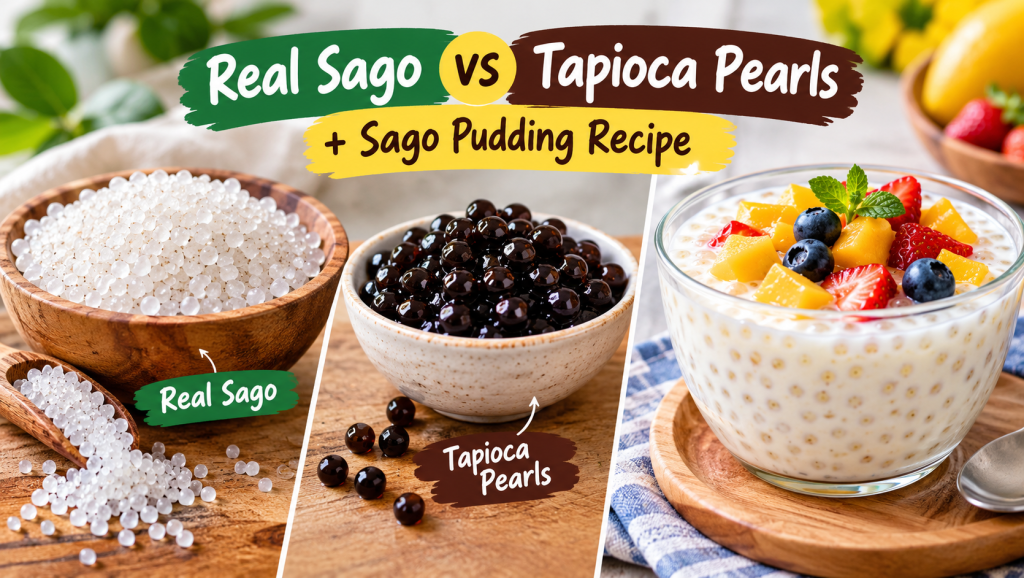
Before you ever add water to a pot, pick up a small handful of dry, raw pearls. Real sago pearls, made from the starchy pith of the sago palm, are noticeably lighter for their size and have a loose, chalky internal structure. Press one between two fingers and it tends to crumble or flatten into powder with almost no resistance.
Tapioca pearls, extracted and pressed from cassava root starch, are denser and harder. Press one between your fingers and it resists, often needing a fingernail or a hard surface to crack rather than crumble. Dropped from a short height onto a plate, dry tapioca pearls tend to bounce or click; sago pearls land with a soft, dull tap and sometimes shatter on impact. This simple weight-and-crush check works even on packages mislabeled as “sago,” because it tests the physical starch structure, not the printed ingredient list.
The most trustworthy test for these pearls isn’t on the package, it’s in your hand: weight and hardness reveal the starch’s real origin even when a label has already gotten it wrong.
2. Big pearls and small pearls are not the same ingredient
A major source of confusion in cooking forums has nothing to do with sago versus tapioca at all – it’s pearl size. Large pearl tapioca, the kind used in old-fashioned boba-style puddings, needs a long soak before cooking and a slow, patient simmer, because water has to penetrate all the way to a dense core. Small pearl or “instant” tapioca, by contrast, is already partly precooked and cracked, so it needs little to no soaking and cooks through in a fraction of the time.
Mix the two up and you’ll get either undercooked, chalky centers (small-pearl technique applied to large pearls) or a disintegrated, gluey mess (large-pearl technique applied to small pearls). The same size distinction applies to sago: large sago pearls behave like large tapioca pearls and need the longer soak-and-simmer approach, while small sago is far more forgiving.
3. Why Americans call it “tapioca pudding” even when it started as sago
Sago pudding has been made in South and Southeast Asia for centuries using palm starch. When the dish reached Western kitchens, imported sago was expensive and inconsistent, while cassava-based tapioca was cheap, could be grown closer to home markets, and was heavily marketed by starch brands in the late 1800s and early 1900s. Over a generation or two, the name “tapioca pudding” simply replaced “sago pudding” in common American usage, even in recipes that occasionally still called for sago. The dish never really changed shape or name logic – the dominant commercial starch changed, and the name followed the ingredient people actually had in their pantry.
4. What cooking and cooling actually change inside the starch
The fish-cracker study referenced above used repeated cooking-chilling cycles specifically because that process reorganizes starch molecules into forms resistant to digestive enzymes – what food scientists call resistant starch. Across a 2014 study on cooking-chilling cycles and resistant starch in fish crackers, four rounds of cooking and chilling raised resistant starch in all three starches tested, but the sago-based crackers ended up with the highest resistant starch content of the group. The tradeoff was textural: chilled samples got softer and wetter, and after frying, the crackers became harder, darker, and expanded less.
The same underlying chemistry applies, in principle, to a pot of sago or tapioca pudding: a pudding eaten freshly hot and a chilled, leftover portion eaten the next day are not identical starches, even though they look the same. This is a small, specific study on savory crackers, not pudding, so it shouldn’t be read as a guarantee of a particular effect in dessert form – but it is a real, measured difference that no sago-versus-tapioca comparison article currently mentions. Separately, several patent filings describe enzymatic methods for converting ordinary starches – including tapioca and sago among other starch sources – into resistant starch while keeping normal cooking behavior, which confirms both starches are chemically similar enough to be processed the same way industrially.
5. The cassava safety question nobody explains
Raw cassava root naturally contains cyanogenic compounds, substances that can release cyanide when the plant’s tissue is damaged or chewed raw. This is a genuine food safety consideration for anyone handling raw cassava root at home, and it’s the reason traditional cassava preparation always involves peeling, soaking, grating, pressing, and thorough cooking before eating.
Commercial tapioca starch and tapioca pearls are processed starch extracted from that root, and the extraction process physically separates the pure starch from the fibrous pulp and peel where most of those compounds concentrate. Properly dried, packaged tapioca pearls that are then boiled according to package directions are considered safe; the real risk sits with raw or undercooked cassava root, not with finished tapioca pearls cooked the normal way. Sago starch, drawn from palm pith rather than a root, doesn’t carry this particular concern at all – one of the few genuine safety distinctions between the two ingredients.
6. Matching the pearl to the person
For blood sugar management, neither fresh-cooked sago nor fresh-cooked tapioca pearls are a low-glycemic food – both are purified starches with almost no fiber, and they digest quickly once hot. The resistant starch increase seen after cooking and chilling in the cracker study suggests that a cooled, next-day portion of pudding may behave somewhat more slowly in digestion than a freshly made bowl, but this hasn’t been tested directly in pudding, so it’s a reasonable inference rather than a proven effect.
For cassava allergy, which can overlap with latex-fruit sensitivities, tapioca pearls should be avoided regardless of pearl size. For the rarer palm allergy, sago is the one to skip. Both starches are low in FODMAPs in typical portions, so people managing IBS generally tolerate either one; the deciding factor is usually texture preference and cooking time, not digestive sensitivity.
Creamy sago pudding, built around these facts
Soak small pearl sago (confirmed with the crush test) for about fifteen minutes, then simmer in coconut milk and water over low heat, stirring often, until the pearls turn translucent. Sweeten lightly, chill at least a few hours before serving, and consider saving one portion overnight in the refrigerator rather than eating it all fresh – based on the resistant starch findings above, that cold, rested portion is the more interesting one nutritionally, even if it tastes nearly identical.
- Real sago pearls are lighter and crumble easily; tapioca pearls are dense and hard to crush, a test that works even when labels are wrong
- Large and small pearls of either starch need completely different soaking and cooking times
- American “tapioca pudding” is historically renamed sago pudding, not a different dish
- Cooking-chilling cycles raised resistant starch in sago-based crackers more than in tapioca or wheat versions, though this was shown in crackers, not pudding
- Raw cassava root carries real cyanogenic-compound risk; properly processed and cooked tapioca pearls do not
- Cassava allergy rules out tapioca, palm allergy rules out sago, and both are generally fine for IBS and FODMAP sensitivity
Sources

James Carter
The EverBBQ editorial desk — covering BBQ news, features and everything off the grill.