Raisins vs Sultanas vs Currants: Which Dried Grape Should You Use?
Real glycemic index numbers, sulfite risks, and antioxidant data on raisins, sultanas and currants — not just "they're all similar."
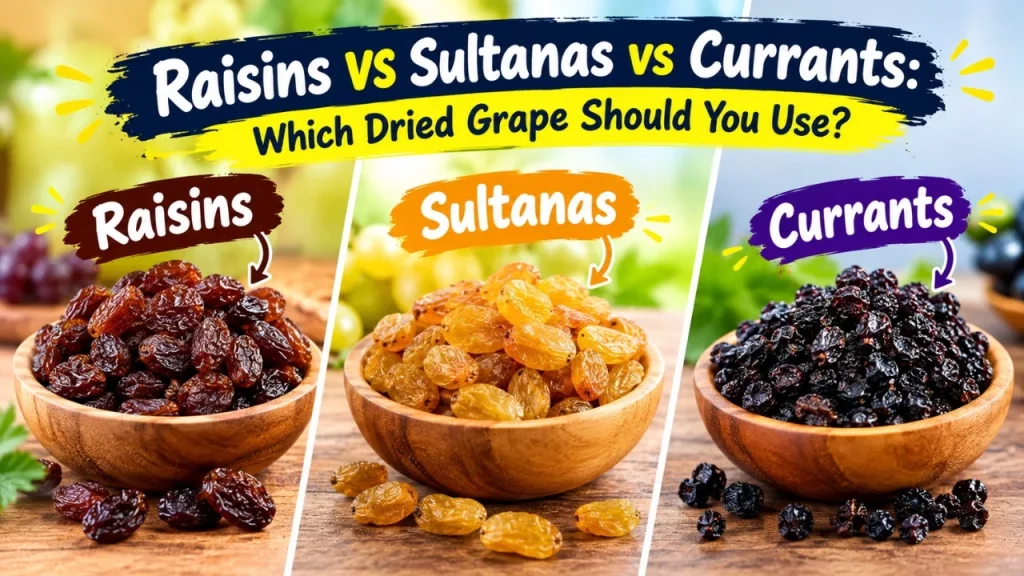
You’re standing in the baking aisle with a glucose meter app open on your phone, comparing a box of golden sultanas to a bag of dark currants, trying to work out which one won’t send your next reading through the roof. The label tells you calories and sugar per serving, but nothing about how your body will actually respond an hour later, or why one of these dried grapes is treated with a gas you’ve never heard of. Here’s what the numbers actually say.
1. The quick verdict for blood sugar control
For blood sugar purposes, dark sun-dried raisins come out slightly ahead of sultanas, but not for the reason most people assume. It isn’t the sulfur dioxide itself that raises blood sugar — it’s that the processing differences correlate with small shifts in fibre retention and oxidation, and the clinical testing has simply been done on dark raisins and on Corinthian raisins (which are, botanically, the same small Zante grape used for currants), not on sulfured golden sultanas. So the honest answer is: raisins and currants both have measured glycemic data behind them; sultanas largely don’t, which is itself useful information if you’re managing diabetes and want to choose the dried grape with an actual track record.
2. What the glycemic numbers actually show
A controlled feeding study gave 50 g of available carbohydrate from raisins to three groups — sedentary adults, trained athletes, and people with prediabetes — and compared the blood glucose and insulin response to a glucose reference drink. The glycemic and insulin index study on raisins found a glycemic index of 49.4 in sedentary adults and 49.6 in the prediabetic group (both “low,” under 55), but 62.3 in aerobically trained adults (“moderate,” 55–69). The insulin index ran similarly, between roughly 47 and 54 across groups.
A separate study fed 74 g of Corinthian raisins — essentially currants — to both healthy adults and people with type 2 diabetes and tracked blood glucose for three hours. The glycemic response study on Corinthian raisins calculated a glycemic index of 66.3 ± 3.4, higher than the raisin figures above, though still “moderate” and well below glucose itself. Glucose and insulin peaks were significantly lower after the dried fruit than after the glucose reference in both groups. So currants are not automatically gentler on blood sugar than raisins — on this evidence, the opposite may be true, which contradicts the “darker and more natural must be better” assumption worth flagging plainly.
A 12-week randomized trial comparing 60 g of dates daily against 60 g of raisins daily, matched for glycemic index, in 79 people with type 2 diabetes (61 completed) found no meaningful difference in HbA1c or fasting glucose between the two snacks over three months, according to the date fruit versus raisins glycemic control trial. That’s reassuring for daily use, but it also means raisins at that dose didn’t dramatically improve glycemic control either — they were simply neutral compared with an equivalent-GI alternative.
Glycemic index snapshot
| Dried grape tested | Measured glycemic index | Source |
|---|---|---|
| Raisins (sedentary adults) | 49.4 | Nutrition Research, 2008 |
| Raisins (prediabetic adults) | 49.6 | Nutrition Research, 2008 |
| Raisins (trained athletes) | 62.3 | Nutrition Research, 2008 |
| Corinthian raisins / currants | 66.3 ± 3.4 | Plant Foods for Human Nutrition, 2013 |
3. Why color isn’t a reliable antioxidant signal
Dark raisins rank in the upper quartile of all foods tested for antioxidant content, according to a review of raisin consumption and cardiovascular risk factors, largely because the fruit oxidizes and darkens during open-air sun drying. Sultanas are deliberately treated with sulfur dioxide precisely to prevent that browning reaction, which keeps them golden but also interrupts some of the same oxidative chemistry that builds up polyphenol compounds in the dark fruit. That said, direct head-to-head testing of sultanas against raisins and currants for antioxidant content is thin in the available research, so treat “sulfuring reduces antioxidants” as a plausible mechanism rather than a settled number — nobody has published the side-by-side figure.
4. The sulfite question: who should actually worry
Sulfur dioxide and related sulfite preservatives are a recognized trigger for breathing problems in a subset of people who already have asthma, through direct irritation of the airways rather than a classic allergic reaction. This isn’t a theoretical label warning — it’s why sulfites are required to be disclosed on food packaging in many countries once they exceed a threshold. If you have asthma and have ever reacted to wine, dried apricots, or packaged potato products, sultanas (and any “golden raisin” sold specifically for its pale color) are the one of these three dried grapes worth testing cautiously or simply avoiding, while dark raisins and currants, which rely on sun exposure rather than sulfur treatment, carry essentially none of that risk.
5. The mold toxin question nobody has fully answered
Dried grapes, like other dried fruits, can carry ochratoxin A, a toxin produced by certain molds during growing or drying if conditions are humid or storage is poor. It’s a legitimate reason some food safety agencies set contamination limits on dried vine fruit as a category. What the evidence reviewed here doesn’t give is a clean, type-by-type comparison showing whether raisins, sultanas or currants differ meaningfully in contamination rates — that specific head-to-head study doesn’t appear in the current clinical and nutrition literature on these three foods. Until it does, the practical move is the same regardless of which dried grape you buy: choose products stored in sealed, cool conditions, avoid fruit that looks visibly dusty or smells musty, and don’t treat any one of the three as automatically “safer” on this point.
6. Getting the gram-for-gram swap right
Because currants are a much smaller berry than raisins or sultanas, a measuring cup of currants packs in more individual pieces and sits denser, which means volume-based substitutions quietly change the moisture and sugar load of a recipe. If a recipe calls for raisins by weight, swapping in currants at the same weight keeps the sugar and moisture contribution close to accurate; swapping by cup or spoon does not, because you’ll fit noticeably more currants into the same volume. Weigh the dried fruit rather than measuring it by volume whenever you’re substituting between the three, especially in recipes like fruitcakes or granola bars where the sugar load is already doing double duty as a binder.
Recap
- Dark raisins tested at a glycemic index of 49–62 depending on the study population; currants (Corinthian raisins) tested higher, at 66.3 — moderate but not automatically “better” for blood sugar.
- A 12-week trial found raisins performed the same as an equal-GI dose of dates for HbA1c and fasting glucose in people with type 2 diabetes.
- Sultanas are treated with sulfur dioxide to stay pale; this can trigger breathing symptoms in people with asthma who are sulfite-sensitive, a real but specific risk group.
- Dark raisins rank in the upper quartile of foods for antioxidant content; sultanas haven’t been directly tested against them, so treat that comparison as plausible, not proven.
- No published comparison currently shows one of the three carries meaningfully more ochratoxin A risk than the others — storage and sourcing matter more than the type.
- Substitute currants and raisins by weight, not volume, to keep a recipe’s sugar and moisture balance intact.
None of these three dried grapes is a problem food for most people, including many with diabetes — but if you’re specifically managing blood sugar or asthma, the choice between them stops being a matter of taste and becomes a matter of which number actually applies to you.
Sources
