PepsiCo Price Increase: Why Doritos, Ruffles and SunChips Are Getting Pricier Again
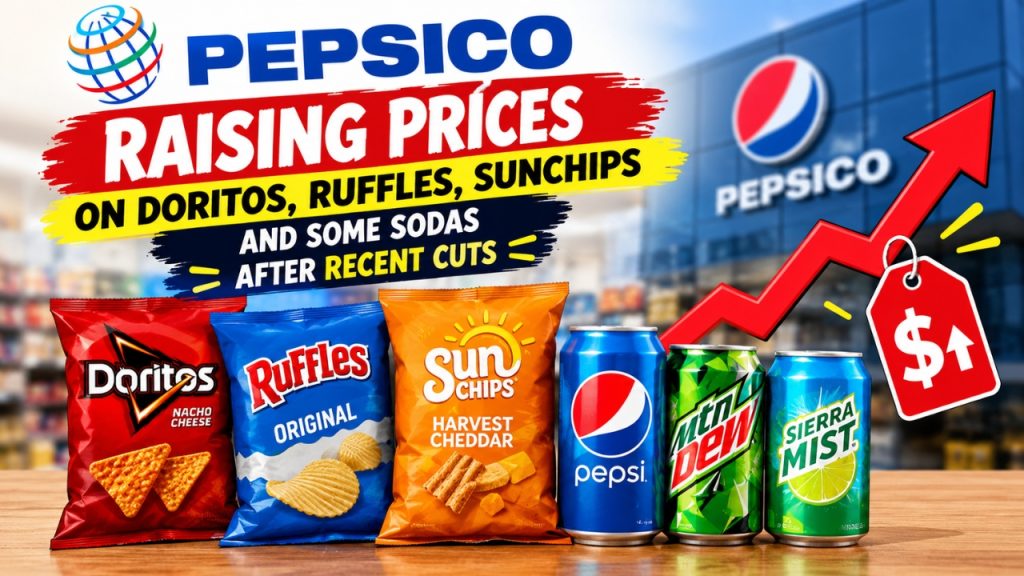
Here's the real math on PepsiCo's new snack prices — who sees it first, who barely notices, and whether you're actually still ahead of February.
A shopper stands in the chip aisle, phone calculator open, trying to remember what a family-size bag of Doritos cost back in January. She can’t remember exactly. Nobody can. That’s precisely the gap this price increase is counting on.
The short version: PepsiCo is raising prices again, but because it’s layering a smaller increase on top of a bigger spring discount, most shoppers will still pay less than they did at the start of the year — just not as much less as they were a few weeks ago.
1. What’s actually going up, and what isn’t
The increase applies to core Frito-Lay salty snacks — Doritos, Ruffles, SunChips, and related lines — along with select PepsiCo beverages. It is not a blanket, every-SKU change. Flavor variants, limited editions, and newer product lines don’t always move in lockstep with the flagship sizes, because pricing decisions get made SKU by SKU and chain by chain, not with a single company-wide switch.
That matters because two bags sitting side by side on the same shelf — say a classic Nacho Cheese Doritos and a newer flavor — can be on completely different pricing schedules. If you’re trying to judge “did my chips get more expensive,” you have to check the exact bag you buy, not the brand in general.
2. The size of the increase, in plain terms
PepsiCo and industry reporting have described this round as a single-digit percentage increase — smaller than the double-digit cuts of February. Translated into real shopping terms, a single-digit percentage move on a snack bag in the typical few-dollar range usually works out to somewhere between a dime and roughly a quarter per bag, not a dollar-plus jump. On a larger family-size or party-size bag priced higher, the dollar amount scales up proportionally, but the percentage stays the same.
This is the detail that gets lost in “single-digit percent” headlines: a percentage means almost nothing until you anchor it to an actual shelf price, and that shelf price is exactly what varies by store, region, and retailer promotion — which is why no single dollar figure applies everywhere.
3. When shoppers will actually see it
There’s a real lag between a price increase being announced and it showing up at checkout. Manufacturers typically notify retailers of new wholesale pricing weeks before shelf tags change, and retailers then decide when to implement it — sometimes immediately, sometimes only once existing inventory sells through. That means two stores in the same city can show different prices for the same bag for several weeks, simply because one restocked sooner than the other.
Quick tip: if you want to catch the lower, pre-increase price a little longer, buy from stores that tend to have slower snack-aisle turnover — smaller grocery chains and convenience stores often lag behind big-box retailers by a few weeks when it comes to updating shelf tags.
4. The math that actually tells you if you’re still ahead
This is the question nobody has actually worked through: does a single-digit increase on top of a cut of up to 15% put you back near where you started, or still meaningfully below it? The answer is compounding math, and it doesn’t cancel out the way it feels like it should.
Consider a simple illustration. If a bag cost $5.00 in January, a 15% cut would have brought it to $4.25. A single-digit increase of, say, 7% on that discounted $4.25 price brings it to about $4.55 — still 9% below the original $5.00, not back to even. The two percentages don’t offset one-for-one because the increase is calculated on the smaller, already-discounted number, not on the original price. That’s simple arithmetic, but it’s the exact piece of math that gets skipped when headlines just say “prices went down, now they’re going back up.”
So the honest takeaway is: for most of the named SKUs, shoppers are very likely still paying less than they were before February, just less less than they were a month ago. Whether that gap feels meaningful depends entirely on how often you buy, and how big your cart is.
5. Nationwide policy, local reality
PepsiCo sets wholesale pricing, but it doesn’t set the price on your receipt — retailers do. A national pricing change from the manufacturer gets filtered through each chain’s own margin strategy, regional competition, and promotional calendar. That’s why the same bag of Ruffles can be noticeably cheaper at one regional grocery chain running a promotion than at a convenience store down the street, even on the same day, under the same manufacturer price list.
Practically, this means the published “single-digit increase” is a ceiling on what PepsiCo is charging retailers, not a guarantee of what you’ll pay. Club stores, discount grocers, and chains with heavy private-label competition often absorb part of an increase to stay competitive, while convenience stores — which have less pricing pressure and lower volume — tend to pass the full increase through immediately.
6. Who this barely touches
Bulk and club-store shoppers are among the least affected. Warehouse-club pricing is typically negotiated on longer contracts and larger pack sizes, so short-term percentage swings on standard grocery SKUs often don’t show up on the same schedule, if at all. Shoppers who buy snacks in bulk tend to be insulated from these month-to-month adjustments simply because of how differently those contracts are structured.
Store-brand switchers are the other group largely unbothered. Private-label chips and snack mixes are priced independently of PepsiCo’s wholesale moves, so a household that already buys the store’s own brand of tortilla chips simply never encounters this increase at all. For many budget-conscious shoppers, that’s been the real response to February’s backlash and this follow-up increase alike — not negotiating with brand pricing, but quietly switching aisles.
7. Who it actually hurts
The shoppers who feel this most are single-serve and convenience buyers — people grabbing a small bag at a gas station or vending machine rather than a family-size bag at a grocery store. Small formats are often priced with thinner margins passed straight through, and convenience retailers have less incentive to cushion the increase the way a grocery chain competing on weekly circulars might.
There’s also a quieter effect worth watching: shrinkflation. Even when a percentage price increase looks modest, manufacturers sometimes pair it with a slightly smaller bag — fewer ounces for close to the same price. If that happens alongside this increase, the real per-ounce cost rises by more than the headline percentage suggests, and it’s the kind of change that’s easy to miss unless you actually check the net weight printed on the bag, not just the price tag next to it.
Bottom line
For most shoppers buying the named Frito-Lay snacks, this increase is real but modest, lands at different times depending on where you shop, and still leaves prices below where they stood at the start of the year — for now. The shoppers who should actually pay attention are convenience-store buyers, single-serve purchasers, and anyone who hasn’t checked the bag’s weight in a while. Everyone else can treat this as a small, unevenly timed nudge rather than a reason to panic in the chip aisle.
