Mountain Dew Pitch Black UK Launch: Citrus Grape Flavour, Price-Marked Packs and Release Dates
What's actually in the can, how it compares to regular Mountain Dew, and what its on-off US history means for UK shelf life.
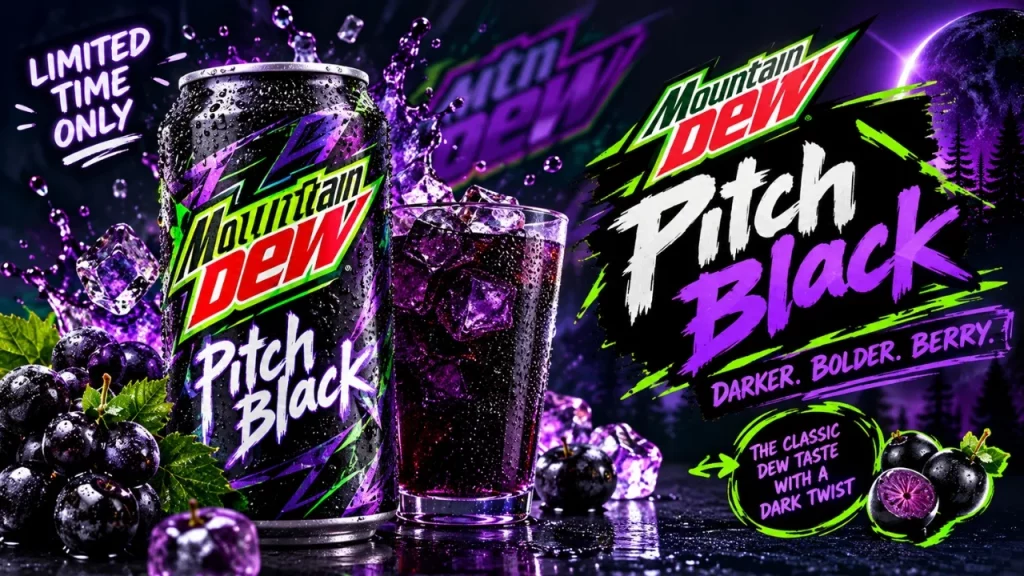
Ever wondered what’s actually inside that inky purple can before you commit a whole case to your shelves, or your fridge, to it?
Citrus grape flavour and space-themed artwork tell you what Mountain Dew Pitch Black looks and tastes like, and the Booker-first rollout tells you when you might see it. Neither answers the two questions most shoppers and retailers actually ask at the point of purchase: what is this doing to my sugar and caffeine intake, and is it worth stocking up on before it possibly disappears again. Those are the gaps worth closing.
1. What kind of drink Pitch Black actually is
Strip away the colour and the branding and Pitch Black has, in every market it has appeared in before, been built on the same carbonated base as standard Mountain Dew. It is not an energy-drink reformulation, and it has never been sold as a performance or “extra caffeine” product. The grape-citrus flavouring and the near-black colour are the novelty; the underlying soft drink is Mountain Dew with a different flavour shot and colourant added to the usual citrus base.
That matters because it sets expectations correctly. Shoppers picking this up expecting something closer to an energy shot are likely to be disappointed, or relieved, depending on what they’re after. It sits in the same category as the standard can: a sweet, heavily carbonated citrus soda, just a darker and fruitier one.
2. Calories and sugar: the honest comparison
Regular Mountain Dew in its classic US form has long been one of the sweeter mainstream sodas on the shelf, with a calorie and sugar count that sits noticeably above a typical cola of the same size. UK Mountain Dew has for some years been formulated differently from the US version specifically to manage sugar content under domestic soft drinks tax rules, which means the UK can has generally carried less sugar than its American counterpart, often through a blend of sugar and sweeteners rather than sugar alone.
No UK nutrition panel for Pitch Black had been made public at the time of writing. Given its track record elsewhere, the safest working assumption for shoppers is that Pitch Black UK will mirror the sugar and calorie profile of standard UK Mountain Dew rather than introducing a separate, higher-sugar recipe just for this flavour. Anyone watching sugar intake closely should still check the can itself before drinking, since limited-edition flavours occasionally use different sweetening blends to balance out the fruitier taste.
3. Caffeine: what to expect and why it isn’t trivial
Mountain Dew as a brand has always carried more caffeine per serving than a typical cola, which is part of its identity as the “harder” soft drink on the shelf. Pitch Black has historically used the same caffeine level as the standard product it’s based on, rather than an elevated dose, because it has always been pitched as a flavour variant, not an energy variant.
For UK buyers comparing it against standard Mountain Dew sold here, or against energy-adjacent sodas on the same shelf, the practical takeaway is this: treat Pitch Black as caffeinated at roughly the same level as the regular can you already know, not as something stronger. If you’re caffeine-sensitive, timing it the same way you would a normal Mountain Dew is the sensible approach, rather than assuming the dark colour signals a dark-roast level of stimulant.
4. Regular formulation, not a zero-sugar launch
One detail worth spelling out plainly: nothing in the way Pitch Black has been marketed, in the UK or previously in the US, suggests this is a diet or zero-sugar variant. It has consistently launched as a full-sugar, full-calorie flavour sitting alongside the zero-sugar Mountain Dew range rather than inside it. Shoppers looking for a low-calorie purple soda should not assume Pitch Black fills that gap; it’s built to sit next to the regular can, not the diet one.
5. The US pattern: launched, loved, pulled, repeated
This is the piece of context almost entirely missing from the UK coverage so far. Mountain Dew Pitch Black is not a new idea dreamed up for this market. It has existed in the United States for roughly two decades, first appearing as a Halloween-season limited release in the mid-2000s and then vanishing from shelves once that selling window closed.
It did not stay gone. Pitch Black has resurfaced multiple times since, almost always timed around autumn, built real fan demand each time it reappeared, sold through its run, and was discontinued again. That stop-start pattern has repeated often enough that American soda enthusiasts treat its return as a seasonal event rather than a permanent addition to the Mountain Dew lineup.
The real story behind Pitch Black isn’t the colour of the liquid, it’s the pattern behind it: a flavour that keeps coming back because it keeps getting pulled, which means the sensible move is to treat any single run as temporary until the brand proves otherwise.
6. What that history means for UK buyers specifically
Given that pattern, UK shoppers and retailers should read this launch as a limited-run flavour unless Carlsberg Britvic says otherwise. The timing lines up with the US habit of treating Pitch Black as an autumn or Halloween-adjacent novelty rather than a year-round fixture, and a wider November rollout after an October exclusive fits a short, seasonal selling window rather than a permanent shelf reset.
That doesn’t mean it won’t come back. The US experience suggests the opposite: flavours this polarising tend to generate exactly the kind of social media buzz and repeat demand that brings them back after a gap. But it does mean anyone who finds a case they like should not assume they can restock in six months. Treat the current run as the one that matters.
7. The price-marked pack detail retailers actually need
Price-marked packs exist to do one job: print a recommended retail price directly on the pack so convenience retailers can sell with confidence without guessing at margin. For the 500ml cases arriving through Booker, that printed RRP is the number that determines shelf pricing in independent and symbol stores, not a generic “price-marked” label. Retailers stocking this should confirm the exact printed price with their Booker representative or wholesaler account before setting a shelf price, since price-marked packs are only useful if the shop price matches what’s printed on the can.
For shoppers, the price-marked pack is generally a reassurance rather than a catch: it signals the retailer isn’t expected to mark the price up beyond what’s printed, which tends to keep pricing more consistent across independent stores than it would be on a non-marked case.
8. If you’re not near a Booker store, or not in the UK at all
For shoppers outside Booker’s supplier network, the realistic options are patience or import. Wider UK retail distribution was set to follow the initial exclusive window, so high street supermarkets and other convenience chains becoming an option is plausible once that wider rollout begins. Specialist American-soda importers that already stock US Mountain Dew variants are the most likely route for anyone outside the UK, or anyone in the UK unwilling to wait, though imported stock typically carries a higher price and a US-formulated nutrition panel rather than the UK one.
None of that changes the core advice: check the can for the printed nutrition panel before assuming anything about sugar or caffeine, treat the flavour as a limited run based on its own history, and confirm the printed RRP before it sits on a shelf. The citrus grape flavour and the space-age tin will draw people in. Whether it stays depends entirely on how this run sells.

Tom Fletcher
The latest from the Australian and global BBQ scene — comps, cooks and culture.