McDonald’s vs. Chick-fil-A: Which Fast-Food Meal Has More Protein?
The 48g Double Quarter Pounder "wins" on paper, but a protein ceiling, sodium load, and full-meal math tell a different story.
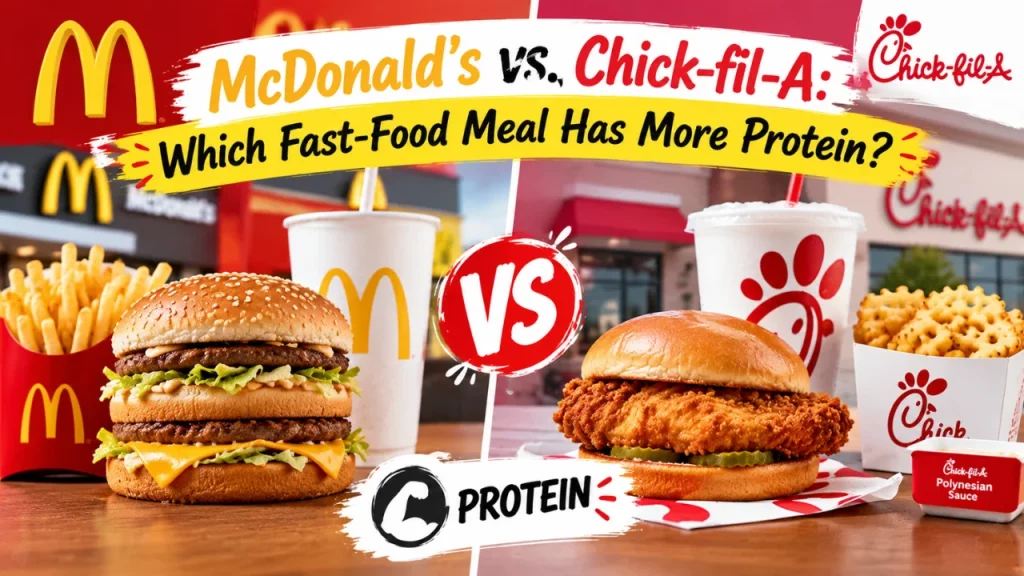
The assumption goes like this: more protein in one sitting is always better for building muscle, so whichever fast-food item has the highest gram count must be the smarter order. By that logic, McDonald’s Double Quarter Pounder with Cheese, at 48 grams of protein, beats anything Chick-fil-A sells outright. But the body doesn’t bank protein like a savings account, and neither chain’s “winning” item is eaten alone — it comes with fries, a drink, and a sauce. Once you run the full numbers, the answer to which meal actually gives you more usable protein changes.
- The body appears to have a per-meal limit on how much protein it can use for muscle-building, estimated around 20-40 grams depending on the protein source and meal composition — so several of those 48 grams may go unused for that purpose.
- Add typical sides, and McDonald’s Double Quarter Pounder meal delivers roughly 52g of protein for about 1,290 calories, while a Chick-fil-A grilled sandwich meal delivers roughly 43g for about 1,020 calories — a smaller protein gap than the single-item comparison suggests.
- The Double Quarter Pounder alone carries 1,360mg of sodium and 20g of saturated fat, figures that matter more to someone managing blood pressure or heart disease risk than the extra 10 grams of protein does.
- Whether “protein per calorie” or “total protein” is the better goal depends on whether you’re trying to lose weight or build muscle — and the two goals point toward different orders.
So which meal actually has more protein?
Item for item, McDonald’s Double Quarter Pounder with Cheese (48g protein) beats Chick-fil-A’s leanest high-protein sandwich option (about 38g protein) by 10 grams. That much is simple arithmetic. But “more protein” and “more usable protein for muscle” are not the same question, and once sides enter the picture, the gap narrows considerably — sometimes to the point of being irrelevant for a meal-by-meal decision.
Does your body even use all 48 grams?
Muscle protein synthesis doesn’t scale endlessly with how much protein you eat in one sitting. A review of controlled feeding studies on per-meal protein limits for muscle-building found that roughly 20-25 grams of fast-digesting protein eaten alone maximizes the muscle-building response in young adults; amounts beyond that are largely burned for energy or converted to urea rather than built into tissue. The same review noted that protein eaten alongside fat and carbohydrates — exactly what happens in a fast-food meal — digests more slowly, which can push the useful ceiling higher, plausibly into the 30-40 gram range.
That matters directly here. A 2016 analysis of U.S. adults aged 50-85 using national health survey data found that people who ate at least 30 grams of protein in a single meal, at least once a day, had meaningfully greater leg lean mass and knee strength than those who never hit that threshold in a sitting — and getting two such meals a day was associated with an even bigger difference. The practical takeaway: both the 48g Double Quarter Pounder and the 38g Chick-fil-A sandwich clear the 30-gram bar that actually seems to matter. The extra 10 grams from McDonald’s may still help on the margin, especially as a slower-digesting mixed meal, but it isn’t the decisive muscle-building advantage the raw number implies.
What happens once you order the whole meal
Nobody eats a burger patty by itself. Add a medium fries and a medium soda to the Double Quarter Pounder, and the meal lands around 52g of protein for roughly 1,290 calories. Add waffle fries and a lemonade to Chick-fil-A’s grilled sandwich, and you get roughly 43g of protein for about 1,020 calories.
| Full meal | Protein | Calories |
|---|---|---|
| McDonald’s Double Quarter Pounder + fries + soda | ~52g | ~1,290 kcal |
| Chick-fil-A grilled sandwich + waffle fries + lemonade | ~43g | ~1,020 kcal |
McDonald’s still edges ahead on total grams, but the Chick-fil-A meal delivers more protein per calorie — a difference that matters enormously if you’re also watching calorie intake, and barely at all if you’re not.
The sodium and saturated fat the protein number hides
The Double Quarter Pounder’s 1,360mg of sodium is more than half of the 2,300mg daily ceiling most adults are advised not to exceed, and well above the roughly 1,500mg limit often recommended for people managing high blood pressure. Its 20g of saturated fat is close to the entire daily allowance many guidelines suggest for someone eating 2,000 calories a day. A cross-sectional study of nearly 2,000 Iranian adults found that higher fast-food consumption tracked with higher intakes of energy, fat, saturated fat, cholesterol, and sodium — an observational finding, not proof that any single meal causes harm, but a reminder that the trade-off is real for people who eat this way regularly. Anyone managing hypertension, existing heart disease, or high cholesterol has a legitimate reason to pick the lighter sandwich regardless of the protein count.
The sandwiches both chains’ simple comparisons skip
Chick-fil-A’s classic fried chicken sandwich — not the grilled one, not the nuggets — comes in at roughly 28g of protein for about 440 calories with around 1,400mg of sodium, putting its protein-per-calorie ratio between the Double Quarter Pounder and the grilled sandwich. McDonald’s non-crispy Grilled Chicken Sandwich sits in a similar middle zone: lean, moderate in protein, and notably lower in saturated fat than the beef option. Neither is the headline number from either menu, but both are realistic everyday orders worth knowing if you’re not chasing a maximum.
Muscle-building versus weight loss: the answer changes
If the goal is building or preserving muscle, total protein per meal (as long as it clears roughly 30g) matters more than calorie efficiency — pick whichever sandwich fits your day’s budget. If the goal is weight loss, protein-per-calorie matters more. A review of randomized trials found that higher-protein meals increase satiety and modestly reduce food intake afterward, and a controlled trial of 148 adults found that extra daily protein (48.2g/day) helped prevent weight regain after a diet-induced weight loss. Neither study found calorie-dense beef specifically responsible for those effects — the benefit came from protein density, something the leaner Chick-fil-A option delivers more efficiently per calorie.
Quick tip: if you’re ordering for muscle-building, don’t chase the single highest-protein item on the board — just confirm your meal clears roughly 30 grams of protein, then let sodium, saturated fat, and your calorie goals for the day decide between the two chains.
What to do with this at the counter
For muscle-building on a typical training day, either meal works — both exceed the per-meal threshold the research associates with better strength and lean mass outcomes, so the Double Quarter Pounder’s extra 10 grams isn’t the deciding factor. For weight management, the leaner grilled option wins on protein-per-calorie efficiency. For anyone with blood pressure or cardiovascular concerns, the Double Quarter Pounder’s sodium and saturated fat load are reasons to choose the lighter sandwich regardless of what the protein label says.
Sources
- Tehran Lipid and Glucose Study on fast food consumption and cardiovascular risk factors (2012)
- High protein diets, thermogenesis, satiety and weight loss: a critical review (2004)
- How much protein can the body use in a single meal for muscle-building? (2018)
- Per meal dose and frequency of protein consumption and lean mass/muscle performance (2016)
- High protein intake sustains weight maintenance after weight loss (2004)

James Carter
The EverBBQ editorial desk — covering BBQ news, features and everything off the grill.