Lentils vs. Chickpeas vs. Black Beans: Which Legume Has the Most Protein and Fiber?
Protein and fiber are nearly tied — the real split between lentils, chickpeas, and black beans is blood sugar, gas, and kidney risk.
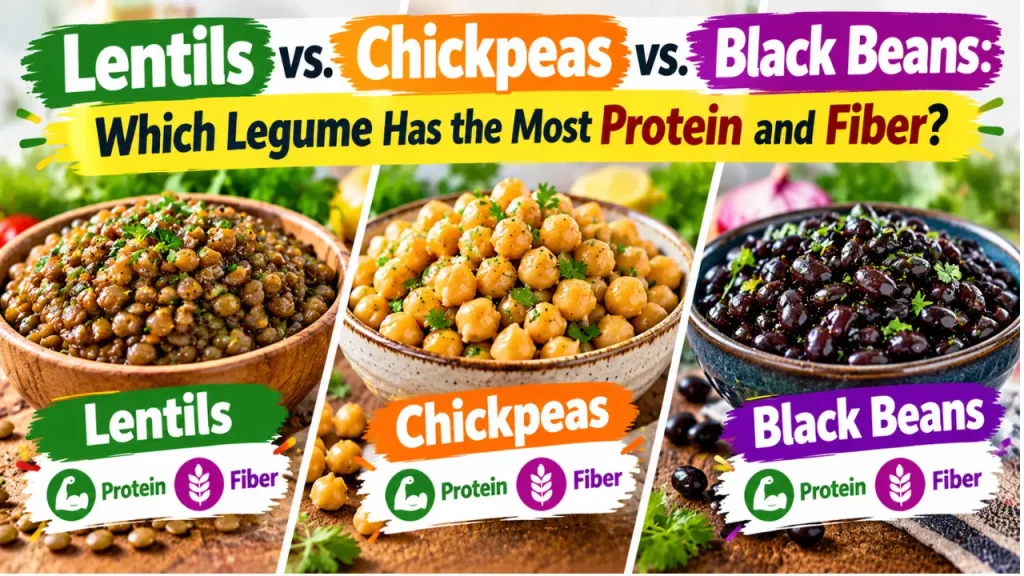
If you had to pick one legume to eat for the next year, would you choose based on a nutrition label or based on how your body actually handles it afterward? Protein and fiber numbers only tell you what’s on the plate — they don’t tell you what happens two hours later, or whether that plate is a good idea for your kidneys.
So which legume actually has the most protein and fiber?
None of them wins by a wide margin on protein, and black beans generally take fiber, but the gap is small enough that it shouldn’t drive your choice. Cooked lentils deliver 9.02 g of protein and 7.9 g of fiber per 100 g, alongside 19.5 g of carbohydrate and 114 kcal, according to USDA FoodData Central’s lentil nutrient profile. Chickpeas and black beans land close behind on protein (roughly 8–9 g per 100 g cooked, as is well established), with black beans typically edging ahead on fiber. That tie is exactly why the more useful question isn’t “which has more,” it’s “which behaves better for your specific situation.”
Which one keeps blood sugar the steadiest after a meal?
Chickpeas have the best-documented, lowest glycemic response of the three. A 2024 trial measuring real postprandial blood glucose in healthy adults found freshly cooked chickpea pasta had a glycemic index of 39, and that cooling it for 24 hours and reheating it dropped the GI further to 33 — a meaningful shift caused by resistant starch rising from 1.83 g to 3.65 g per 100 g, confirmed by the chickpea pasta cooking and cooling study. A broader review of cereal- and legume-based bakery products found legume-containing foods consistently scored in the 40–50 GI range compared with 55–80 for cereal-only versions, and that swapping in legumes could cut a product’s glycemic index by up to 25%, per the review of glycemic impact in cereal and legume bakery products. Lentils and black beans don’t have comparable controlled test-meal numbers in the current research, but both are built on the same fiber-plus-resistant-starch chemistry that drives chickpeas’ low GI, so they’re reasonable low-GI bets even without an identical head-to-head trial. For people managing diabetes specifically, a network meta-analysis of breakfast composition trials found macronutrient mix — not any single food — shapes next-hour glucose control, underscoring that pairing any of these legumes with the right breakfast matters as much as which legume you pick, according to the systematic review of breakfast macronutrients and glycemic control. Separately, an 8-week randomized trial in people with type 2 diabetes found that swapping red meat for non-soy legumes several times a week caused no adverse shift in fasting glucose, insulin, or HbA1c, suggesting legumes are a safe glucose-neutral substitution rather than a risky one, per the trial comparing red meat and legume intake in type 2 diabetes.
Which legume is gentlest on the gut?
Lentils tend to cause less gas than chickpeas or black beans because they carry a smaller load of the fermentable oligosaccharides (the “FODMAP” sugars) that resist digestion in the small intestine and get fermented by gut bacteria further down. Chickpeas and black beans both carry a thicker skin and denser oligosaccharide content, which is part of why they’re more commonly flagged by people with sensitive digestion or IBS. Canning helps regardless of legume: much of the problematic soluble sugar leaches into the canning liquid during processing, so draining and rinsing canned chickpeas or black beans removes a real portion of what would otherwise ferment in your gut. If gas is your main concern, lentils dried-and-cooked at home are the safest starting point, canned chickpeas or black beans (rinsed well) are the middle ground, and dried chickpeas or black beans cooked in their own soaking liquid are the most likely to cause discomfort.
Which legume is safest if you’re prone to kidney stones or gout?
If calcium oxalate stones are your concern, portion control matters more than picking a “safe” legume, because all plant foods contribute to a dietary oxalate load that your body already produces on its own. A literature review on dietary oxalate found the body generates roughly 10–25 mg of oxalate daily through normal metabolism, independent of food, and that around 80% of kidney stones are calcium oxalate, meaning diet is one lever among several rather than the sole cause, according to the review of dietary oxalates and kidney inflammation. That same review notes cooking and preparation methods can help denature food oxalates, which is one more argument for well-cooked, well-drained legumes over raw or lightly processed ones if stones are a recurring issue. For gout and purine sensitivity, the evidence base specifically comparing lentils, chickpeas, and black beans is thin — legumes as a food group are generally considered moderate-purine plant foods, but there isn’t strong comparative data singling one of these three out as meaningfully worse, so this shouldn’t be the deciding factor unless your doctor has told you otherwise.
Which legume pairs best with grains for complete protein?
Lentils bring more lysine to the table, which matters because lysine is the amino acid grains like rice and wheat are shortest on. All three legumes are already known to run low on methionine, so none is a “complete” protein alone — but because lentils skew higher in lysine relative to the others, pairing lentils with a grain-heavy dish (rice and dal, lentils with bread) closes the amino acid gap a little more efficiently than relying on chickpeas or black beans for that same pairing.
Dried or canned — which actually stretches further?
Dried lentils are the fastest-cooking of the three, often ready in well under half an hour with no soaking, which makes them the practical choice when you want home-cooked legumes without planning a day ahead. Dried chickpeas and black beans both typically need an overnight soak and a longer simmer, so canned versions of those two make more sense on busy weeknights, with the rinse step doing double duty — cutting sodium and reducing the gas-forming sugars discussed above.
So which legume should you actually choose?
If blood sugar control is your top priority, lean on chickpeas, especially cooked-and-cooled preparations given their measured low GI. If gut comfort is the priority, choose lentils first and treat canned, rinsed chickpeas or black beans as your backup. If you’re managing kidney stones, don’t single out one legume — control total portions and favor well-cooked batches. If you’re pairing legumes with rice or bread for protein quality, lentils have a slight edge through their lysine content. There’s no single winner here — there’s a right legume for the specific problem you’re trying to solve.
Sources
- USDA FoodData Central — Lentils, cooked (2024)
- Cooking and cooling chickpea pasta: resistant starch and glycemic index (2024)
- Breakfast macronutrient composition and glycemic control: systematic review (2026)
- Glycemic impact of cereal and legume-based bakery products (2024)
- Dietary oxalates and kidney inflammation: literature review (2024)
- Red meat vs. soy/non-soy legume in type 2 diabetes (2021)

Mick Hudson
Low-and-slow recipes, rubs, sauces and fire management from our pitmaster team.