Jollibee: The Fast Food Chain Serving America’s Favorite Fried Chicken
A reader poll crowned Chickenjoy America's best fried chicken — but the voting math, not the chicken, explains the win.
A chicken sandwich poll is not a chicken taste test, and treating the two as the same thing is the mistake almost everyone makes.
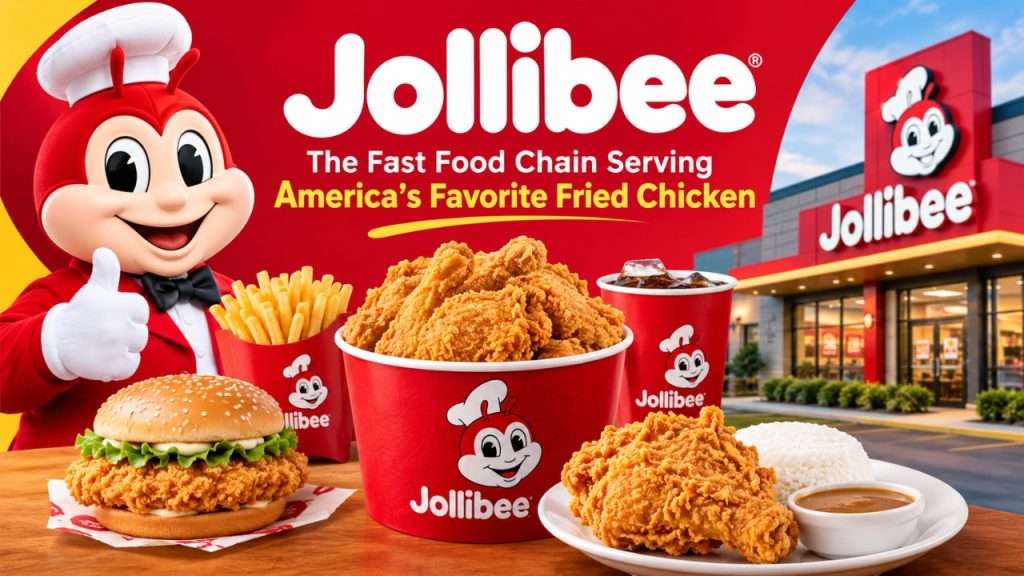
Picture the line at a Jollibee counter on a Saturday afternoon: families ordering in Tagalog and English in the same breath, a toddler pointing at the grinning bee mascot, a tray arriving with a glistening piece of fried chicken, a mound of white rice, and a small cup of gravy. Nobody at that counter is thinking about a nationwide reader poll. But that poll is exactly why a chain with a small American footprint keeps getting called the best fried chicken in the country, and almost nobody explains why that claim means something different than it sounds like it means.
What Jollibee Actually Is
Jollibee is a Filipino fast food company, founded in the Philippines, that has expanded into the United States with a menu built around Chickenjoy, its fried chicken centerpiece, served alongside rice, gravy, spaghetti with a sweetened sauce, and burgers. It is still a modest presence on the American fast food map compared with the drive-thru giants, but it has become a gathering point for Filipino-American communities and a curiosity for everyone else. The headline claim driving its recent wave of attention is simple: a USA TODAY readers’ poll has repeatedly ranked Chickenjoy above Popeyes and KFC. What almost no coverage of that result stops to unpack is how that kind of ranking is produced, and what it can and cannot tell you about the chicken itself.
How a Popularity Contest Actually Works
A 10Best-style contest is not a scientific survey and it is not a blind comparison. It typically starts with a small panel of editors or experts nominating a shortlist of contenders, after which the contest opens to the public, and anyone can vote for their favorite from that shortlist, often once per day, for several weeks. That single detail, the ability to vote repeatedly over an extended window, changes everything about what the result measures. A contest like this does not ask whether Chickenjoy tastes better than Popeyes to the average American palate. It asks which brand’s fans are more willing to return to a voting page day after day and click a button. Those are not the same question, even though headlines routinely treat them as interchangeable. A chain with a smaller footprint but a passionate, organized fan base can out-vote a chain with ten times the locations, simply because turnout, not coverage or consumption, is what the format rewards.
Why the Diaspora Shows Up
This is where Jollibee has a structural advantage that has nothing to do with the chicken’s seasoning. Filipino-American communities are large, geographically concentrated in several metro areas, and digitally connected in ways that make coordinated voting easy. When a hometown brand is on a national ballot, community groups, social media pages, and family group chats can turn a modest poll into a rallying point in a way that a brand with broader but more passive customer loyalty struggles to match. Popeyes and KFC have enormous numbers of customers, but most of those customers never think of themselves as part of a fan community defending the brand’s honor online. That asymmetry, a small but intensely mobilized base against a large but diffuse one, is a well-known pattern in open internet voting of any kind, and it is a far more plausible explanation for Chickenjoy’s repeat wins than any claim about blind flavor superiority.
What’s Actually on the Plate
So does the chicken actually differ from its competitors in any measurable way? In preparation, yes, noticeably. Chickenjoy is battered and fried to a profile that leans sweeter and less aggressively salted than the typical American Southern-style bird, and it is almost always served with a side of gravy and steamed rice rather than alone or with a biscuit. KFC’s Original Recipe leans on its herb-and-spice blend fried in a thinner crust, Popeyes is built around a spicier, more heavily seasoned Louisiana-style breading, and Chick-fil-A’s chicken, mostly sold as sandwiches and tenders rather than bone-in pieces, is brined and fried in peanut oil with a milder, slightly sweet crust of its own. Exact calorie, sodium, and protein figures per piece vary by cut, by whether it’s a breast, thigh, wing, or drumstick, and by regional menu differences, so rather than inventing numbers that don’t hold up across markets, the honest takeaway is this: fried, breaded chicken from any of these four chains is a calorie-dense, high-sodium food, and none of them should be mistaken for a lean protein choice. If sodium or calorie count per piece matters to your decision, the only reliable move is to check each chain’s own published nutrition information for the specific cut you’re ordering, because a wing and a breast from the same restaurant can differ sharply.
A Poll Is Not a Palate
No part of the 10Best process involves a blind taste test, a trained sensory panel, or any controlled comparison where tasters don’t know which chicken they’re eating. That matters enormously, because brand recognition and emotional attachment are proven to change how food tastes to people even when the food itself is identical. A fan who grew up eating Chickenjoy at family parties is not a neutral taster, and neither is a lifelong Popeyes customer. The poll measures enthusiasm and turnout, not blind preference, and no credible sensory research exists to confirm that Chickenjoy would beat its rivals in a side-by-side tasting where nobody knew the logos on the box.
Who This Ranking Is Not For
All of this points to a simple, useful distinction nobody else spells out. If you’re a diaspora customer, or someone who already loves Jollibee’s sweeter, gravy-and-rice style of fried chicken, this ranking confirms something you already know and the community turnout behind it is a genuinely interesting cultural story. But if you’re a newcomer trying to decide which chicken is objectively better by taste, saltiness, crunch, or heat, this poll tells you almost nothing reliable. It cannot guide someone who prefers a sharply seasoned, standalone bucket-and-biscuit eating experience over a milder piece of chicken meant to be eaten with rice and gravy, because that comparison was never actually tested. The ranking is a mirror of who showed up to vote, not a verdict on whose fryer is better.
Back at the Counter
Back at that Jollibee counter, the tray still looks the same regardless of what any poll says: chicken, rice, gravy, a family deciding where to sit. The three-year winning streak didn’t change the recipe and it didn’t run a blind test against KFC or Popeyes. What it did was prove that a devoted, well-organized community can out-vote a much bigger footprint, which is a real story about loyalty and identity. It just isn’t the story about chicken that the headlines keep implying it is.

James Carter
The EverBBQ editorial desk — covering BBQ news, features and everything off the grill.