How to Make Fresh Orange Juice Without a Juicer: 5 Easy Methods
Squeezing and blending both make juice without a juicer, but they produce different drinks — here's the honest trade-off nobody spells out.
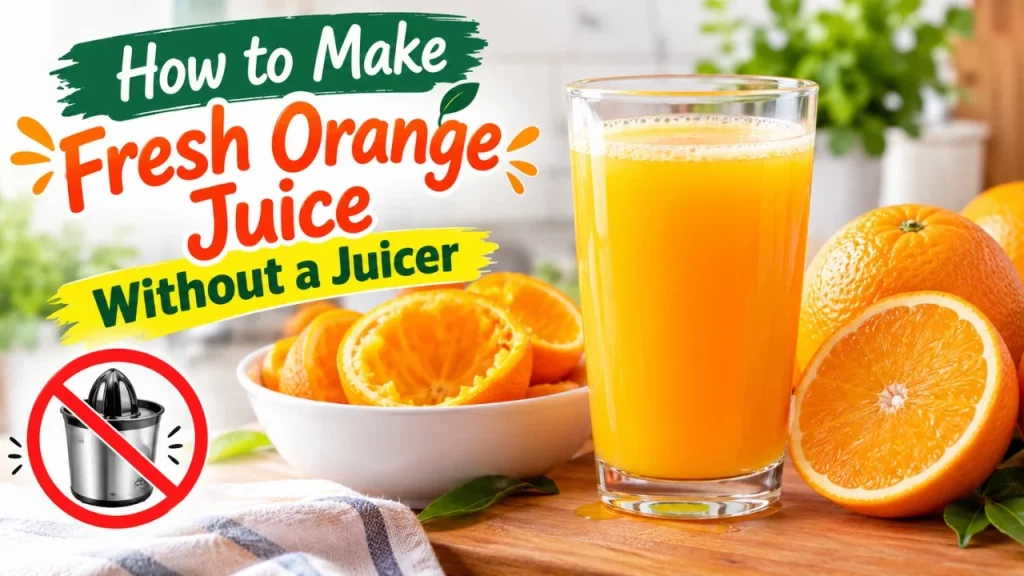
Which no-juicer method actually gets more usable juice out of an orange: the one where you squeeze with your bare hands, or the one where you blend the whole fruit and strain it afterward? Most guides answer that question by simply listing five techniques side by side, as if they were interchangeable. They aren’t, and the differences matter more than the instructions suggest.
Here are the five workable methods, in brief: squeezing halved oranges by hand; twisting a fork into the cut flesh and working it like a makeshift reamer; pressing with tongs or the back of a sturdy spoon for extra leverage; rolling the whole orange firmly on a counter before cutting and squeezing to loosen the juice sacs; and blending peeled segments, then straining the pulp through a sieve or cloth. All five will get juice out of an orange without any special equipment. What almost nobody explains is that they split into two genuinely different approaches with different results, and picking the wrong one for your goal is the real reason people end up disappointed.
The squeeze-only methods: hand, fork, tongs, rolling
Hand squeezing and its variants — fork-twisting, tong-pressing, pre-rolling the fruit — all share one mechanism: you are physically forcing juice out of intact juice sacs while leaving the membranes, pith, and seeds behind. This is the same basic action a manual reamer performs, just with less mechanical advantage, which is why your forearm tires out before the orange is empty.
The upside is texture. Juice extracted this way looks and tastes like juice: thin, clear-ish, with floating pulp if you want it or none if you strain lightly. It oxidizes gradually, the way juice from a reamer does, because the fruit’s cell structure is only broken where you’ve applied direct pressure.
The downside is yield and effort. Because you’re relying on finger and wrist strength rather than a lever or blade, a meaningful amount of juice stays trapped in sacs near the rind, especially in oranges with thicker pith. Rolling the orange before cutting helps, because it ruptures some internal juice vesicles mechanically, but it’s a modest improvement, not a transformation. Tongs and spoon-pressing add leverage and reduce hand fatigue, but they don’t change the fundamental limit: you’re squeezing, not pulverizing.
The blend-and-strain method
Blending takes the opposite approach. You peel the orange, removing most of the bitter white pith, then blend the segments — seeds removed — until they’re liquefied, and pour the result through a sieve, nut-milk bag, or cheesecloth to separate out the fibrous pulp. Because a blender shreds the fruit’s cell walls completely rather than just pressing on them, it releases far more of the liquid trapped inside the segments, including juice that hand-squeezing simply cannot reach.
That’s the real advantage, and it’s the one other articles tend to understate: blending is a higher-yield method, not just an alternative one. The trade-off is in what comes along with that juice. Blending incorporates more air into the liquid than squeezing does, which speeds up oxidation and browning, so blended juice tends to separate and dull in color faster if it sits. It also pulls some bitterness from any pith left clinging to the segments, which is why careful peeling matters more here than in squeeze methods, where pith is simply never pressed. And no amount of straining removes every trace of fine pulp, so the texture sits somewhere between juice and a thin smoothie unless you strain twice.
The real choice isn’t which method is easier — it’s whether you want a drink that behaves like juice or one that behaves like a thin smoothie, because no amount of technique makes squeezing and blending produce the same thing.
| Factor | Squeeze methods (hand, fork, tongs, rolling) | Blend-and-strain method |
|---|---|---|
| Juice yield from each orange | Lower — juice trapped near the rind and in dense pith is largely left behind | Higher — cell walls are fully broken, releasing juice hand pressure can’t reach |
| Texture | Clear to lightly pulpy, close to reamer-pressed juice | Thin-smoothie texture unless strained more than once |
| Bitterness risk | Low, since pith is never pressed | Higher if any white pith is blended in with the flesh |
| Speed of oxidation and browning | Slower, less air incorporated | Faster, blending whips in more air |
| Physical effort | Higher per orange, especially for large batches | Lower per orange, but requires cleanup of blender and strainer |
| Equipment needed | Just a knife and hands, or a fork/tongs/spoon | Blender plus a sieve, cloth, or nut-milk bag |
| Best suited to | A single glass, or when you want traditional juice texture | Batches, or when maximizing yield matters more than clarity |
There’s a practical detail both camps tend to skip: ripeness changes which method works better. A very ripe, thin-skinned orange gives up its juice easily to hand squeezing because the juice sacs are already softened, so the gap between squeezing and blending narrows. A firmer, thicker-skinned orange — common with some winter varieties — resists hand pressure much more, and that’s exactly when blending’s higher yield becomes most noticeable. Choosing a method without accounting for the fruit in front of you is how people end up concluding a technique “doesn’t work,” when really it just wasn’t suited to that orange.
Temperature matters too, in a way recipe lists rarely mention. Oranges at room temperature release juice more readily under pressure than cold ones straight from the refrigerator, because chilled fruit is firmer and its juice sacs are less pliable. A few minutes on the counter, or a very brief roll under your palm, does more for squeeze methods than most people assume, and costs nothing.
Quick recap
- Hand squeezing, fork-twisting, tong-pressing, and pre-rolling are all variations on the same squeeze mechanism, with similar texture and similar built-in yield limits.
- Blending peeled segments and straining the result extracts more juice per orange, but adds oxidation speed, bitterness risk, and a softer texture.
- Thicker-skinned, firmer oranges favor blending; very ripe, thin-skinned oranges narrow the gap between the two approaches.
- Letting cold oranges warm slightly, or rolling them before cutting, meaningfully improves squeeze-method yield at no cost.
- No juicer-free method matches a dedicated juicer or reamer for yield-to-effort ratio, but blending comes closer than squeezing does.
If the goal is a single glass of juice with proper juice texture and minimal fuss, squeezing by hand — helped along by a fork or tongs for leverage — is the better pick, and rolling the orange first is worth the ten extra seconds. If the goal is making the most juice possible from a bag of oranges, especially firmer ones, blending and straining wins on yield even though it costs you some clarity and a faster trip to the browning stage. There’s no single best method here, only a best method for what you actually want the juice to be.

Tom Fletcher
The latest from the Australian and global BBQ scene — comps, cooks and culture.