Hemp Seeds vs. Pumpkin Seeds vs. Watermelon Seeds: Which Has the Most Protein?
The real answer depends on how you eat these seeds, not just what a nutrition label says per ounce.
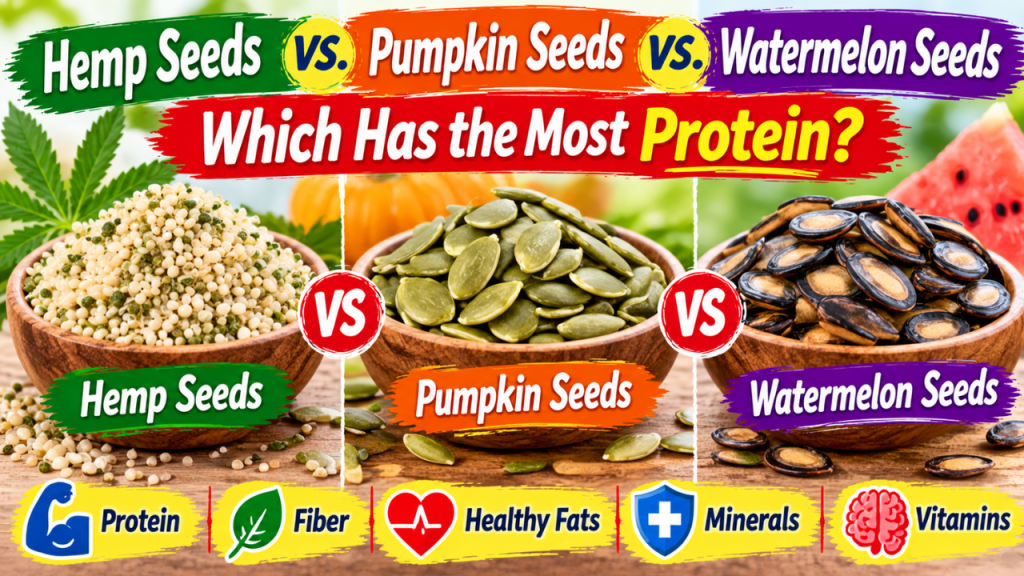
You’re standing in a bulk-bins aisle, scoop in one hand, three open bins in front of you. Hemp hearts, pepitas, and a small bag labeled “watermelon seeds, shelled.” A stranger next to you is doing the same math you are: which one actually gives you the most protein for your money and your smoothie bowl?
Here’s the short answer first, because you shouldn’t have to read ten paragraphs to get it: among these three, hemp seeds and pumpkin seeds are consistently the top performers for protein, and they tend to land close to each other, with watermelon seeds not far behind in many preparations. But that sentence hides almost everything useful. The real story is in the details nobody bothers to explain.
The part everyone skips: “seeds” isn’t one product
Walk into three different stores and you’ll find watermelon seeds sold whole and roasted in the shell, or hulled and sold as a pale green kernel. Pumpkin seeds show up the same way — in the shell as a snack, or hulled as pepitas for salads. Hemp seeds are almost always sold hulled, as “hemp hearts.”
This matters enormously, because protein content is usually reported per the edible kernel, not the shell. If you’re comparing a whole roasted watermelon seed you crack with your teeth to a spoonful of shelled hemp hearts, you are not comparing the same thing. A lot of the “which seed wins” articles quietly assume everyone is eating the hulled version of everything. Most people aren’t.
Why the comparison usually ignores how much you actually eat
Protein-per-ounce numbers assume you eat seeds in ounce-sized portions. Nobody does. A sprinkle of hemp hearts on oatmeal might be a tablespoon. A handful of roasted pumpkin seeds at a ballgame might be three or four times that. Watermelon seeds, because they’re small and often eaten shell-on, get consumed more slowly and in smaller effective amounts, even when the bag looks generous.
So the honest way to think about this isn’t “which seed has the highest protein density,” it’s “which seed are you realistically going to eat enough of, often enough, for the density to matter.” A seed that technically wins on paper but that you use a pinch of twice a month isn’t doing much for your protein intake. A seed you eat by the handful most days, even if it’s technically a bit lower in protein, will outperform it in real life.
The quality question nobody puts in the headline
Protein quantity is only half the picture. The other half is amino acid completeness — whether a food supplies all the essential amino acids your body can’t make on its own.
Hemp seeds have a reputation, deserved by most accounts, for offering a relatively complete amino acid profile, which is part of why they get singled out in vegan and plant-based protein conversations. Pumpkin seeds and watermelon seeds are still solid protein sources, but they tend to be a little lower in certain amino acids, particularly lysine, which is common across many seeds and nuts. In practice, this mostly matters if seeds are a major chunk of your total protein intake rather than a topping. If you’re eating a varied diet with legumes, grains, dairy, or meat, these gaps close themselves out over the course of a day without you doing anything deliberate.
Fat, fiber, and the stuff riding along with the protein
All three of these seeds are energy-dense. They carry a meaningful amount of fat alongside their protein, mostly unsaturated fat, which is one reason a small serving fills you up more than you’d expect. Pumpkin seeds and hemp seeds are also notable sources of magnesium and zinc, two minerals a lot of people fall short on. Watermelon seeds get less attention nutritionally, partly because they’re eaten in smaller amounts and partly because fewer people seek them out as a dedicated snack rather than a rind-adjacent oddity.
Quick tip: if your goal is protein, don’t just ask which seed wins on a label — ask which one you’ll actually use daily, in a real portion, in something you already eat. A tablespoon of hemp hearts stirred into yogurt every morning will beat an occasional handful of pepitas you forget you bought.
A side-by-side you can actually use
| Seed | Typical form sold | Protein standing | Amino acid completeness | Common everyday use |
|---|---|---|---|---|
| Hemp seeds | Hulled “hearts” | Among the highest of the three | Relatively complete | Sprinkled on yogurt, oatmeal, smoothies |
| Pumpkin seeds | Hulled (pepitas) or in-shell | Close to hemp, sometimes higher depending on roasting and brand | Good, slightly lower in some amino acids | Salad topping, roasted snack |
| Watermelon seeds | Hulled or whole roasted | Solid but less consistently reported | Good, similar limitations to pumpkin | Snack, less common as a daily add-in |
Notice what’s missing from that table: exact gram figures. That’s deliberate. Seed protein content shifts with roasting method, brand, moisture content, and whether you’re looking at raw versus roasted, shelled versus unshelled — enough that a single number thrown around without those details is more marketing than nutrition.
The question that actually matters more than “which wins”
If you zoom out, the real decision isn’t a protein cage match. It’s about which seed fits into your actual eating pattern without friction. Hemp hearts dissolve into a smoothie with zero effort. Pumpkin seeds survive being carried in a bag to work. Watermelon seeds take more patience, whether you’re cracking shells or just remembering they exist in your pantry.
None of these seeds are going to replace a serious protein source like eggs, beans, fish, or poultry. They’re additions, not foundations. Treating them like a competition misses the point of how people actually eat.
The takeaway: hemp and pumpkin seeds are generally your best bets for protein among the three, with watermelon seeds a reasonable but less convenient option — but the seed that helps your diet most is the one you’ll actually keep eating, in a real portion, week after week.

Mick Hudson
Low-and-slow recipes, rubs, sauces and fire management from our pitmaster team.