Greek Yogurt vs. Cottage Cheese: Which Has More Protein per Serving?
Cottage cheese often wins on grams, but digestion speed, satiety, and health conditions decide which one your body actually needs.
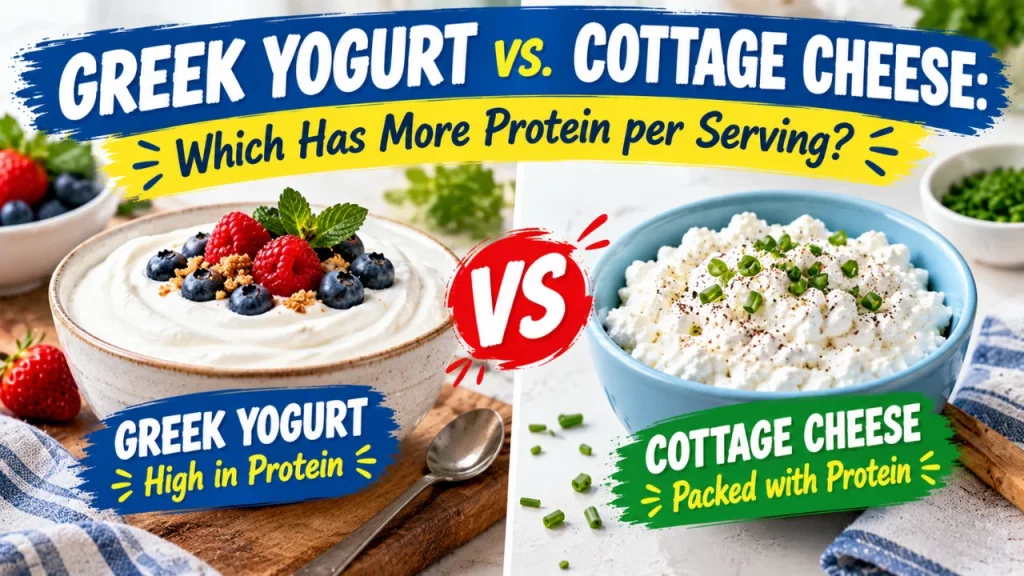
Which matters more to your muscles, your appetite, and your blood pressure: the number on the nutrition label, or how fast your gut actually processes that protein? That question gets skipped in almost every cottage cheese versus Greek yogurt comparison, and it’s the one that should actually decide what ends up in your bowl tonight.
1. The headline number, settled quickly
Per 100 grams, cottage cheese generally edges out Greek yogurt in protein, though by how much depends heavily on the brand you grab. Once you adjust for the fact that a typical cottage cheese serving is often smaller than a tub of Greek yogurt, the real-world gap narrows. Sodium and calcium differences between the two have been hashed out elsewhere; the more useful question is what happens after you swallow either one, and that’s where the two foods genuinely diverge.
2. Why the protein numbers you see never seem to agree
If you’ve noticed one label says 11 grams and another says 12.4 grams for what looks like the same serving, you’re not imagining it. Cottage cheese protein content shifts with curd size, how much whey is drained off during production, and whether the brand adds extra milk protein concentrate to thicken the curd. Greek yogurt varies too, based on straining time and the specific live culture strains used, since different bacterial strains ferment lactose and process milk proteins at different rates. Sodium swings for the same reason: draining method and added salt for shelf life vary by manufacturer, which is why you’ll see figures anywhere from roughly 320 to over 400 milligrams per serving depending on the brand. None of this means the labels are wrong; it means “cottage cheese” and “Greek yogurt” are categories, not single standardized foods.
3. Casein versus fermented protein: a real digestion-speed difference
Cottage cheese’s protein is dominated by casein, the same slow-digesting milk protein used in most lab studies on protein absorption. In one controlled study, researchers fed healthy men a 35-gram bolus of casein and tracked how quickly its amino acids showed up in the bloodstream and muscle tissue over six hours, comparing young and elderly adults; both groups showed a steady, gradual rise rather than a quick spike, and the postprandial muscle protein synthesis response did not differ by age in that trial, according to research comparing casein digestion in young and elderly men. That slow, sustained amino acid release is casein’s defining trait.
Greek yogurt still contains a lot of casein too, but fermentation and the remaining whey fraction change its behavior somewhat, and live cultures partially pre-digest proteins during fermentation. A separate trial using 25 grams of casein delivered directly into the small intestine versus the stomach found that bypassing the stomach produced faster protein digestion and quicker amino acid absorption, according to a study comparing jejunal and gastric casein feeding, confirming that where and how casein is broken down changes its absorption speed considerably, not just its raw digestibility.
4. Does faster or slower digestion actually matter for muscle?
Partially predigested protein does move faster. In one trial, a hydrolyzed casein bolus produced a 27% higher exogenous phenylalanine appearance rate in the blood compared with the same amount of intact casein, according to research on hydrolyzed versus intact casein digestion. A broader review of milk- and soy-based proteins notes that different protein types produce different amplitude and duration of muscle protein synthesis after eating, which is the mechanistic reason “fast” and “slow” proteins get recommended for different times of day, per a review on milk and soy protein’s role in muscle protein synthesis. Worth noting: a rat study found casein’s true digestibility sat around 95 to 96%, with only small shifts based on age and body fat, according to animal research on casein digestibility and aging — a small, non-human data point, not direct evidence about dairy snacks in people, but consistent with casein’s reputation for being thoroughly, if gradually, absorbed.
5. Post-workout versus before bed: what the digestion speed actually suggests
Here’s the practical takeaway from that research: cottage cheese’s slow, casein-dominant release makes it a reasonable bedtime choice, since you want a steady trickle of amino acids into the bloodstream overnight rather than a fast spike you’ll burn through before you wake up. Greek yogurt’s partially fermented protein and live cultures make it a slightly better pre- or post-workout option when you want amino acids available sooner rather than later, though the difference between the two is a matter of degree, not an on/off switch — both are still mostly casein.
Quick tip: if you’re training in the evening and eating close to bedtime, you don’t have to choose one or the other — a half-serving of Greek yogurt right after your workout followed by cottage cheese an hour or two before sleep uses each food’s digestion speed for what it’s actually good at.
6. Fullness isn’t just about the protein number
Grams of protein on a label don’t tell you how full you’ll feel two hours later. Slower-digesting casein keeps amino acids and the associated fullness signals trickling in over a longer window, which is part of why dense, casein-heavy cottage cheese tends to feel more satisfying bite for bite than the same weight of Greek yogurt, independent of the small protein-gram difference between them. This isn’t about one food being “better” — it’s about matching the slower release to situations where you want sustained fullness, like a midday snack meant to carry you to dinner, versus situations where faster absorption is more useful.
7. Who should think twice about cottage cheese specifically
Cottage cheese’s protein edge doesn’t make it the right choice for everyone. A few groups should lean toward Greek yogurt instead, or watch portions carefully:
- Hypertension: cottage cheese’s sodium content runs well above Greek yogurt’s in most brands, which matters if you’re already managing blood pressure.
- Kidney disease: higher sodium and a dense protein load per spoonful both add strain on a lower-function kidney, so portion control matters more here than with Greek yogurt.
- Lactose sensitivity: Greek yogurt’s live cultures ferment and break down a meaningful portion of the milk sugar during production, which many lactose-sensitive people tolerate better than cottage cheese, where less lactose is broken down.
- Histamine intolerance: aged or cultured dairy products can carry more histamine than fresh curd cheese for some individuals, so reactions vary person to person and are worth tracking individually.
8. The bottom line for your plate
Cottage cheese usually wins the gram-for-gram protein count, but that number is only half the story. Its casein-dominant, slow-release profile makes it a strong bedtime food and a satiety-friendly snack, while Greek yogurt’s fermentation and live cultures make it gentler on sensitive digestion and a touch quicker to deliver amino acids after exercise. Neither food is universally “better” — the right one depends on the clock and on your own health profile, not just on which label shows the bigger number.
Sources
- Dietary protein digestion and absorption rates and muscle protein synthesis in young vs. elderly men (2009)
- Jejunal vs. gastric casein feeding and digestion kinetics (2015)
- Protein hydrolysate vs. intact protein digestion and absorption rate (2009)
- Role of milk- and soy-based protein in muscle protein synthesis (2009)
- Adiposity and casein digestibility in aging rats (2022)

Tom Fletcher
The latest from the Australian and global BBQ scene — comps, cooks and culture.