Easy Seafood & Eggplant Casserole: A Delicious Baked Dinner Recipe
Beyond the basic recipe: the doneness cues, safe timelines, and nutrition facts that decide whether this casserole is a healthy dinner or a risk.
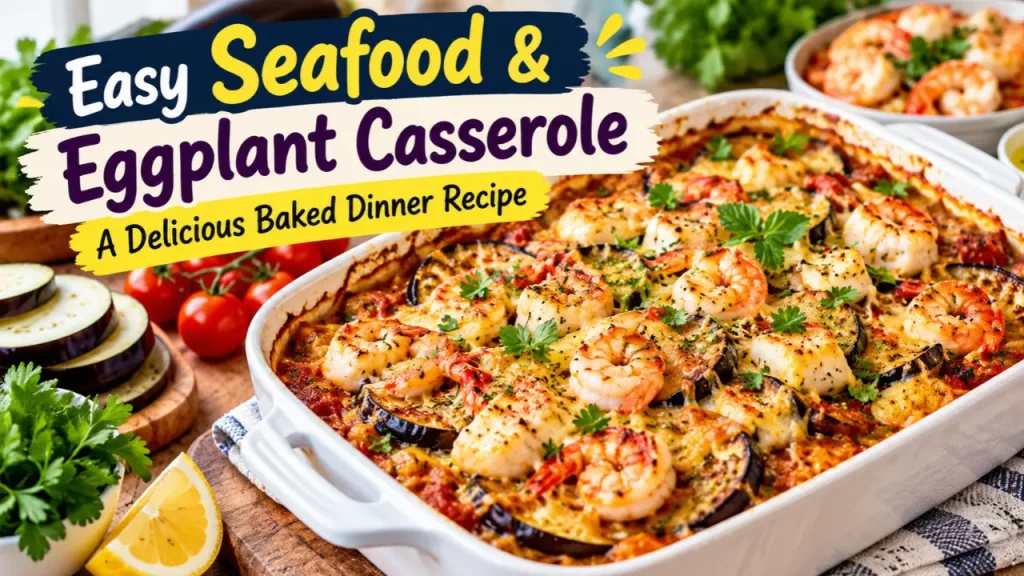
Most cooks assume that once a seafood and eggplant casserole looks bubbly and golden on top, everything underneath is cooked through and safe. It isn’t that simple. Shrimp, white fish, and crab finish cooking at different speeds, eggplant can trap enough moisture to undercook the seafood sitting on top of it, and “two days in the fridge” is a rough rule of thumb, not a guarantee. Picking the right mix and portions matters as much as the layering.
- Shrimp, fish, and crab don’t finish at the same moment, so the casserole has to be built around whichever one cooks slowest.
- The dish is seafood-and-dairy heavy, which means it can run high in sodium and cholesterol depending on the cheese, sauce, and shellfish used.
- Cooked seafood leftovers have a shorter safe window in the fridge than many baked casseroles — treat the clock seriously, not loosely.
- Mussels, scallops, and squid need different pre-cooking and timing than shrimp, and freezing can work if you handle the eggplant and seafood separately before combining.
What “done” actually looks like when three seafoods share one dish
The core challenge of a mixed seafood casserole is that you’re baking several proteins with very different cook times in one pan, at one temperature, for one fixed stretch of oven time. Shrimp turn from translucent gray to opaque pink-white and curl into a loose “C” shape when cooked; a tight, tense “O” shape is a sign of overcooking, which turns shrimp rubbery fast. Flaky white fish like cod or tilapia is done when it turns from glassy to opaque and separates into flakes with gentle pressure from a fork — it should not look wet or translucent at the center. Crab meat is almost always pre-cooked before it goes into the dish, so your goal with crab isn’t “doneness” but simply heating it through without drying it out, since it toughens quickly with extra time in a hot oven.
Because these cues are visual and textural rather than a single number you can rely on blind, the safest approach is to check the thickest, densest piece in the dish — usually the fish — and treat that as your timer. If you want a numeric backstop, general food-safety guidance for seafood calls for cooking fin fish and shellfish until they reach an internal temperature in the range of 145°F (63°C), checked at the thickest part with a food thermometer. Shrimp and crab, being smaller and thinner, typically hit a safe internal temperature well before the fish does, which is exactly why layering matters: put thicker fish pieces where they get the most direct heat, and add shrimp or pre-cooked crab in the last stretch of baking so they warm through without turning tough.
Why eggplant throws off the timing
Eggplant is mostly water and air pockets, and even after salting and roasting it continues to release moisture as it bakes further in the casserole. That moisture pools under the seafood layer, which can do two conflicting things at once: it can insulate the seafood sitting on top (slowing its cooking) while also steaming the bottom layer of fish into mush. This is why a casserole can look fully baked on the surface — browned cheese, bubbling sauce — while the fish underneath is still underdone or the eggplant at the bottom has gone waterlogged. Pre-roasting the eggplant until most visible steam has stopped and letting it rest on a rack or paper towel briefly before layering reduces this effect, but it doesn’t eliminate it, which is why checking the seafood directly, rather than judging by the eggplant or cheese, is the more reliable habit.
The real safety test for this casserole isn’t how it looks on top — it’s whether the slowest-cooking seafood in the dish has actually reached a safe internal temperature, checked directly, every time.
Is it actually a healthy dinner?
This casserole sits in a nutritional gray zone: the seafood brings lean protein and beneficial fats, but the cheese, cream-based sauce, and shellfish can push sodium and cholesterol higher than people expect from a “seafood” dish. Shellfish such as shrimp and crab are naturally higher in dietary cholesterol than most fin fish, and a cheese topping with a cream or butter-based sauce adds saturated fat and sodium on top of that. The exact numbers shift a lot depending on how much cheese, salt, and which seafood you use, so rather than quote a single calorie count that won’t match your version, it’s more useful to know who should be cautious:
| Group | Why this dish needs attention |
|---|---|
| Pregnant or breastfeeding | Some larger or longer-lived fish carry more mercury; choosing shrimp, crab, scallops, or smaller fish keeps mercury exposure lower. |
| Shellfish allergy | Shrimp, crab, mussels, scallops, and squid are all shellfish-family; an all-fish version avoids the allergen entirely. |
| High cholesterol or heart disease | Shrimp and crab are higher in dietary cholesterol than white fish, and cheese adds saturated fat; smaller portions or a lighter cheese layer help. |
| High blood pressure / sodium-sensitive | Cheese, salted eggplant, and any added salt in the sauce stack up quickly; rinsing salted eggplant and going light on added salt matters here. |
How long leftovers are actually safe
General food-safety guidance for cooked seafood dishes is to refrigerate leftovers within about two hours of coming out of the oven, and to eat them within roughly three to four days when stored cold and covered — not indefinitely just because it “still smells fine.” Smell is an unreliable test for seafood specifically, because some bacteria that grow on cooked shellfish don’t produce an obvious off odor before they reach risky levels. If the casserole included shellfish like shrimp, crab, mussels, or scallops, treat the earlier end of that window as the safer target, and reheat leftovers until they’re steaming hot all the way through, not just warmed at the edges.
Swapping in mussels, scallops, or squid
These three behave nothing like shrimp or fish, so a straight swap by weight will throw off both texture and safety. Mussels should be cooked (steamed open) before they go into the casserole; any that don’t open during that initial steaming step should be discarded rather than added. Scallops cook very fast and turn rubbery quickly, so they’re best seared briefly and added near the end of baking, similar to shrimp, rather than baked raw from the start. Squid is the most unforgiving: it needs either a very quick, hot cook or a long, slow braise — anything in between turns it tough — so for a casserole, a fast pre-sear added at the very end works better than baking it with everything else for the full cooking time.
Does freezing really ruin it?
Freezing a fully assembled casserole with raw eggplant and raw seafood together tends to produce the mushy, watery result people complain about, because both eggplant and many shellfish release extra liquid as ice crystals form and then thaw. Two techniques improve this noticeably: par-freezing the roasted eggplant separately on a tray before it touches any sauce, and lightly blanching or searing the seafood and cooling it fully before freezing, rather than freezing it raw inside the casserole. Assembling and baking fresh from these pre-frozen, pre-prepped components gives a texture much closer to a freshly made casserole than freezing the finished dish ever does.