Crispy Chicken Caesar Sandwich: Ready in 20 Minutes
Fry, air-fry, or oven-bake? Here's how to make the crispiest Caesar chicken sandwich ahead, store it, and reheat it without sogginess.
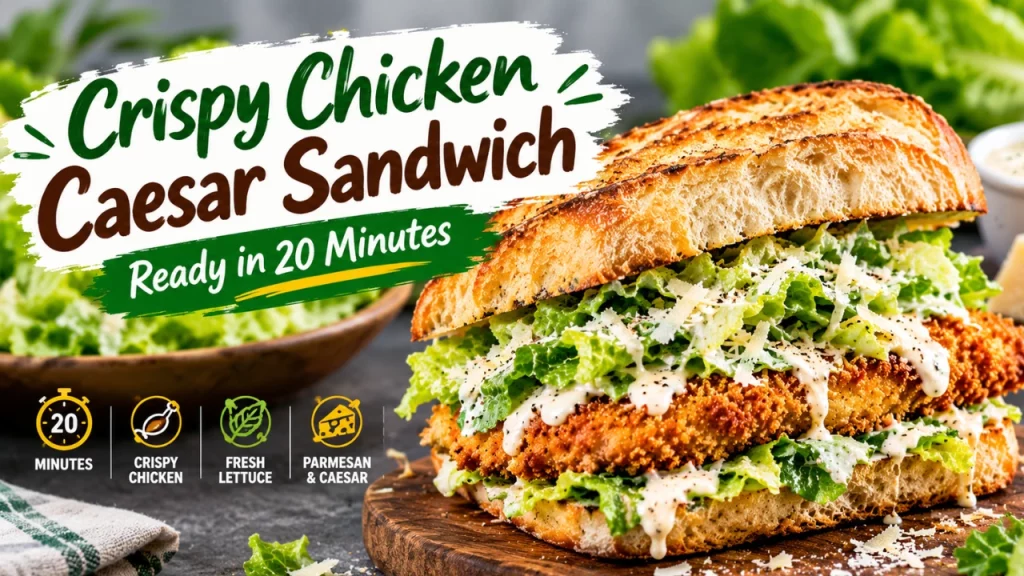
Can a sandwich you made on Sunday still taste like it was fried ten minutes ago on Wednesday? That’s the real question behind this crispy chicken Caesar sandwich, because the first bite is easy — any hot cutlet out of oil is going to crackle. The second day is where most people fail, and it’s also where the calorie math actually matters, since nobody is deep-frying chicken fresh every single night.
This guide skips the basics you’ve already seen — cutlets sliced thin, the flour-egg-panko line, a mayonnaise-based Caesar dressing, toasted buns, frying to 165°F, romaine and parmesan on top. Instead it answers what happens after the pan is put away: how to store the components, how to reheat the chicken so the crust survives, which cooking method actually gives you the best crunch for the least oil, and what to do if you can’t eat gluten, dairy, or raw-egg-adjacent dressings.
Step 1: Build a make-ahead timeline instead of cooking everything at once
Treat the sandwich as three separate components with three separate shelf lives: dressing, breaded-but-uncooked chicken, and cooked chicken.
- Dressing: make up to 3 days ahead, refrigerated in a sealed jar. A mayonnaise-based Caesar avoids the raw egg yolk issue of a classic version, but it still contains anchovy paste and dairy (parmesan), both of which are perishable — treat it like any opened mayonnaise-based sauce and don’t leave it at room temperature for more than two hours.
- Breaded, uncooked cutlets: can be breaded up to 24 hours ahead and refrigerated on a wire rack, uncovered or loosely covered, so the panko doesn’t get soggy before it even hits oil.
- Cooked chicken: cool completely, then refrigerate up to 3 days or freeze up to 2 months, cutlets separated by parchment so the crust doesn’t weld together.
Tip: assemble the sandwich itself only at serving time. Lettuce, dressing, and bread should never sit against hot or warm chicken in storage — that’s the single biggest cause of a soggy sandwich the next day.
Step 2: Reheat the chicken dry, not wet
The mistake almost everyone makes is microwaving leftover crispy chicken. Microwaves push moisture out of the meat and into the crust, turning panko into paste and the chicken itself tough. A study comparing reheating methods for crispy fried pork cutlets found that deep-frying versus non-fat reheating methods for crispy fried meat produced very different textures: microwave reheating (500 W for 7 minutes) and oven reheating (200°C) both substantially increased hardness, which the researchers linked to lower consumer acceptability, while air-frying at 185°C for 12 minutes kept texture close to the original fried product.
That same research measured fat directly: air-frying for reheating achieved a 15.4% fat reduction compared with deep-frying reheating, while keeping similar textural properties — meaning you genuinely get a crisper, lighter result from the air fryer on day two, not just a “healthier-sounding” one.
Tip: reheat chicken straight from the fridge in an air fryer at around 185°C (365°F) for 10–12 minutes, no oil spray needed, flipping once halfway. If you don’t own an air fryer, a wire rack set inside a sheet pan in a hot oven is the next best option — never a plate in the microwave.
Step 3: Choose your original cooking method based on crunch-per-calorie, not habit
Before you even get to leftovers, the method you fry the chicken with the first time determines how much oil it’s carrying into storage. Oil uptake during frying isn’t fixed — it depends heavily on the frying medium and method. A review of alternative frying media explains that research on oleogels as alternative frying media for reducing oil uptake found that oil incorporation during deep-frying is influenced by multiple factors in the frying process itself, and that oleogel-based frying media (semi-solid fat networks that trap oil) are being studied specifically because conventional deep-frying leads to high oil retention in the final food, which is tied to health concerns around fried-food consumption.
Put plainly: the oil your cutlet sits in doesn’t just coat it, a meaningful portion gets absorbed into the crust itself, which is exactly why a shallow-fried cutlet feels heavier in the stomach than one that’s air-fried or oven-baked, even when both look equally golden.
| Method | Oil exposure | Crunch after reheating | Best use case |
|---|---|---|---|
| Shallow-fry (original cook) | Highest — direct oil contact, documented oil retention concern in deep-fried foods | Good fresh, degrades fastest without careful reheating | Serving immediately |
| Air-fry (original cook or reheat) | Lowest — no oil bath; reheating study measured 15.4% fat reduction vs. deep-fry reheating | Closest to fresh-fried texture after storage | Make-ahead and leftovers |
| Oven-bake (reheat) | Low, no added oil | Hardness increases, texture suffers | Backup only if no air fryer |
Tip: if you’re cooking a double batch specifically to have leftovers, air-fry the whole batch instead of shallow-frying half for tonight. You lose a little of the classic fried-crust feel on day one, but you gain a method that reheats properly on day two — the pork study found air-frying preserved key aroma compounds (citrus, herbal, pine notes from terpenes) more effectively than deep-frying during reheating, which is part of why it tastes less “leftover” than microwaved or oven-reheated crispy food.
Step 4: Adjust the breading for gluten or dairy restrictions without losing crunch
Panko and parmesan are both swappable, but not every substitute browns the same way.
- Gluten-free: swap wheat flour for a gluten-free all-purpose blend, and panko for crushed gluten-free rice crackers or gluten-free cornflakes — both crisp up under heat and hold up to air-frying.
- Dairy-free: drop the parmesan from both the dressing and the topping; a splash of extra lemon juice and a pinch more anchovy paste in the dressing covers most of the savory depth parmesan would have added. For the crust, dairy isn’t typically in panko itself, so this swap is usually only about the dressing and topping.
Tip: whichever substitute you use, press it onto the chicken firmly before frying or air-frying — looser coatings (especially crushed crackers) shed more in the pan than classic panko.
Common mistakes
- Assembling the full sandwich ahead of time. Store parts separately; build it only when you’re ready to eat.
- Microwaving leftover cutlets. It’s the fastest way to turn a crispy crust into paste, per the reheating-method comparison above.
- Treating mayo-based Caesar dressing as shelf-stable. It still contains anchovy paste and dairy; refrigerate it and use within a few days rather than leaving it out.
- Judging all frying methods as equally greasy. They aren’t — the gap between deep-frying and air-frying is large enough (double-digit percentage in fat for reheated pork) that it changes which method is worth choosing for leftovers specifically.
- Assuming gluten-free or dairy-free swaps need a different cooking method. They don’t — the same fry, air-fry, or oven approach works, as long as the coating is pressed on firmly.