Creamy Turkish Pasta with Garlic Yogurt and Spiced Butter Sauce
Exact calories, protein, and sodium per serving, plus who should modify this dish and why the yogurt goes on cold.
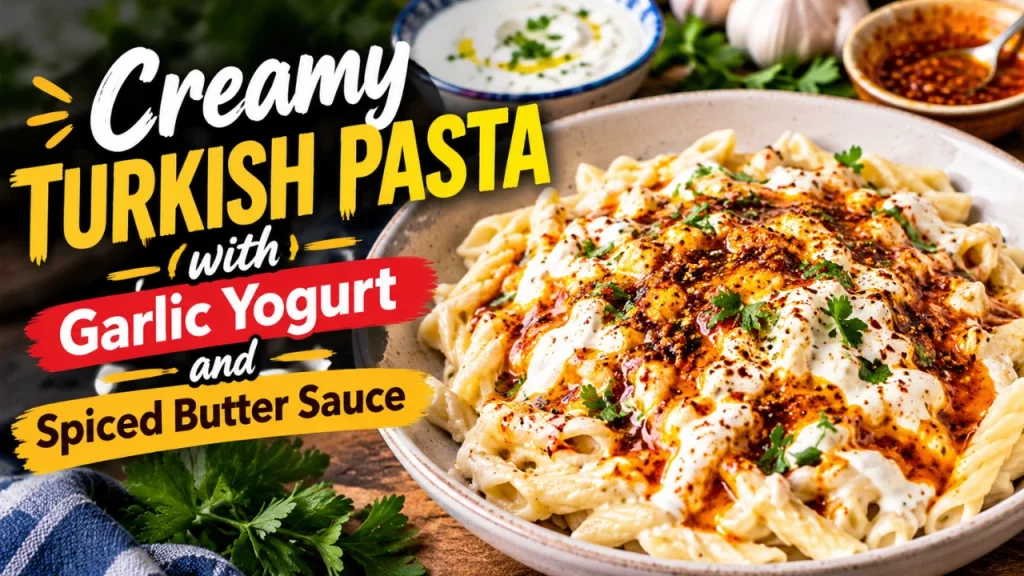
How many calories are actually sitting under that pool of garlic yogurt and paprika butter — and does your blood pressure, your gut, or your garlic tolerance have a say in how big that bowl should be? Most recipes for this dish stop at “serve warm.” Here’s what the plate actually costs you, and who needs to eat it differently.
Myth: “It’s just pasta with yogurt, so it’s a light meal”
A standard serving — roughly a quarter of a typical recipe built from pasta, full-fat Greek yogurt, butter, and spiced ground meat — lands around 620–650 calories, with about 26–28 grams of protein and roughly 14 grams of saturated fat. That protein number is solid, coming from both the yogurt and the meat layer, but the calorie load is closer to a restaurant entrée than a side dish. Sodium is the bigger surprise: between the salted pasta water, seasoned meat, and butter, a serving typically runs 700–800 milligrams of sodium, which is a third or more of a standard daily sodium target before you’ve added bread or a salad with dressing. None of this makes the dish bad — it makes it a main course, not a light bite, and portioning it as one matters more than the ingredient list suggests.
Myth: “A little yogurt sauce is fine even if you’re lactose intolerant”
Full-fat Greek yogurt is lower in lactose than milk because straining removes much of the liquid whey, but it isn’t lactose-free, and a generous spoonful layered over a hot bowl of pasta adds up quickly alongside any butter-based dairy in the sauce. For someone with lactose intolerance, that combination — yogurt plus butter plus possibly cheese on top — can be enough to trigger bloating or discomfort even though each component alone seems modest. The fix isn’t necessarily skipping the dish; it’s thinning the yogurt layer, swapping in a lactose-free strained yogurt, or testing a smaller portion first rather than assuming “yogurt sauce” is automatically gentle on digestion.
Myth: “Butter is the only thing people with high blood pressure need to worry about here”
Butter contributes saturated fat, but the sodium conversation is more nuanced than “cut the fat.” A systematic review and meta-analysis of dairy intake and elevated blood pressure pooling nearly 45,000 people found that overall dairy consumption was associated with lower risk of elevated blood pressure, but when researchers separated dairy types, only low-fat dairy showed that protective association — full-fat dairy did not carry the same benefit. A separate controlled trial in overweight adults found that daily low-fat dairy (not full-fat) modestly lowered systolic blood pressure by about 2.9 mm Hg over eight weeks compared with sugary control foods, though it also slightly reduced HDL cholesterol. Translated to this dish: using full-fat yogurt for richness is a reasonable culinary choice, but someone actively managing blood pressure is better served watching the total sodium — from pasta water, seasoned meat, and salted butter combined — than fixating on the dairy fat alone.
Myth: “Full-fat dairy and meat together are a cardiovascular red flag”
This is less settled than it sounds. A JACC state-of-the-art review on saturated fat concluded that most recent meta-analyses found no clear benefit from limiting saturated fat intake for cardiovascular disease or total mortality, noting that whole-fat dairy and unprocessed meat sit inside a food matrix that behaves differently than isolated fat on a lab sheet. A long-term prospective study following US women for 18 years similarly found no association between total meat, red meat, or dairy intake and pancreatic cancer risk, despite earlier case-control data suggesting a link. Yogurt itself has epidemiologic and experimental support as part of a cardiometabolic-friendly pattern, per a review in the American Journal of Clinical Nutrition on yogurt and dairy consumption. None of this is a green light to eat the dish daily in large portions — it’s a reason not to treat the yogurt-butter-meat combination as automatically dangerous either. Moderation and portion size matter more than demonizing any single ingredient.
Myth: “You can just stir the yogurt into the hot butter sauce”
This is the one piece of food science nobody explains. Yogurt’s structure depends on casein proteins holding water in a stable network. Casein begins to denature and clump once it’s held above roughly 160–180°F (71–82°C) for more than a minute or two, especially in an acidic, high-fat environment like a butter-and-lemon pan sauce. Once that happens, the smooth yogurt breaks into grainy curds and a thin, watery liquid — it won’t re-smooth no matter how much you whisk. That’s why the yogurt is spooned over warm (not boiling) pasta rather than simmered into the sauce: the residual heat of the pasta is gentle enough to loosen the yogurt into a pourable layer without pushing it past the temperature where the proteins seize. It also means reheating leftovers in a saucepan with everything stirred together is the wrong move — the yogurt layer should be added fresh and cold-to-warm, not re-cooked.
Myth: “Leftovers are safe to reheat straight from the counter”
Because this dish layers dairy directly on top of cooked meat, it behaves like any combination dish for food-safety purposes: it should go into the refrigerator within about two hours of assembly, not sit out while you decide whether to finish the pan. When reheating, warm the pasta and meat layers through properly and add a fresh spoonful of cold yogurt afterward rather than microwaving the whole assembled bowl — this protects both texture and reduces the time the dairy spends at unsafe lukewarm temperatures.
Quick tip: if you’re managing sodium or blood pressure, cut the salt in the pasta water by half and skip salting the meat separately — the yogurt and butter already carry enough seasoning to make the dish taste complete.
Myth: “This pasta version has the same nutrition profile as traditional manti”
Traditional manti wraps a small amount of meat in individual dumpling dough, meaning more flour-to-meat ratio and portion control built into each dumpling. This deconstructed pasta version uses looser, more generous layers of meat, yogurt, and butter per bite, which generally pushes protein per serving higher but also raises the saturated fat and sodium density compared with a plate of manti of similar weight. Neither version is inherently better — the pasta format is simply more calorie-dense per spoonful because the ratios aren’t portioned by hand the way dumplings are.
- A typical serving: roughly 620–650 calories, 26–28g protein, 700–800mg sodium, ~14g saturated fat
- Lactose-sensitive eaters: reduce the yogurt layer or use a lactose-free swap
- Blood pressure concerns: watch total sodium, not just the butter’s fat content
- Yogurt must go on warm, not hot, pasta — above ~160–180°F casein proteins curdle and won’t smooth back out
- Refrigerate assembled leftovers within two hours; reheat pasta/meat first, add cold yogurt after
- This version runs richer per bite than traditional manti due to looser portioning
Sources
- Dietary meat, dairy, fat, cholesterol and pancreatic cancer risk — prospective study (2003)
- Systematic review and meta-analysis of dairy foods and elevated blood pressure (2012)
- Saturated Fats and Health: JACC State-of-the-Art Review (2020)
- Low-fat dairy consumption and systolic blood pressure trial (2011)
- Yogurt and dairy consumption to prevent cardiometabolic diseases (2014)