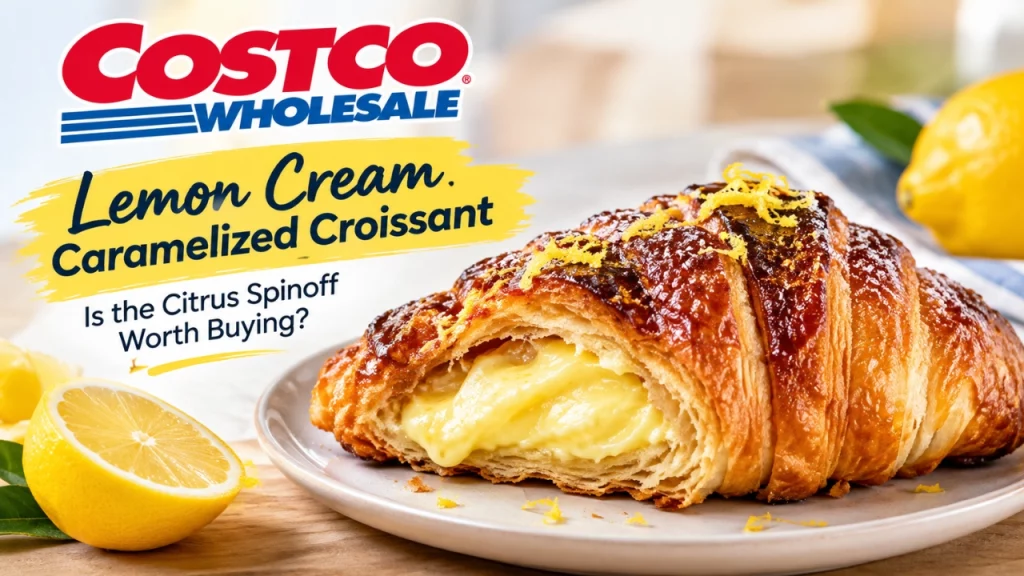
Costco Lemon Cream Caramelized Croissant: Is the Citrus Spinoff Worth Buying?
Costco won't publish the calories or sugar in this pastry, so here's what the actual research on citrus, sugar, and pastry habits says instead.
A citrus drink made from real juice can carry a glycemic index of just 37, a number low enough to sit comfortably in the “low GI” category according to a small clinical study on calamansi and blood glucose. That number has almost nothing to do with what happens when you eat a pastry that pairs lemon cream with a caramelized sugar crust and a butter-laminated dough. Yet that confusion, citrus equals light, is exactly why the Costco lemon cream caramelized croissant gets a pass that the blueberry cheesecake version never did.
- Costco has not published a calorie, sugar, or fat count specific to this item, the way it would for a packaged shelf product, so anyone citing exact numbers for it is guessing.
- The “lighter” reputation leans on citrus acidity masking sweetness, not on any meaningful difference in sugar or butter content versus the blueberry cheesecake croissant.
- People managing GERD, blood sugar, or added-sugar limits should treat this the same as any other bakery-case dessert, not as a safer swap.
- At $12.99 for six, the per-unit cost is reasonable, but keeping six caramelized pastries in the house changes how often most people actually eat them.
What’s Actually in This Croissant, and What’s Missing From the Box
Costco’s in-store bakery items, unlike its packaged grocery products, don’t come with a printed nutrition panel on a wrapper the way a granola bar or a frozen pizza does. That’s the real reason every article on this pastry says nutrition info is “not widely published”: there isn’t a label to photograph. What we do know by looking at the product is structural. It’s a laminated, buttery dough, the same category as a croissant or Danish, filled with a cream-cheese-based lemon filling and finished with a caramelized sugar bottom that forms in the paper baking cup during baking. The blueberry version uses the same base dough and a similar cheesecake-style filling, just swapped for blueberry instead of lemon. Structurally, these are twins. The difference is flavor, not formulation.
Why Lemon Feels Lighter Than Blueberry Cheesecake
Acid changes how sweetness registers on the tongue, which is why a lemon dessert can taste less cloying than a blueberry one with the same sugar load. The calamansi study above measured a real physiological effect, a citrus drink with a glycemic index of 37, but that result came from a beverage made mostly of juice and water, not from a pastry built on butter, cream cheese, and caramelized sugar. Applying a juice’s blood sugar profile to a croissant is a stretch the evidence doesn’t support.
There’s a second layer of citrus-health mythology worth untangling. A case study on naringenin, a flavonoid found in citrus, found that a single subject with diabetes who took 150 milligrams of a standardized orange extract three times a day for eight weeks saw improvements in body weight and metabolic markers, according to a published case report on naringenin and insulin sensitivity. That’s a single person, a concentrated supplement dose, and eight weeks of consistent intake, nothing like the trace amount of lemon flavoring folded into a cream filling. A croissant is not a naringenin supplement, and no amount of citrus zest in a dessert filling comes close to replicating that dose.
Who Should Actually Think Twice
Three groups have a real reason to be more careful with this pastry than the marketing suggests.
People with GERD or acid reflux are often advised to limit foods that combine high fat, high sugar, and acidity, because each factor independently slows digestion or relaxes the lower esophageal sphincter. A pastry that stacks all three, caramelized sugar, cream filling, laminated butter dough, and lemon acidity, checks every box clinicians typically flag, even though no single study in this roundup measured this exact product.
People watching blood sugar shouldn’t assume the citrus angle protects them. The low-GI result for a calamansi drink doesn’t transfer to a mixed, high-fat, high-sugar baked good, because fat and dough slow digestion in ways that change the glucose curve compared to a simple juice drink. Treating “has lemon in it” as a blood-sugar-friendly signal is not supported by the research available.
People actively cutting added sugar face a behavioral risk more than a biochemical one. Two separate surveys tracked what happened to eating habits when people had more unstructured time and easy access to sweet baked goods. A multicountry study across Spain and eleven Latin American countries found 38.5% of over 10,000 respondents reported weight gain during pandemic confinement, alongside increased reported consumption of pastry products and sweetened drinks, according to a cross-sectional study on confinement eating patterns. A separate survey of 1,451 adults in Riyadh found 40.9% reported weight gain and nearly 89% reported some change in eating habits after quarantine, per a follow-up study on long-term dietary habit changes. Neither study measured this croissant specifically, and both are observational, meaning they show association, not proof that pastries alone caused the weight change. But the pattern is consistent: when sweet, easy-to-reach bakery items are in the house, consumption and weight tend to move together.
Does Freezing Help, and What It Does to the Caramelized Bottom
Freezing extends how long you can hold onto a six-pack before anything spoils, but it changes the one feature that makes this pastry distinct. The caramelized bottom is essentially a thin layer of hardened sugar syrup fused to the dough during baking. Freezing introduces moisture that recrystallizes as the pastry thaws, which softens that syrup layer from the inside. Reheating in an air fryer or toaster oven can recrisp the outside, but it’s recrisping a softened layer rather than preserving the original bake, so the texture after freezing and reheating is close to the fresh version but not identical. If the caramelized crackle is the main reason you’re buying this, eating it within the box’s stated window rather than freezing preserves that texture best.
Cost, Portion Size, and the Verdict
At $12.99 for six pastries, that works out to roughly $2.17 per croissant, in line with or cheaper than a single pastry at most coffee shops. For a household of three or four sharing one each, that’s a reasonable treat-night price. For a single person or couple, six identically tempting, high-sugar pastries sitting in the fridge is the exact scenario the confinement studies above describe: easy access correlating with higher reported intake and weight gain. Freezing half the box in individual bags, even with the texture trade-off, is a practical way to avoid working through all six in a few days.
The honest verdict: this croissant isn’t a lighter or healthier alternative to the blueberry version, it’s the same richness with a different, more deceptive flavor profile. It’s worth buying as an occasional dessert for a household that will share it. It’s worth skipping, or buying to freeze and portion out slowly, for anyone managing reflux, blood sugar, or added sugar intake, and for a single-person household wary of having six identical temptations on the counter at once.
Sources

James Carter
The EverBBQ editorial desk — covering BBQ news, features and everything off the grill.