Chicken Crust Pizza: The High-Protein Pizza Trend Explained
Chicken crust triples the protein of wheat crust, but the sodium, fat and fiber math tells a messier story than the marketing.
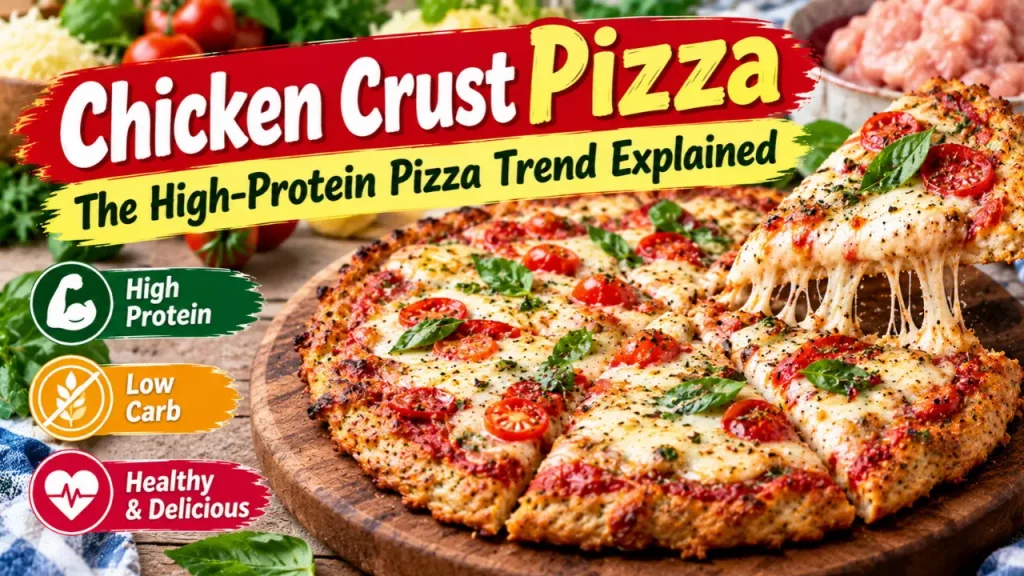
The most surprising number in chicken crust pizza isn’t the protein count. It’s what happens to your sodium total once you add the usual mozzarella on top of a crust that already has cheese baked into it. A trend sold as the “cleaner” pizza can quietly end up saltier than the one it replaced, depending on how heavy-handed you are with toppings.
The short version: chicken crust gives you roughly three times the protein of wheat crust per 100 grams, but it also strips out almost all the fiber, and the cheese baked into the dough means the sodium and saturated fat savings aren’t as automatic as the hype suggests.
The actual numbers, side by side
Most chicken crust recipes are a blend of cooked shredded chicken, egg, and shredded cheese, roughly in a 60/15/25 ratio by weight. Built from standard USDA composition values for those raw ingredients, a typical chicken crust works out to about 186 calories, 27 grams of protein, 8 grams of fat, and 218 milligrams of sodium per 100 grams, with essentially no fiber. A standard wheat pizza dough, baked plain, runs closer to 266 calories, 9 grams of protein, 4 grams of fat, 640 milligrams of sodium, and 2.4 grams of fiber per 100 grams.
| Per 100g (crust only, before sauce/toppings) | Chicken crust | Wheat crust |
|---|---|---|
| Calories | 186 | 266 |
| Protein | 27g | 9g |
| Fat | 8g | 4g |
| Sodium | 218mg | 640mg |
| Fiber | ~0g | 2.4g |
So the base crust itself is genuinely leaner in calories and far higher in protein. But that table only covers the crust. Once you add a normal layer of sauce and mozzarella on top, the chicken crust’s sodium and saturated fat advantage shrinks fast, because you’re stacking cheese on top of cheese. The fiber gap, meanwhile, never closes. A wheat crust slice contributes meaningful fiber from whole-grain or enriched flour; a chicken crust slice contributes almost none, full stop.
Does more protein actually mean a healthier meal?
Here’s where the marketing oversimplifies things. A review of high protein diet trials found convincing evidence that higher protein intake increases satiety and thermogenesis compared to lower protein meals, and that high protein meals tend to reduce how much you eat afterward. That’s real, and it’s part of why chicken crust pizza feels more filling than a regular slice.
But look closer at the studies behind that claim. A 12-week trial in 46 women comparing 30% versus 18% protein diets found the higher protein group preserved more lean mass during weight loss and reported less decline in satiety. A separate 10-week trial in 24 women aged 45 to 56 found that a lower carbohydrate-to-protein ratio diet improved fat-to-lean mass ratio during weight loss and improved blood lipids more than a higher-carb diet. These are real findings, but they’re short trials, in small, specific groups of middle-aged or older women, not proof that swapping your pizza crust daily produces lasting benefits. A review of protein’s role in weight regulation notes the same satiety and energy expenditure effects, but also flags a less flattering detail: sulfur-containing amino acids, abundant in meat and egg, have a blood pressure-raising effect tied to loss of nephron mass over time. In other words, more protein isn’t a free upgrade. It trades one set of problems for another, and the trade is more favorable for some bodies than others.
Who this swap is genuinely not good for
If you have chronic kidney disease, this is not a neutral swap. A 2020 review on plant-dominant low-protein diets for CKD recommends 0.6 to 0.8 grams of protein per kilogram of body weight daily, with more than half coming from plant sources, specifically because high protein diets built on heavy meat intake are linked to greater cardiovascular risk in people managing kidney function. A pizza where the crust itself is 27 grams of protein per 100 grams, stacked under a normal cheese and meat topping load, can push daily protein well past what a kidney patient’s care plan allows, often without anyone realizing the crust is the culprit.
If you manage gout, the purine load in chicken and the concentrated animal protein in a crust-plus-cheese combination is worth flagging with your doctor, since diets heavy in meat and cheese are a known trigger for uric acid flare-ups, and chicken crust packs more meat per slice than a standard pizza does.
If you’re watching cholesterol or saturated fat, remember the crust already contains baked-in cheese before any topping goes on. Doubling your cheese exposure per slice isn’t something the “high protein, low carb” framing mentions, but it’s sitting right there in the ingredient ratio.
If you’re an endurance athlete or just someone who trains hard, a near-zero-carb, near-zero-fiber crust doesn’t refill glycogen the way a wheat crust does. None of the protein research above tested athletic performance outcomes, so nobody can honestly claim chicken crust helps endurance. It simply isn’t built for that job.
Why it turns out rubbery, soggy, or dry
The texture problems aren’t bad luck, they’re ratio math. Chicken is mostly water and muscle protein with very little binding fat or starch to hold it together. Egg adds protein that firms up fast under heat, almost like a custard setting. Cheese adds fat and moisture that releases as it melts. Get the chicken-to-egg ratio too heavy on chicken, and the crust turns rubbery because there’s too much pure muscle protein tightening up with nowhere for moisture to go. Too much egg, and it sets like a frittata instead of a crust. Too much cheese, and trapped fat keeps the center soggy no matter how long you bake it. Wheat dough doesn’t have this problem because gluten strands create structure that holds moisture evenly; chicken crust has no such scaffolding, so getting the protein-to-moisture ratio right matters more than oven temperature.
The takeaway
Chicken crust pizza really does deliver roughly triple the protein of wheat crust per 100 grams and fewer calories in the crust itself, but it also strips out fiber almost entirely and can match or exceed wheat crust’s sodium and saturated fat once normal toppings go on, so it’s a genuine win for protein goals but not the across-the-board health upgrade the trend implies, especially if you have kidney disease, gout, high cholesterol, or need carbs for serious training.
Sources
- Dietary protein, weight loss, and weight maintenance (2009)
- The effects of high protein diets on thermogenesis, satiety and weight loss: a critical review (2004)
- Higher protein intake preserves lean mass and satiety with weight loss in pre-obese and obese women (2007)
- A reduced ratio of dietary carbohydrate to protein improves body composition and blood lipid profiles during weight loss in adult women (2003)
- Plant-Dominant Low-Protein Diet for Conservative Management of Chronic Kidney Disease (2020)
