Celeste Pizza Is Vanishing From Freezers: Your Move, Right Now
What to do with the last Celeste pizzas you find, and which budget frozen brands could be cut next.
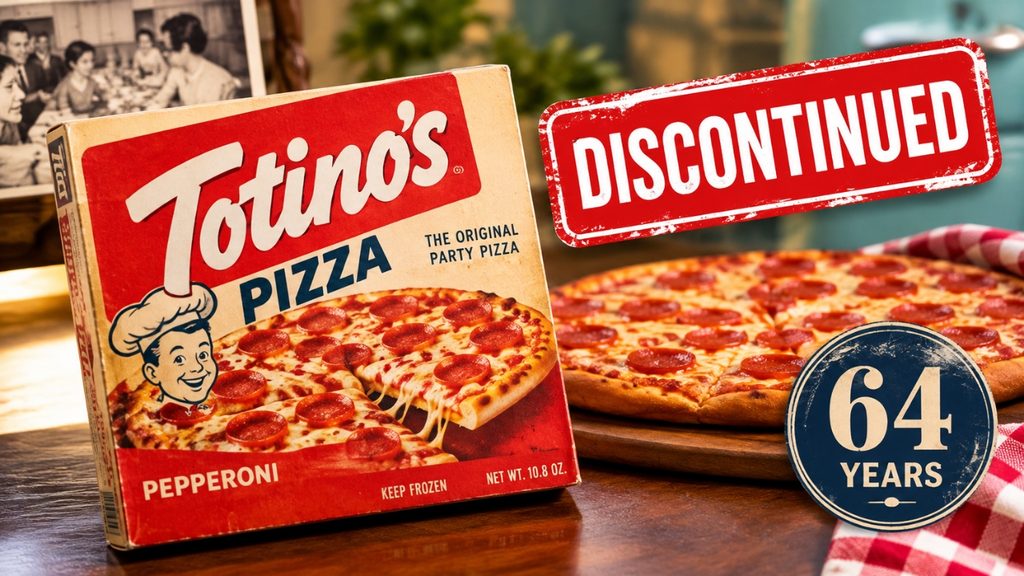
You open the freezer door at your regular grocery store, reach for the spot where the small round Celeste pizzas have always sat next to the generic store brand, and the shelf tag is still there but the boxes are not. Or maybe they are there, marked down, stacked crooked like nobody has restocked them in weeks. You stand there holding your phone, trying to figure out if this is a supply hiccup or something permanent, and whether the three boxes in your own freezer at home are now, weirdly, collector’s items.
Celeste’s run from a Chicago kitchen in 1937 to a national frozen-food name is a story you have probably already read elsewhere. What matters now is what happens next, in your store, with your money, and in your freezer. Here is what is actually true versus what people assume.
Myth: a discontinued brand disappears from shelves immediately
Discontinuation does not work like a light switch. When a company like Conagra stops production, it does not recall the pizzas already sitting in distribution centers, regional warehouses, and store freezers. Those boxes get sold through the normal supply chain until they run out, store by store, region by region. That means two shoppers in different cities can have completely different experiences right now: one sees empty shelf tags, the other sees a full case, possibly at a discount as the retailer tries to clear it before resetting that freezer space for another brand.
There is no public countdown clock for this. Grocery chains do not publish sell-through timelines for a single discontinued SKU, and Conagra has not attached a date to “gone for good.” The realistic range for a product like this, based on how frozen inventory typically clears, is weeks in high-turnover stores and several months in slower-moving ones, especially independent grocers and dollar-store-style chains that order less frequently. If you find it, that is not a sign it will still be there next week. Treat every sighting as the last one.
Myth: your frozen stash is now useless or unsafe to eat
A discontinued product is not a recalled product. If Celeste pizzas have been sitting properly frozen at zero degrees Fahrenheit or below, they remain safe indefinitely from a food-safety standpoint, though quality — texture of the crust, flavor of the sauce — degrades gradually over many months. Check the best-by date printed on the box rather than the news of discontinuation itself; that date, not the headlines, tells you the window for best quality. If you stocked up after hearing the news, there is no urgency to eat them all in a panic. There is urgency to find more if you want them, because restocking will not happen.
Myth: Celeste was cut because nobody bought frozen pizza anymore
This is backwards. Frozen pizza as a category has been one of the more resilient corners of the supermarket, not a shrinking one. What has shifted is which tier of that category people are buying. Shoppers who used to grab the cheapest personal-size pizza in the freezer case have increasingly traded up to brands positioned as “better than average” — thicker, more artisan-style crusts, recognizable restaurant-adjacent names, clean-label marketing — while the rock-bottom budget tier gets squeezed from both directions: dollar stores and store-brand private labels undercut it on price, and premium brands peel off anyone willing to pay a little more for perceived quality. A small, old-fashioned single-serve brand like Celeste sat right in that shrinking middle, competing with cheaper store brands on one side and glossier national brands on the other, without the marketing budget to defend its shelf space against either.
Myth: only Celeste fits the profile Conagra described as ‘small and unprofitable’
Conagra’s portfolio is built around a small number of large, actively marketed brands — the ones that get the advertising spend, the shelf-end displays, and the new product launches — alongside a long tail of older, smaller names that were absorbed through decades of acquisitions and that quietly keep selling without much investment behind them. Celeste fit that second category almost perfectly: a legacy name from a 1937 founding story, a narrow product line that never expanded much beyond the original format, and sales that had been sliding for years without the company stepping in to refresh packaging, recipe, or marketing.
Any brand in Conagra’s lineup that shares those traits is a reasonable candidate for the same treatment eventually: a budget-tier frozen item with a dated identity, limited distribution outside certain regions, no recent reformulation, and sales that management would describe as flat or declining rather than growing. The pattern is not about one product category being doomed — it is about which brands get reinvestment and which get allowed to run down until the inventory math no longer justifies keeping the production line open. If you have a nostalgic budget freezer-aisle favorite that has not changed its packaging in a decade and rarely gets a coupon or a new flavor, that is the profile to watch.
Myth: Celeste disappearing is unprecedented for an old ‘Mama’-style brand
It is not unprecedented at all — it is close to a pattern. The frozen pizza aisle has already been through this kind of consolidation once. Jeno’s, a budget frozen pizza brand with its own long history, was folded away and effectively replaced decades ago as its parent company shifted investment toward Totino’s, which survived by leaning into a cheap, snack-style niche that budget shoppers still reliably buy. Other founder-named legacy brands have either been absorbed into a parent company’s flagship name, repositioned, or left to shrink quietly the way Celeste did, right up until someone finally pulls the plug on production. The lesson is that an old family name and a loyal nostalgic customer base are not enough to protect a brand if it is not generating meaningful profit relative to the shelf space and manufacturing capacity it occupies.
Myth: any national frozen pizza brand is basically a like-for-like replacement
Not quite, because Celeste occupied a specific niche: small, round, single-serve personal pizzas meant for one person’s lunch or quick dinner, with a thinner crust style than most competitors. Red Baron and Tombstone are both positioned closer to the mid-tier, family-size segment, with thicker crusts and a heartier topping style built for sharing rather than a solo meal. If what you actually liked about Celeste was the personal-size format and portion control, those two brands will feel noticeably different in texture and serving size, not just in name. Shoppers looking for the closest match to Celeste’s format are better off checking the personal-pan and single-serve sections of the freezer case, including store-brand versions, rather than assuming any big-name box is an equivalent swap. Taste and crust texture vary enough between brands that it is worth buying one of each on your next trip and doing your own side-by-side before committing a cart full of grocery money to a new regular.