Canadian Poutine vs. American Cheese Fries: Which Dish Packs More Calories?
Calories don't decide the real winner — sodium, saturated fat, and who's eating the dish do.
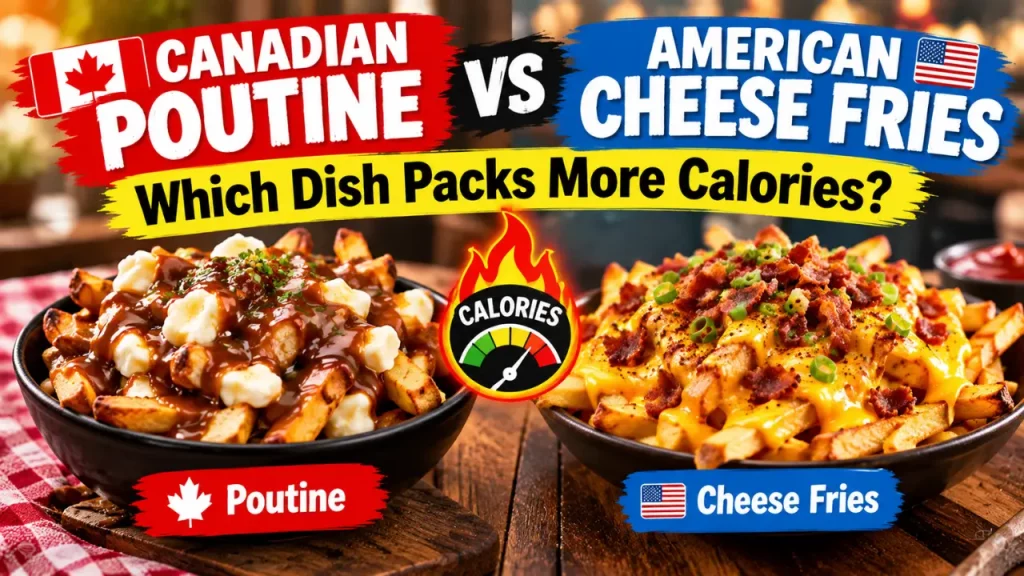
Most people assume that whichever plate has the higher calorie count is automatically the worse thing you could order. By that logic, a reader could just glance at a menu, pick the lower number, and feel good about the decision. But calories are only one slice of the story, and in this matchup, the dish with fewer calories can still be the one that does more damage to your blood pressure or your arteries, depending on who you are.
1. The calorie question, answered quickly
Poutine typically lands somewhere between 700 and 1000 calories per serving, while cheese fries swing far more wildly, from about 460 calories at the modest end to as much as 1240 calories when a restaurant piles on bacon, extra cheese sauce, or a larger fry portion. So on raw calories alone, cheese fries can be either the lighter option or the heavier one, while poutine stays in a narrower, consistently high band. That makes calories a poor single measure for deciding which dish is “healthier” — which is exactly why sodium and saturated fat matter more for most real-world decisions.
2. Where the sodium actually comes from
Poutine’s gravy is usually built on concentrated beef, chicken, or vegetable stock, thickened with a butter-and-flour roux. Concentrated stock bases, whether made from scratch or from a commercial concentrate, are among the saltiest components in any restaurant kitchen, because salt is what gives a thin liquid the illusion of depth and richness. Cheese fries take a different sodium route: processed cheese sauces rely on emulsifying salts, often sodium citrate or sodium phosphate, to stay smooth and pourable under a heat lamp for hours. Shredded cheddar melted directly on top of fries carries less of that added emulsifier salt than a pump-dispensed cheese sauce does, but cheddar itself is still a naturally salty cheese.
The practical takeaway is that neither gravy nor cheese sauce is the “safe” topping. The dish that ends up higher in sodium on any given plate usually comes down to which kitchen used a saltier stock base versus which kitchen used a heavier hand with processed cheese sauce, rather than something inherent to poutine or cheese fries as categories.
3. Saturated fat: butter gravy versus melted cheese
This is where the dishes start to look more similar than different, and where the real evidence lives. A large review on saturated fatty acids and cardiovascular disease found that dairy fat, the kind found in cheese curds, cheddar, and butter-based gravies alike, is associated with a slightly lower cardiovascular risk than the saturated fat found in meat, but still carries a significantly greater risk than unsaturated fats when it replaces them in the diet. In other words, swapping either topping for something built on olive oil or nuts would lower risk, but swapping poutine gravy for cheese sauce, or vice versa, does little for your saturated fat exposure, because both are dairy-fat-heavy.
A comprehensive review of dairy foods and cardiometabolic risk complicates the picture further, reporting that randomized controlled trials have shown mixed effects of regular-fat dairy on blood lipids and blood pressure, which has led researchers to question whether dairy fat behaves the same way as other saturated fats in the body. A separate review of dairy and cardiovascular disease evidence adds a caveat worth taking seriously: short-term intervention studies have shown that diets higher in saturated fat from whole milk and butter do raise LDL cholesterol when those fats replace unsaturated fats in the diet. Butter-based gravy fits that description almost exactly, which is a point in cheese fries’ favor if the cheese used is a lower-fat shredded cheddar rather than a butter-enriched processed sauce.
4. Does either dish offer any nutritional upside?
Cheese curds and melted cheddar both supply more protein per gram than gravy does, since gravy is mostly water, starch, and fat with little protein contribution. That gives cheese fries a modest edge if protein is your goal, though neither dish was designed with protein in mind, and the amount contributed by a few ounces of melted cheese is small next to the fat and sodium that come with it.
The research on whether cheese itself helps or hurts is genuinely unsettled. A cross-sectional study of cheese consumption among Iranian adults found that higher cheese intake was associated with higher C-reactive protein, a marker of inflammation, alongside some favorable changes in cholesterol subtypes, a mixed result that doesn’t point clearly either way. Meanwhile, a study tracking dairy consumption and artery thickness in elderly women found that cheese and milk intake were not associated with carotid artery thickening at all, while yogurt specifically was linked to less thickening. The honest summary: cheese is not shown to be protective in the way yogurt appears to be, but it also isn’t clearly shown to be harmful on its own in these observational studies, which can’t prove cause and effect.
5. Who should actually avoid which dish
For someone managing high blood pressure or on a sodium-restricted diet, the deciding factor should be the specific sauce in front of them, not the dish’s name. A thin, intensely reduced gravy poured generously over poutine can carry just as much sodium as a heavy ladle of processed cheese sauce. If you have hypertension, ask whether the gravy is made from a concentrated base or a lighter stock, and whether the cheese sauce is a processed blend or simple shredded cheese — the lighter versions of either dish are the safer order.
For someone tracking saturated fat because of high LDL cholesterol or existing heart disease, the research above points toward cheese fries made with shredded cheddar rather than pumped cheese sauce, and toward poutine only if the gravy is lean rather than butter-heavy, since butter-based fat sources have been shown to raise LDL more directly than cheese fat in short-term trials. For weight loss specifically, the deciding factor circles back to portion and topping load rather than the dish category, since a modest poutine can sit at 700 calories while a loaded cheese fries platter can exceed 1200.
6. A decision rule that isn’t just about calories
Before ordering, it helps to ask three questions rather than one. First, is the sauce a concentrated stock gravy or a processed cheese sauce, since either can be the saltier option depending on the kitchen. Second, is the fat source butter-based or cheese-based, since butter has more directly been shown to raise LDL cholesterol when it replaces unsaturated fat in the diet. Third, is the portion a shareable appetizer or a full meal-sized plate, since portion size swings the calorie count far more than the dish’s identity does.
Run through those three questions and you’ll often find that the “healthier-sounding” dish on a given menu is really just the smaller, less sauced-up version of either plate, not poutine or cheese fries as a category.
Sources
- Saturated Fatty Acids and Cardiovascular Disease (2017)
- Comprehensive Review of the Impact of Dairy Foods and Dairy Fat on Cardiometabolic Risk (2016)
- Influence of dairy product and milk fat consumption on cardiovascular disease risk (2012)
- Cheese consumption in relation to cardiovascular risk factors among Iranian adults (2014)
- Association between yogurt, milk, and cheese consumption and carotid artery intima-media thickness (2011)

James Carter
The EverBBQ editorial desk — covering BBQ news, features and everything off the grill.