Beloved pizza brand discontinued after 89-year run- Many Americans Grew Up With
Celeste is leaving freezers for good — here's how to pick a real replacement and whether other legacy frozen brands are next.
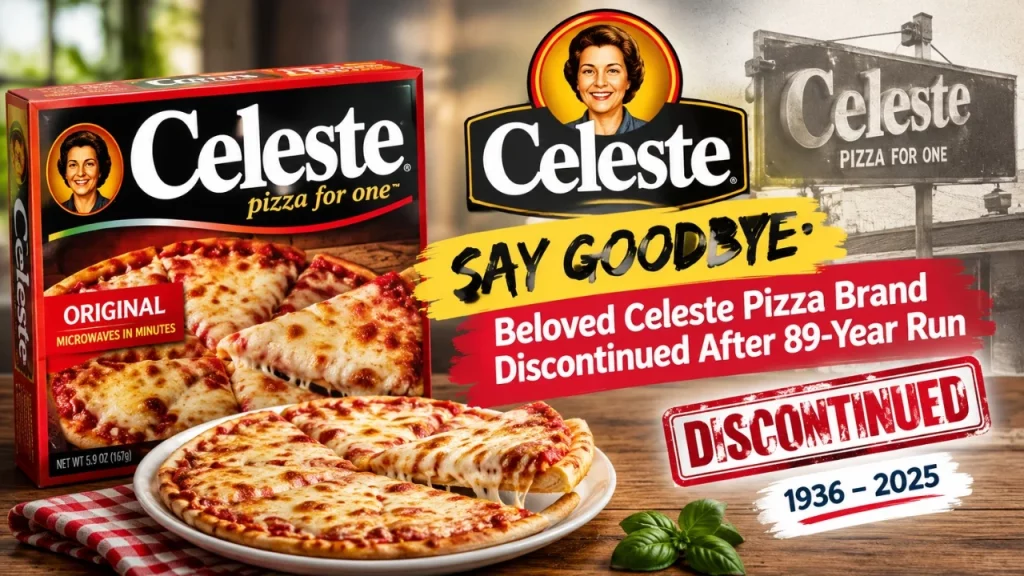
Celeste pizza is being phased out, and the freezer aisle is about to lose one of its last true budget single-serve originals.
The brand traces back to a 1937 beer garden recipe, was folded into Conagra’s portfolio through its 2018 acquisition of Pinnacle Foods, and its removal has been framed by the company’s leadership as a matter of focusing resources rather than any safety or quality problem. You can still find it on shelves at Kroger, Walmart, Harris Teeter and Dollar Tree for now. None of that tells you what to put in your cart next, whether your other favorite freezer staples are quietly on the same chopping block, or why a category that’s reportedly growing would shed one of its oldest names. That’s the gap worth closing.
Option One: Stick With a Legacy Single-Serve Brand
The instinct for a lot of shoppers will be to simply grab the nearest individual frozen pizza and assume it’s an even swap. It usually isn’t. Single-serve frozen pizzas vary enormously in crust thickness, cheese load, and sodium concentration, because the crust-to-topping ratio shrinks as the pie gets smaller, and manufacturers compensate with seasoning and cheese blends to keep flavor intense per bite. That means a personal-size pizza from one brand can run meaningfully saltier per ounce than a family-size pizza from the same company, simply because there’s proportionally more crust and cheese edge per serving.
Brands like Red Baron and Totino’s dominate the category’s volume, but they built their single-serve lines differently. Red Baron’s personal pizzas lean toward a thicker, bread-like crust meant to feel substantial on its own, which tends to push calories up per pie even when toppings are modest. Totino’s party pizzas and its single-serve offshoots go the other direction: thin, crisp crust, lower per-unit price, but a saltier flavor profile because the seasoning has to carry more of the eating experience on a thinner base. Neither is a precise nutritional clone of Celeste, which built its identity on being a genuinely small, inexpensive, thin pizza rather than a mini version of a family pie.
Option Two: Shift to Store Brand or Regional Frozen Pizza
The option almost nobody writes about is the one that matters most to anyone who bought Celeste specifically because it was cheap. Store brands sold under grocery chains’ private labels, along with regional frozen pizza makers that never got national marketing budgets, have spent years quietly copying the exact format Celeste occupied: a small, thin, individually wrapped pizza priced to compete on cents-per-ounce rather than on brand recognition. These are frequently manufactured in the same co-packing facilities that produce name-brand frozen food, meaning the ingredient quality gap between a store brand and a mid-tier national brand is often smaller than shoppers assume, while the price gap is not.
For a true budget replacement, the private-label personal pizza in your own grocery chain’s freezer case is very likely the closest match to what Celeste actually was, both in format and in intent. The tradeoff is consistency: store-brand recipes can change without much notice, and flavor profiles vary by region in ways national brands try to standardize.
The real lesson here isn’t which single pizza replaces Celeste — it’s that shoppers who build loyalty around a legacy brand name are, often without realizing it, actually loyal to a price point and a portion size, and those can be matched by brands they’ve never heard of.
A Practical Framework for Picking a Replacement
- Price per ounce, not price per box. Divide the shelf price by the total weight in ounces printed on the package. A slightly more expensive pizza that weighs noticeably more can still be the better per-ounce value.
- Sodium per serving as labeled, not per package. Some single-serve pizzas are labeled as two servings, which halves the sodium and calorie numbers printed in the main nutrition line. Check the servings-per-container line before comparing anything.
- Calories per ounce of actual pizza, not per unit. A smaller pie with fewer total calories can still be denser per ounce than a larger one, which matters if you’re comparing a thin-crust single-serve against a thicker personal pizza.
- Ingredient list length. Shorter, more recognizable ingredient lists tend to track with simpler, less heavily processed cheese and sauce blends, regardless of brand name.
Is This Part of a Bigger Pattern at Conagra
Celeste is not an isolated casualty. Large packaged food companies routinely run periodic SKU reviews, pruning the lowest-volume, lowest-margin items in a portfolio to concentrate marketing and manufacturing capacity on brands with the biggest growth potential. Conagra’s stated focus on reallocating resources points toward exactly this kind of review, and it’s rarely a one-brand event. When a legacy brand with slim margins and an aging customer base gets cut, it’s usually because the same shelf space and factory line time can produce more revenue under a brand with stronger marketing support, better retailer placement, or higher per-unit pricing. Any Conagra-owned frozen brand that occupies a similarly small, low-price, low-visibility niche is operating under the same financial logic that just ended Celeste, whether or not it has been named publicly. Fans of other old-guard freezer names shouldn’t assume history alone is protection.
Why a Growing Category Still Cut a Brand
The seeming contradiction — a frozen pizza market that’s reportedly expanding while a frozen pizza brand gets discontinued — resolves once you separate category demand from brand-level margin. Growth in frozen pizza overall is increasingly concentrated at the premium end, where shoppers pay more per pie for perceived quality, restaurant-style crusts, or recognizable chef and restaurant tie-ins. Value and single-serve pizzas, by contrast, compete almost entirely on price, which compresses margins even when unit volume holds steady. A company managing a large portfolio will often protect the segment where rising prices translate directly into rising profit, and quietly retire the segment where sales might be stable but profit per unit keeps shrinking. That is a margin decision, not a verdict on whether people still wanted to eat Celeste pizza.
Timeline: When Shelves Actually Go Empty
Discontinuations like this rarely happen on a single date nationwide. Retailers typically sell through existing inventory rather than pulling product immediately, and because Celeste was distributed through large chains alongside smaller regional grocers and dollar stores, the sell-off will not be uniform. Larger chains with centralized ordering tend to stop reordering first and clear remaining stock within a few billing cycles, while smaller independent and regional stores can keep selling existing inventory considerably longer simply because their restocking schedules are slower and less centrally managed. Anyone who wants to stock up should treat dollar stores and smaller regional chains as the longer tail, and larger supermarket chains as the places where it will disappear soonest.
| Factor | Legacy Single-Serve Brand (Red Baron / Totino’s style) | Store Brand or Regional Pizza |
|---|---|---|
| Price position | Mid-range, brand-premium pricing | Lowest price per ounce, closest to Celeste’s original positioning |
| Crust style | Thicker (Red Baron) or thinner-crisp (Totino’s), both built for family-size scaling down | Typically thin, built specifically as a personal-size product |
| Sodium tendency | Seasoning often intensified per ounce to compensate for small format | Varies by manufacturer, often comparable or lower per ounce |
| Availability | Wide national distribution, consistent recipe | Regional or chain-specific, recipe can shift without notice |
| Risk of future discontinuation | Lower, protected by strong national sales volume | Variable, dependent on individual retailer strategy |
The Verdict
If what you actually valued in Celeste was the price and the portion, not the name on the box, a store-brand or regional single-serve pizza is the more honest replacement, even though it will never get the marketing push that keeps a name like Red Baron or Totino’s visible on every aisle endcap. If you specifically want the thicker, more indulgent personal-pizza eating experience and are willing to pay more per ounce for it, a national single-serve line is the safer long-term bet, if only because it’s far less likely to vanish in the next portfolio review. Either way, the brand name on the box matters less than reading the servings line and doing the ounce math before you buy.
Which would you actually switch to — a national single-serve brand, or whatever your store sells under its own label?

Tom Fletcher
The latest from the Australian and global BBQ scene — comps, cooks and culture.