Bambara Groundnut: Southern Africa’s Traditional Protein-Rich Superfood
Lab-sheet protein numbers for Bambara groundnut don't survive the cooking pot — here's what the real digestibility data means for your plate.
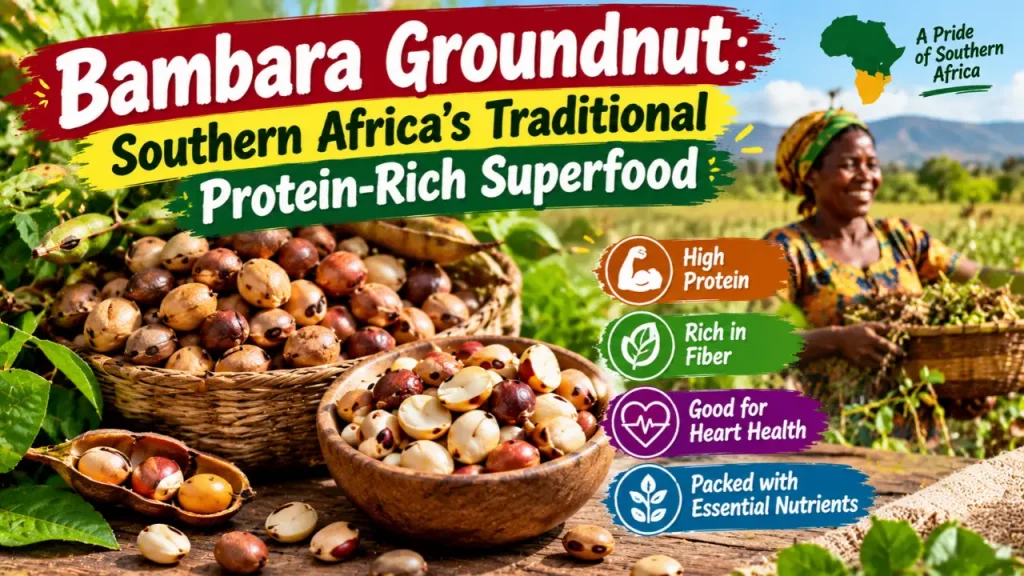
A woman in a Pretoria market stall scoops dried bambara groundnuts into a paper bag, and the hand-written sign above her table reads “protein superfood.” At home that night, the beans soak from afternoon into evening, then simmer for nearly two hours until they finally soften. The cook who bought them expecting a steak-like protein hit is, without knowing it, about to eat something closer to a modest side bean than a meat replacement — and the gap between the label and the bowl is the real story nobody has measured for her.
- Dry, raw bambara groundnut tests at 17–24% protein in the lab, but a 2023 South African study measuring the bean as it’s actually cooked and eaten found only about 9.4% protein per 100 g — less than half the dry-weight figure.
- Tannins, phytic acid, oxalates and trypsin inhibitors in the raw bean genuinely interfere with protein digestion and mineral absorption, per a 2025 review of bioprocessing and antinutrients in Bambara groundnut.
- Bloating, gas, and — rarely — legume allergy are real, documented risks, not footnotes, and people with gout, kidney stone history, or mineral deficiencies have specific reasons to be careful.
- Processing choices (dehulling, sprouting, fermenting) change the nutrition math more than the standard “soak and boil” instruction suggests.
What the Protein Numbers Actually Show
The 17–24% protein figure that circulates for Bambara groundnut comes from dry-weight laboratory analysis — the bean before it absorbs water and before cooking losses occur. That’s a legitimate number, but it isn’t what ends up on anyone’s plate. A 2023 South African study that analyzed the legume as consumed — soaked, boiled, and ready to eat — recorded roughly 9.4 g of protein per 100 g, a fraction of the dry-weight claim once water weight and cooking are accounted for.
Put that beside other cooked legumes using standard USDA composition data: cooked chickpeas run close to 8.9 g protein per 100 g, and cooked soybeans come in far higher, around 16.6 g protein per 100 g — nearly double the cooked bambara figure. So on an as-eaten basis, bambara groundnut sits roughly in line with chickpeas, not the protein powerhouse the dry-weight number implies, and it trails soy by a wide margin.
Why Protein Quality, Not Just Quantity, Falls Short
Protein amount is only half the picture. What matters for muscle and tissue repair is how much of that protein the body can actually absorb and use — measured by scores like DIAAS or PDCAAS. Published, standardized DIAAS scores specifically for raw Bambara groundnut are not yet well established in the literature, which is itself telling: soy and chickpea have been studied and optimized for digestibility for decades, while bambara groundnut remains what researchers call an “underutilized” crop.
What is well documented is why its digestibility likely lags. The same 2025 review on bioprocessing found that the raw bean contains tannins, phytic acid, oxalates, and trypsin inhibitors — compounds that physically bind to protein or block the digestive enzyme trypsin from breaking it down. Trypsin inhibitors in particular don’t just slow digestion; they reduce the total fraction of protein your gut can extract at all, which is precisely what a protein-quality score is meant to capture. A separate 2026 review of legume proteins found that fermentation can reverse much of this damage, breaking proteins down into peptides and free amino acids and measurably improving digestibility and mineral availability — but that applies to processed, fermented legume products generally, not to the raw, simply boiled bean most people actually eat at home.
What This Means If You Eat It Regularly
For an occasional side dish, none of this is alarming. But if bambara groundnut becomes a primary protein source, the antinutrient load matters in three concrete ways.
First, digestion. The combination of fiber, resistant starch, and oligosaccharides typical of legumes causes bloating and flatulence in many people, and bambara groundnut is no exception — the same gut bacteria that ferment undigested carbohydrate in beans and lentils do the same job here, producing gas as a byproduct.
Second, mineral absorption. Phytic acid and tannins bind to iron, zinc, and calcium in the gut, reducing how much your body can take up from the same meal. For someone already low in iron or zinc, a diet leaning heavily on unprocessed bambara groundnut can quietly work against them rather than for them.
Third, allergy. Legume allergy is uncommon but real, and because Bambara groundnut is botanically related to other legumes, people with known peanut, soy, or other legume allergies should treat it as a new potential allergen to introduce cautiously rather than assume it is automatically safe because it’s “just a groundnut.”
Who Should Be Cautious
Three groups have specific reasons to moderate intake or check with a clinician first. People with diagnosed legume or peanut allergies should introduce Bambara groundnut carefully, in small amounts, given the cross-reactivity risk common among legumes. People with a history of calcium-oxalate kidney stones should be aware of its oxalate content, documented in the same bioprocessing review, and avoid making it a daily staple without medical input. And anyone relying on it as their sole protein source — rather than pairing it with a cereal grain, as is traditionally done — should know that low protein quality combined with a modest cooked-protein yield means it will not substitute cleanly for meat, dairy, or soy on a gram-for-gram basis.
What to Do About It
The fix isn’t to avoid Bambara groundnut; it’s to process it the way research shows actually reduces antinutrients, rather than stopping at a basic soak-and-boil. Dehulling — removing the outer seed coat before cooking — strips out a large share of the tannins concentrated in the hull. Sprouting or germinating the beans before cooking measurably lowers phytic acid levels. Fermenting bambara flour, rather than simply boiling the whole bean, goes further still: the 2026 review on legume protein fermentation found that microbial and enzymatic activity during fermentation breaks proteins into more digestible peptides and reduces antinutritional factors at the same time, a double benefit that boiling alone doesn’t deliver.
On sourcing, look specifically for dehulled bambara flour or processed bambara products sold through African grocery specialists and online legume retailers, rather than only whole dried beans; processed forms tend to have gone through at least one antinutrient-reducing step already. Whichever form you buy, pair it with a cereal grain as tradition already does, cook it thoroughly rather than lightly, and treat it as a useful, affordable plant protein addition — not a one-to-one swap for soy or meat.
Sources
