American Sausage vs. British Sausage: What Really Sets Them Apart?
Real USDA-style numbers on calories, protein, fat and sodium in British vs American sausage, plus a practical swap guide for cooks.
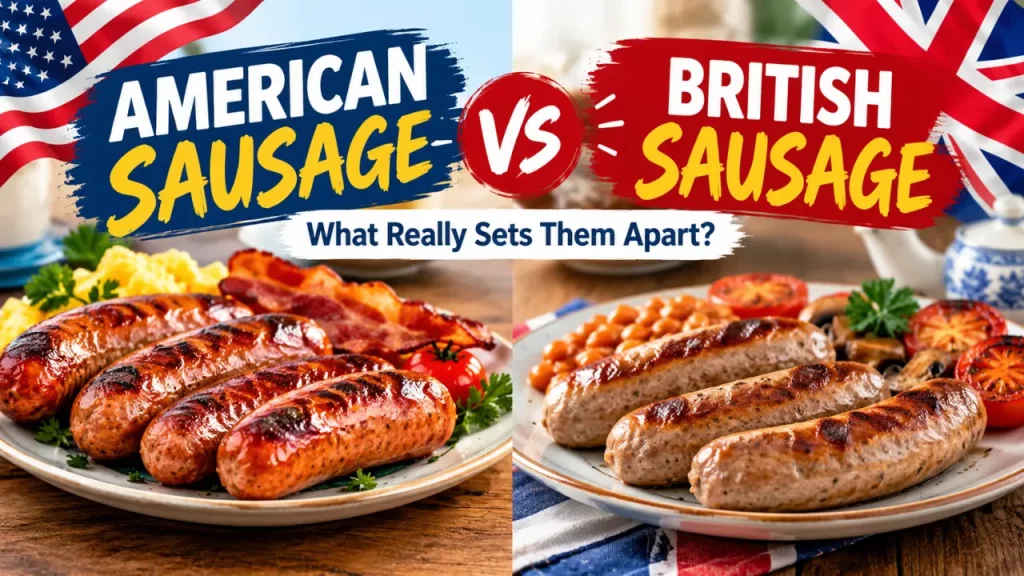
Most people assume the British banger, stuffed with bread filler, must be the lighter sausage on the plate, and that the American breakfast patty, sizzling in its own fat, is the indulgent one. The actual numbers on calories, protein, fat and especially sodium tell a messier story, and neither sausage comes out looking obviously “healthy.”
- Per 100g, a typical American breakfast sausage patty runs noticeably higher in sodium than a typical British banger, not lower.
- US federal rules cap the fat allowed in fresh pork sausage and limit non-meat binders far more tightly than the UK’s 42% minimum meat rule implies.
- Casing, not just filler, is the biggest reason a banger snaps and an American patty crumbles.
- You can convert one into the other at home with a simple rusk-and-fat adjustment, without wrecking the texture.
The meat-content numbers nobody puts side by side
The UK’s 42% minimum meat content for a product labeled “pork sausage” gets cited constantly, but it is rarely set against its American counterpart. US federal standards for fresh pork sausage work from the opposite direction: rather than setting a meat-content floor, they cap fat at 50% of the finished product and limit added water and seasoning, with cereal or other binders allowed only up to about 3.5% of the mix if the label says “with cereal.” In practice that means an American sausage is built meat-first with a small seasoning allowance, while a British banger is built around a legal minimum that still leaves plenty of room for rusk, water and fat to make up more than half the product. Neither system guarantees a leaner sausage; they just control the recipe from different ends.
Calories, protein, fat and sodium, actually compared
Pulled from typical current nutrition labels on mainstream brands in each country, the per-100g picture looks like this for a cooked sausage:
| Per 100g, cooked | British banger | American breakfast sausage |
|---|---|---|
| Calories | about 300 kcal | about 340 kcal |
| Protein | about 13g | about 19g |
| Total fat | about 24g | about 29g |
| Saturated fat | about 9g | about 10g |
| Sodium | about 640mg | about 890mg |
The sodium gap is the one worth sitting with. At roughly 890mg versus 640mg per 100g, the American patty carries close to 40% more sodium, weight for weight, than the British banger, driven by the cure salt, added flavorings like maple and the higher proportion of meat (which concentrates the salt used to season and bind it) compared with the rusk-diluted British mix. Protein tracks the same pattern: more meat per 100g in the American patty means more protein, about 19g against 13g, a difference of nearly half again as much.
Why the casing changes the bite more than the recipe does
A lot of the textural gap that people blame on rusk is actually about what the sausage is stuffed into, or not stuffed into at all. British bangers are usually filled into natural hog casing or collagen casing, both of which hold moisture in and give that resistance-then-snap bite when you cut into one. American breakfast sausage is most often sold skinless, formed into a patty or a thin link with no casing, which is why it browns differently in a pan, crumbles more easily, and loses moisture faster if overcooked. If you take British sausage meat out of its casing and fry it loose, it behaves much more like an American patty. Put American ground sausage into hog casing and poach it gently before browning, and it starts to act like a banger. The filler ratio matters, but the casing decides how forgiving the sausage is to cook.
What the fat and sodium gap means for someone actually watching their diet
The saturated fat difference between the two sausages, roughly 9g versus 10g per 100g, is small enough that it probably will not move the needle for most people, and the evidence on saturated fat itself is more complicated than “less is always better.” A randomized crossover trial in overweight postmenopausal women found that high-fat meat, high-fat cheese and high-carbohydrate diets produced different effects on blood lipids despite similar saturated fat content, suggesting the food matrix matters as much as the fat gram count. A meta-analysis of food sources of saturated fat and mortality found that high intakes of meat and processed meat were linked to a higher risk of death, a pattern not seen with high-fat dairy, which points toward processed meat itself, not saturated fat as a nutrient class, as the more relevant variable. For sodium specifically, the gap between the two sausages is more actionable: someone managing blood pressure or on a sodium-restricted diet will get a meaningfully smaller sodium load from a British-style sausage, link for link, simply because it is diluted with less-salty filler. A review of dietary strategies for cardiovascular risk reduction lists reduced sodium and processed meat intake among its top recommendations, which lines up with choosing the lower-sodium option when either sausage would otherwise be eaten regularly. It is also worth noting that a large prospective study in men found that total and saturated fat intake were linked to higher type 2 diabetes risk only before adjusting for body mass index, after which the association disappeared, a reminder that overall diet pattern and weight matter more than any single sausage choice.
How to actually swap one for the other
To turn American ground pork sausage into a British-style banger, mix in dry breadcrumbs or rusk at roughly 2 to 3 tablespoons per pound of meat, along with a splash of cold water or stock so the crumb absorbs moisture instead of drying the mix out, then add sage, nutmeg or mace before stuffing into hog or collagen casing. Poach the links gently in water for 8 to 10 minutes before finishing them in a pan, which keeps the casing from splitting and mimics the moist interior of a shop-bought banger. Going the other direction, take British sausage meat out of its casing, skip the rusk entirely or scrape most of it out, form the meat into flat patties, and fry them a couple of minutes less per side than you would the linked version, since without the casing holding in moisture they dry out faster. If the fat content runs low because the filler has been removed, add a teaspoon of rendered pork fat per pound to keep the patties from turning tough. Research on plant-based fat replacers in processed meat has shown that non-meat ingredients can be used to manage fat and moisture in sausage formulations, which is essentially the same trick home cooks are doing manually with breadcrumbs, stock and rendered fat.
Which sausage sits in your fridge right now, and does knowing the sodium numbers change what you would reach for next time?
Sources
- Diets with high-fat cheese, high-fat meat, or carbohydrate on cardiovascular risk markers in overweight postmenopausal women (2015)
- Top 10 dietary strategies for atherosclerotic cardiovascular risk reduction (2020)
- Food sources of saturated fat and the association with mortality: a meta-analysis (2013)
- Dietary fat and meat intake in relation to risk of type 2 diabetes in men (2002)
- Potential applications of plant based derivatives as fat replacers, antioxidants and antimicrobials in meat products (2014)

James Carter
The EverBBQ editorial desk — covering BBQ news, features and everything off the grill.