Hershey added new disclaimer on wrapper after Reese’s pumpkin lawsuit!
Reese's swapped "Decorating Suggestion" for a blunter line on pumpkin wrappers this October — but it's not the legal win it looks like.
Have you actually read the fine print on a Reese’s pumpkin wrapper lately, or are you still picturing the little “Decorating Suggestion” line from a few Halloweens ago?
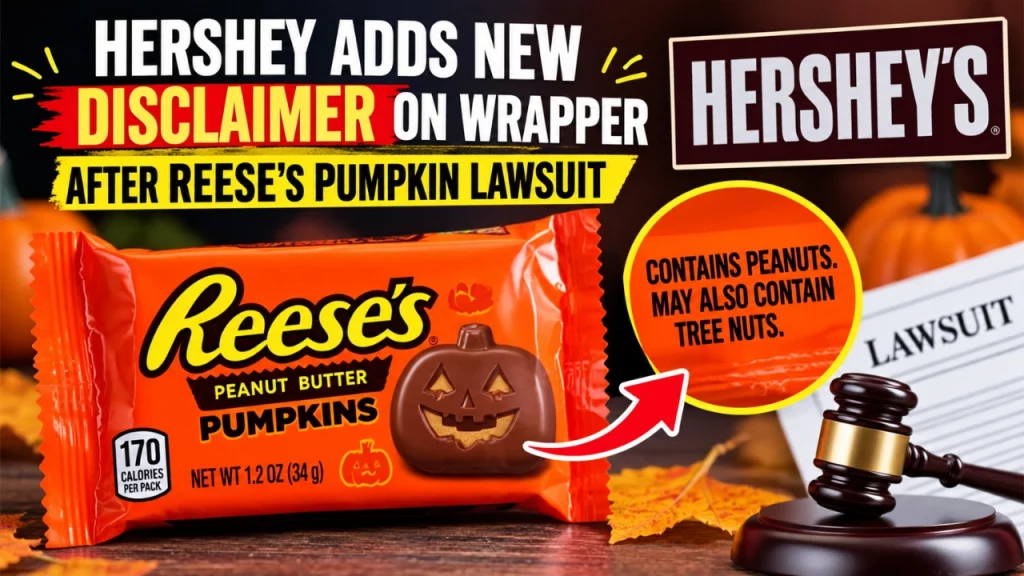
The short version: Hershey quietly swapped the old “Decorating Suggestion” language for a more direct line reading “Carving not on actual product,” and it started showing up on shelves around October 6 — but the change followed a lawsuit dismissal, not a courtroom loss, so it’s a business decision rather than an admission that the old wrapper was misleading.
1. The exact new wording, and why it matters
The new disclaimer on Reese’s pumpkin-shaped peanut butter cup packaging reads, in effect, “Carving not on actual product.” That phrasing is a deliberate step away from the old “Decorating Suggestion” tag that used to sit near the product photo. The difference sounds small, but it isn’t. “Decorating Suggestion” is vague marketing language that could be read as a stylistic note about how you might choose to display the candy. “Carving not on actual product” is a factual statement: the jagged jack-o’-lantern face on the wrapper is not something you will find molded into the chocolate inside. There’s no room left for a shopper to argue they thought the candy itself would arrive carved.
This matters because the original 2023 Florida lawsuit centered on exactly that gap between the wrapper art and the smooth, faceless candy inside the package. A packaging line that plainly states the carving isn’t on the product closes that interpretive gap before it can become a legal argument again.
2. When the new wrapper actually hit shelves
If you’re looking for the moment the fine print changed, it lines up with early October of this year, with October 6 marking when the updated wrapper began appearing in stores. That timing isn’t random — it sits right in the thick of the Halloween candy season, when Reese’s pumpkins are moving through registers at their highest volume. Rolling out new packaging language during peak sales means the clearest, least ambiguous version of the disclaimer reaches the largest number of customers, right when scrutiny of seasonal candy shapes is highest.
It’s worth being precise here because a lot of coverage talks about “the new disclaimer” as though it’s been there for years. It hasn’t. For most of the pumpkin candy’s run, “Decorating Suggestion” was the operative phrase. The blunter “Carving not on actual product” wording is new to this season.
3. Did the plaintiff actually win anything?
No, and this is the part that trips people up. The lawsuit that’s getting tied to this wrapper change was a 2026 case that was dismissed for lack of standing, not because a judge ruled the wrapper was accurate or inaccurate on the merits. Lack of standing means the court decided the plaintiff hadn’t shown they were the right person, or hadn’t suffered the kind of harm, needed to bring the case forward at all. The judge never had to weigh in on whether a carved pumpkin face on a wrapper next to a smooth candy inside is actually deceptive.
So there was no finding against Hershey, no monetary win for the plaintiff, and no court order requiring any wrapper change. Hershey had already pointed to the existing “Decorating Suggestion” language in its court filing as evidence the company wasn’t hiding anything. In plain terms: the case ended on a technicality, not on the facts of the candy.
4. Why change the wrapper after winning, not losing
This is the detail that actually makes the story interesting. Companies don’t usually rewrite packaging after a legal win — a dismissal is typically treated as validation to leave things alone. So why move at all?
The most reasonable explanation is that a dismissal on standing is a fragile kind of win. It doesn’t prevent a different plaintiff, with a stronger claim to standing, from filing the same complaint again next Halloween. Rather than rely on winning the same procedural argument repeatedly, tightening the wrapper language removes the underlying ambiguity that gave the original complaint its opening in the first place. It’s a cheaper, more permanent fix than fighting the same fight every season. Updating a label is inexpensive compared to years of repeat litigation, even litigation the company expects to win again.
None of this requires Hershey to say the old wrapper was wrong. A company can believe its prior disclosure was perfectly adequate and still decide a clearer one lowers the odds of being sued at all, which is a different goal than defending a past label in court.
5. Does “Decorating Suggestion” disappear everywhere, or just here?
This is where people’s assumptions run ahead of the facts. The visible evidence is specifically about the pumpkin-shaped Reese’s product tied to the lawsuit — that’s the item where “Carving not on actual product” has replaced the older phrase. There’s no confirmed, wrapper-by-wrapper rollout showing “Decorating Suggestion” has vanished from every Hershey product that uses shaped candy and seasonal artwork.
Treat the new wording as confirmed for the pumpkin item tied directly to the dispute, and treat its presence on anything else as unconfirmed rather than assumed. If you pick up a different holiday-shaped item from the same company and see the old phrase still printed on it, that’s not a contradiction — it likely just means that product wasn’t part of the specific packaging run that was updated.
6. What about the ghosts, bats, footballs, and holiday shapes?
Reese’s sells a rotating cast of shaped peanut butter cups across the year — ghosts and bats for Halloween, footballs for autumn sports season, trees and snowmen in winter, hearts in February. Every one of these relies on the same basic setup as the pumpkin: a molded shape with printed or illustrated detail on the wrapper that’s more elaborate than what the actual candy surface looks like.
There is no confirmed, public breakdown showing whether those other shaped items have received the same “Carving not on actual product” update or an equivalent disclaimer of their own. Given that the pumpkin was the specific target of the lawsuit, it’s reasonable to expect the pumpkin packaging to be first in line for any wording change, with other shapes updated later if the company decides the same legal logic applies to them. Until that’s confirmed, shoppers checking a bat or football wrapper for a matching disclaimer may or may not find one.
7. No, this has nothing to do with “real chocolate”
A separate rumor has been floating around asking whether Reese’s is “using real chocolate again,” as if the wrapper change signals some kind of recipe reversal. It doesn’t. The new disclaimer is about the printed artwork on the packaging describing a carved face, not about the composition of the peanut butter cup coating inside. Nothing in the standing dismissal, the lawsuit, or the wrapper update touches ingredients, recipes, or chocolate sourcing. If you’ve seen that claim paired with this story, it’s worth treating as an unrelated rumor rather than a fact tied to the actual legal situation.
8. What this actually tells shoppers
Put together, the facts are narrower than the headline suggests. A specific wrapper, for a specific pumpkin-shaped product, got a sharper disclaimer around October 6, after a lawsuit was thrown out on a procedural issue rather than decided on its merits. Hershey didn’t admit the old label was misleading, and the plaintiff didn’t walk away with a ruling in their favor. What happened is closer to risk management: a clearer label now, instead of defending the same argument again next season.
Do you think a plainer label like “Carving not on actual product” actually changes what you expect when you grab a bag of Reese’s pumpkins, or were you never confused by the wrapper art in the first place?

Mick Hudson
Low-and-slow recipes, rubs, sauces and fire management from our pitmaster team.