Smoked Fish Recall Alert: Is Your Starfish Seafood Trio Safe to Eat?
You ate it three weeks ago and feel fine—here's why that doesn't mean you're out of the woods, and what freezing really did.
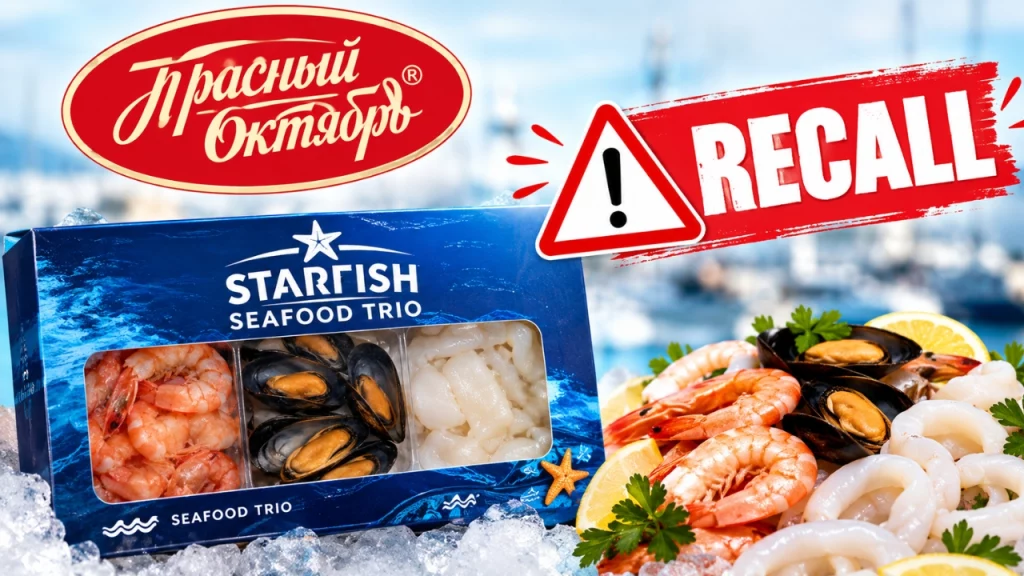
The vacuum-sealed package has been sitting in the back of someone’s freezer since before the holidays, pushed behind a bag of peas, forgotten. Then a neighbor mentions a recall notice they saw on their phone, and suddenly that person is standing in front of an open freezer door at 11 p.m., turning a frosty bag of cold smoked salmon over in their hands, trying to remember exactly when they bought it and whether they already ate half of it on crackers two weeks ago.
That moment of “wait, did I already eat this?” is the real question most people have right now, and it’s the one most recall coverage skips past on its way to the refund instructions. The short answer: if you ate the recalled Starfish Seafood Trio product, you cannot assume you’re safe just because no symptoms have shown up yet, freezing it did not neutralize the risk, and where you bought it matters less than where it ended up.
Myth: No symptoms yet means you’re in the clear
Listeria is not like typical food poisoning, where you know within hours or a day whether you got sick. A review of documented listeriosis incubation periods that examined 37 confirmed single-exposure cases found the time between eating contaminated food and developing invasive illness ranged from 3 days to 70 days, with cases split among central nervous system infections, bloodstream infections, and pregnancy-associated cases. A separate cluster of gastrointestinal-only outbreaks in the same review had a much shorter window, closer to typical food poisoning timing. That split matters: the mild stomach-upset form shows up fast, but the dangerous invasive form—the one that can cause meningitis, bloodstream infection, or pregnancy loss—can take more than two months to appear.
That means a recall announced today with “zero illnesses reported” is describing a snapshot, not a verdict. Someone who ate the fish five weeks ago and is only now developing a fever, stiff neck, or confusion is still inside the plausible incubation window. If you ate this product and develop fever, muscle aches, headache, stiff neck, confusion, or loss of balance within ten weeks of eating it, tell your doctor specifically that you ate recalled cold smoked fish. That detail changes what tests they order.
Myth: If the facility tested positive, the fish you ate must be contaminated too
Recall notices often blur an important distinction: did the finished, packaged fish test positive for Listeria, or did inspectors find it on a drain, a conveyor belt, or a wall in the processing environment? Those are not the same risk level. An environmental finding means the bacteria is present somewhere in the facility and could, in theory, have cross-contaminated product during slicing or packing. A positive result from the sealed product itself means it was actually present in food that reached a store shelf.
Environmental contamination isn’t a minor technicality, either. Research on Listeria biofilm formation on stainless steel under simulated fish-processing conditions found that the bacteria readily colonize equipment surfaces over time, and once established, these biofilm communities tolerate disinfection chemicals that would normally kill free-floating bacteria. In other words, a facility that tests positive on equipment isn’t a one-time fluke—it’s a sign the organism may have built a persistent foothold that keeps shedding into product runs over weeks, not just the specific batch that triggered the recall. If the notice you read doesn’t specify which type of test came back positive, treat the product as higher risk, not lower, until the company clarifies.
Myth: Freezing the fish before the recall killed the bacteria
This is the one people most want to be true, and it isn’t. Freezing stops bacterial growth by putting cells into a kind of suspended animation; it does not kill them the way heat does. A laboratory study on Listeria monocytogenes survival through repeated freezing and thawing cycles, though conducted in dairy and plant-based milk rather than fish, demonstrated that the bacteria’s tolerance to freeze-thaw stress varied by the product it was growing in, but survival was the consistent pattern, not elimination. Listeria is also known to handle cold and salty environments better than most foodborne pathogens, which is a separate line of evidence: a study profiling fifty genetically distinct Listeria strains found it took a concentration of 8% salt to inhibit growth in most strains, far saltier than any cold-smoked fish brine, and that the organism adapts readily to the kind of stress factors a refrigerator or freezer applies, according to an analysis of environmental stress tolerance in Listeria strains. Put plainly, your freezer preserved the fish and the bacteria equally well. If you froze the product before you heard about the recall, that freezer time bought you nothing in terms of safety, and the clock on incubation still started the day you ate it, not the day you found out.
Myth: The recall only applies if you bought it in one of the listed states
Recall notices list the states where a product was sold, but fish doesn’t stay put. If you bought the trio in one of those states and mailed it, carried it on a flight, or handed it to a relative as a gift, the recall follows the product, not the zip code. Check the lot number and sell-by date against the recall notice regardless of where you are now, and if you gave it away, it’s worth a quick call or text to whoever received it. Nobody wants to be the reason a parent or grandparent in another state ate something that was already pulled from shelves elsewhere.
Myth: Cold-smoked fish carries the same risk as canned or hot-smoked salmon
This is where a lot of FAQ-style recall coverage gets muddled by lumping all smoked and preserved fish together. Hot smoking cooks the fish through, typically reaching temperatures high enough to kill Listeria outright. Canning involves a sealed, pressure-processed container that is heat-treated specifically to eliminate bacterial spores. Cold smoking does neither. It flavors and partially preserves fish at low temperatures, generally under 90°F, specifically to avoid cooking the flesh, which is what gives cold-smoked salmon its silky, raw-like texture. That low-temperature process does nothing to kill Listeria, and because the fish is handled, sliced, and vacuum-packed by hand after smoking, it has more opportunities to pick up contamination from equipment than a product that goes straight into a sealed, heat-treated can.
What to actually do now
Stop eating the product regardless of whether it’s frozen, thawed, or already half-gone. If you’ve eaten it within the last ten weeks, watch for fever, muscle aches, stiff neck, or confusion, and mention the specific product to a doctor if anything develops, even mild flu-like symptoms. If you’re pregnant, elderly, or immunocompromised and ate it, call your doctor now rather than waiting for symptoms, since those groups are advised to seek preventive guidance after any known exposure. Do not rely on freezing, refrigeration, or the absence of symptoms today as proof you’re fine. And if you passed the fish along to someone outside the recall’s listed states, let them know too.
Sources
- What is the incubation period for listeriosis? (2013)
- Dynamics of biofilm formation by Listeria monocytogenes under simulated fish processing conditions (2018)
- Microbial Growth, Survival, and Cryotolerance of Listeria monocytogenes in Milk Alternatives (2025)
- Assessment of the influence of selected stress factors on Listeria monocytogenes growth and survival (2023)

Tom Fletcher
The latest from the Australian and global BBQ scene — comps, cooks and culture.