Sesame Hidden in Your Dip? What the Oliva LLC Allergy Alert Means for Hummus and Baba Ghanouj Shoppers!
Why a "corrected" sesame label isn't the end of the story, and what the law, the science, and the ingredient list actually tell you.
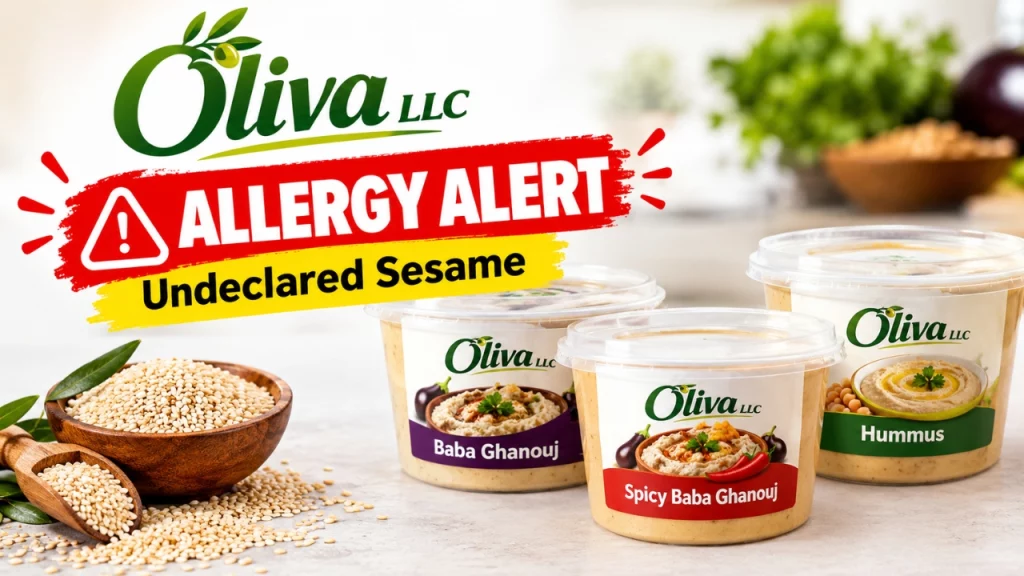
A woman stands at her kitchen counter, baba ghanouj container open, spoon halfway to a plate of crackers for her son. He has had a sesame reaction before — once, after a sesame bagel, his lips swelled within minutes. She has already heard about the recall. The label now says “sesame” in bold. But she pauses anyway, because a corrected label on a jar is not the same as a guarantee about what happened on the production line last month.
That pause is the right instinct. The real question for a sesame-allergic shopper is not just “did they fix the label,” but whether the legal requirement to fix it is new enough that mistakes are still common, whether “sesame” on a label means the same risk for everyone, and how dangerous a slip-up actually is compared with other allergens. Those answers don’t live in a recall notice. They live in the regulatory history and the clinical data.
Trusting the Corrected Label
Here is the backstory most shoppers never hear: sesame only became a legally mandatory labeled allergen in the United States in 2023, under the FASTER Act. Before that date, a company could legally put sesame in a product, or let it cross-contact a hummus or baba ghanouj line, without ever being required to call it out the way peanuts, milk, or tree nuts have been called out for two decades. A review of food-labeling issues for severe food-allergic consumers describes the FASTER Act specifically as the law that added sesame to the United States’ major allergen list, alongside similar updates like Natasha’s Law in the UK. That means the entire system for catching sesame on ingredient panels, in supplier audits, and in recall triggers is only a couple of years old. Small producers, co-packers, and regional brands are still building the habits that larger allergen programs spent twenty years developing for the original eight allergens. A “corrected” label after a complaint or inspection is a sign the company caught the problem this time, not proof the underlying process has changed.
Scanning the Ingredient List Yourself
Because the system is new, the safer habit is to treat the label as a starting point, not a verdict, and to scan for sesame under its many disguises. Tahini is the obvious one in hummus and baba ghanouj, since it is literally sesame paste, but sesame also hides as gomashio, benne seed, sesamol, sesame paste, or simply “natural flavoring” in products made before stricter sourcing practices took hold. A shopper who sees “corrected” on a recall notice should still physically read the ingredient panel on the jar in their hand, because recalled lots and newly produced lots can sit on the same shelf for weeks.
| Trusting the Corrected Label | Scanning the Ingredient List Yourself | |
|---|---|---|
| Speed | Fast — one glance at the allergen statement | Slower — requires reading the full ingredient list |
| Catches hidden synonyms (tahini, gomashio, benne seed, sesamol) | No, relies on the company’s own allergen statement | Yes, shopper checks for every known sesame alias |
| Accounts for new, still-maturing labeling law (FASTER Act, 2023) | No, assumes the system is already mature | Yes, treats the law’s youth as a reason for extra caution |
| Protects against shelf overlap of old and new lots | No | Yes, checks the jar itself rather than the recall notice |
Seed Allergy or Oil Allergy: Not the Same Risk
Another gap recall notices never fill is the difference between a sesame seed allergy and a sesame oil allergy. Sesame seeds and sesame paste contain the storage proteins responsible for most serious reactions. A review on tree nut and seed allergies explains that sensitization to storage proteins is the pattern most strongly linked to systemic reactions and anaphylaxis, while sensitization to other protein families tends to produce milder, localized symptoms. Refining a seed oil typically strips out much of the protein that triggers those reactions, which is one reason some sesame-allergic people tolerate highly refined sesame oil even though they react to the seed, the paste, or unrefined oil. That is not a rule to test at home. A clinical pathway study for diagnosing sesame allergy in children found that skin tests and blood tests for sesame have only limited predictive value, so the diagnosis still depends on supervised oral food challenges. In other words, whether a given person’s reaction is to the protein in tahini or to trace oil is a question for an allergist with a controlled challenge, not a guess made over a grocery cart.
How Severe, Really, and What “No Symptoms Yet” Means
Sesame is often described as rare, and the numbers back that up on a population level. A population-based Canadian prevalence study found perceived sesame allergy in 0.10% of the surveyed population, compared with 1.00% for peanut, 1.22% for tree nut, and 1.60% for shellfish — meaning sesame allergy was roughly ten times less common than peanut allergy in that sample. Rare does not mean mild, though. The pediatric sesame allergy pathway study describes sesame allergy as a common cause of life-threatening, persistent reactions in children, which is exactly why regulators added it to the major allergen list in the first place.
If a container was already eaten before the recall registered, the key fact is timing: allergic reactions to foods typically appear within minutes to a couple of hours of exposure, not days later, so a genuinely symptom-free window of several hours after eating is reassuring for that specific meal. It is not a green light for the rest of the batch. A survey of pediatric food allergy patients found that 31.1% of a prospectively surveyed group and 19.0% of a retrospective clinical chart review reported at least one accidental ingestion over a year, with 10% to 25% of participants reporting an accidental ingestion in any given month — a reminder that tolerating one exposure is common even among people with a confirmed allergy, and does not mean future exposures from the same mislabeled product are safe.
Quick tip: keep the recalled lot number and the jar itself until you’re sure your household is symptom-free, and if anyone with a known sesame allergy ate from it, call their allergist rather than waiting to see what happens with the next jar.
The Verdict
Neither side wins outright. The corrected label matters, because the FASTER Act finally forces sesame onto the page where it belongs, and companies are legally on the hook now in a way they weren’t before 2023. But the law’s newness is precisely why self-checking still earns its keep: scan for tahini, gomashio, benne seed, and sesamol every time, don’t assume refined oil and whole seed carry the same risk for a given person, and treat any eaten product from a recalled lot as worth a call to a doctor even if nothing happened in the first few hours.
Have you ever caught a hidden sesame synonym on a label that wasn’t flagged as an allergen warning?
Sources
- Population-based study of peanut, tree nut, fish, shellfish, and sesame allergy prevalence in Canada (2010)
- Prevalence and characteristics of accidental ingestions among pediatric food allergy patients (2024)
- Food-labeling issues for severe food-allergic consumers (2023)
- A clinical pathway for the diagnosis of sesame allergy in children (2022)
- Update on tree nut and seed allergies: prevalence, clinical characteristics, diagnosis, and management (2025)

Tom Fletcher
The latest from the Australian and global BBQ scene — comps, cooks and culture.