8 New Costco Food Finds Shoppers Should Look for This October
Which October Costco finds are truly new, what they cost per serving, and which ones deserve the "healthy swap" label they're getting.
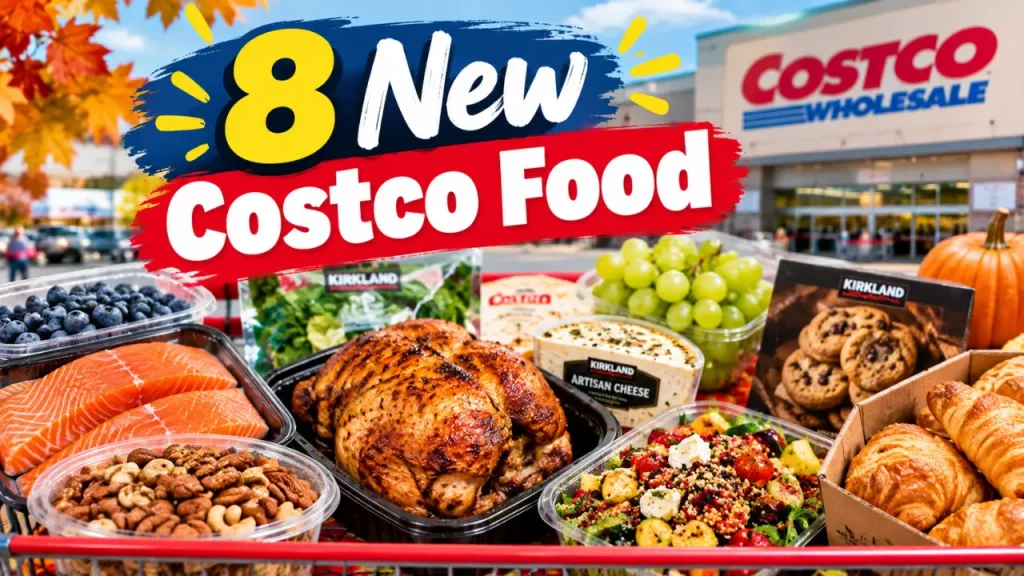
You’re standing in the aisle holding two bags you’ve never seen before, a sparkling water and a frozen mac and cheese, trying to decide if either one is worth the cart space. The endcap sign says “new,” but you bought something that looked identical last October. The price tag says “member only savings,” but you have no idea if that’s actually cheaper than what’s sitting in your regular grocery store two miles away. This is the moment this guide is for.
Costco’s October lineup mixes genuinely new SKUs with seasonal regulars that simply reappear every fall, and the shelf tags rarely tell you which is which. Below is a way to sort the two apart, price them honestly against supermarket alternatives, and flag the health claims that deserve a second look before they land in your cart.
Step 1: Separate “new” from “back for the season”
Before comparing prices, figure out whether an item is a permanent addition to Costco’s rotation or a limited-time October run. Seasonal regulars, like pumpkin-flavored baking mixes and caramel-coated snack clusters, tend to vanish by early winter and return the following fall with the same packaging. Items positioned as part of the food court or beverage lineup, including newly stocked sparkling waters and coffee formats, are more often year-round SKUs that simply get marketing attention in October because that’s when foot traffic rises for holiday shopping.
Tip: Check the package for a “limited time” or seasonal graphic versus a standard Kirkland Signature label with no date branding. If it’s the latter, you usually have months, not weeks, to decide.
Step 2: Do the per-serving math before you believe “bulk is cheaper”
Bulk packaging creates an illusion of savings that doesn’t always hold up. The only honest comparison divides the total shelf price by the number of servings or ounces, then lines that figure up against a name-brand or store-brand equivalent at a regular grocery store. A nine-serving snack box priced a few dollars higher than a six-serving grocery-store box can still come out cheaper per serving, or it can come out roughly the same once you do the division, which defeats the entire point of buying in bulk.
Tip: Do this math standing in the aisle, on your phone, with the actual price tag in front of you this week. Costco’s pricing shifts by region and by month, so last October’s math won’t tell you anything reliable about this October’s tag.
Step 3: Read past the “healthy soda swap” label on the new sparkling water
A newly stocked Kirkland sparkling water is being pitched as a lighter alternative to soda, but that framing only holds if the can is unsweetened or uses a non-nutritive sweetener rather than added sugar. Sugar-sweetened beverages are consistently linked to weight gain, higher type 2 diabetes risk, and cardiovascular disease risk in large population studies, and a review of fructose and cardiometabolic health points to the way liquid sugar calories slip past normal appetite regulation more easily than solid food does. Separately, a systematic review on sugar-sweetened beverages and blood pressure found a consistent association between higher intake and elevated blood pressure risk. Neither finding applies to a plain sparkling water with no added sugar, but it does apply if the flavor variant on the shelf uses real cane sugar rather than a sweetener, something the shelf sign won’t tell you.
There’s also a smaller, more mechanical issue worth knowing: carbonation itself affects pH. An analysis of still and carbonated bottled water brands found carbonated waters skewed more acidic than still water overall, with ten of the thirty-two carbonated brands tested landing below a pH of 5.2, a range associated with greater dental erosion risk, particularly for people with dry mouth. That’s not a reason to avoid sparkling water, but it is a reason to not drink it instead of plain water all day, every day, on the assumption it’s functionally identical.
Tip: Flip the can over before you add it to the cart. “0g sugar” on the front doesn’t always match what’s printed in the ingredient list on the back.
Step 4: Know who should steer clear of the frozen mac and cheese
The frozen Devour mac and cheese has already been flagged for its protein count, but its sodium and saturated fat load deserve more attention than a passing mention. People managing high blood pressure or who’ve been told to watch sodium intake are the ones who should treat this as an occasional item rather than a freezer staple. The same blood pressure review cited above and a broader review on sugar-sweetened beverage consumption and obesity-related disease both point to the same underlying pattern: regular intake of energy-dense, highly processed foods and drinks compounds over time, and people already managing blood pressure or metabolic risk feel that compounding fastest.
Tip: If you’re sodium-sensitive, treat this box as a once-a-week meal, not a weeknight default, and pair it with a low-sodium side rather than adding salt at the table.
Step 5: Store the new 2-pound coffee bag like it has an expiration date
A large-format coffee bag looks like a bargain until the back half goes stale before you finish it. There’s no solid published research specific to how long a 2-pound retail bag stays fresh once opened, so treat any shelf-life claim printed on the bag as a marketing estimate rather than tested data. The safer practical rule is the one roasters already use: keep it sealed, away from light and heat, and portion out only what you’ll use in a week or two into a separate airtight container, rather than opening the full bag repeatedly.
Tip: Split the bag in half the day you bring it home and freeze the unused portion in a sealed bag, pulling it out only when the first half runs low.
Common mistakes shoppers make with October’s lineup
- Assuming a “new” sign means a limited-time item when it’s actually a year-round SKU getting seasonal marketing
- Comparing total package price instead of price per serving or per ounce
- Trusting a front-of-package “healthy” claim without checking the sugar line on the nutrition panel
- Treating high-sodium frozen meals as a weekly default rather than an occasional item
- Opening a full 2-pound coffee bag at once instead of freezing half immediately
Sources
- pH analysis of still and carbonated bottled water and dental erosion potential (2022)
- Fructose and cardiometabolic health: evidence from sugar-sweetened beverages (2015)
- Impact of sugar-sweetened beverages on blood pressure (2014)
- Evidence that decreasing sugar-sweetened beverage consumption reduces obesity prevalence (2013)
- How sugar-sweetened beverage health warnings should be designed (2019)

Mick Hudson
Low-and-slow recipes, rubs, sauces and fire management from our pitmaster team.