5 Healthy Breakfast Ideas Rich in Vitamins A, B, C, D and E
Real numbers behind five "vitamin-rich" breakfasts, and why pregnant women, warfarin users and biotin-gummy fans should read the fine print.
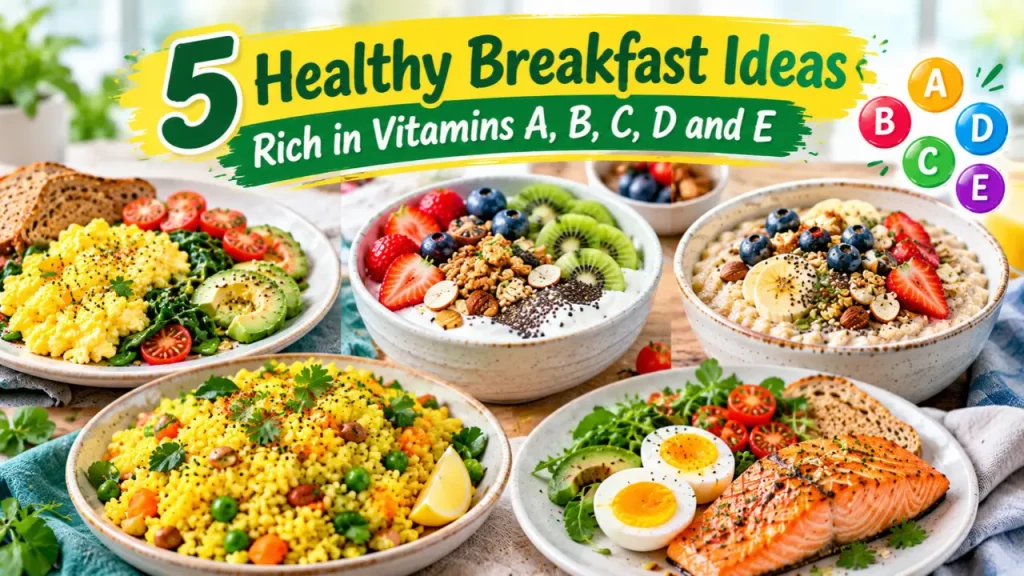
She’s cracking an egg into a pan, dropping a handful of spinach on top, squeezing a wedge of orange into her water, and swallowing a biotin gummy because the bottle promised thicker hair by summer. By the time she sits down, she’s mentally checked off five vitamins before 8 a.m. — A, B, C, D, E, done. It feels like a complete win. It isn’t quite that simple, and the gap between “contains” and “covers your day” is where this gets interesting.
Five breakfasts, one honest question
The combinations that keep showing up in vitamin-focused breakfast lists are predictable for good reason: eggs with spinach and toast, Greek yogurt with kiwi and almonds, a fortified-milk smoothie with citrus, avocado toast topped with an egg and pumpkin seeds, and oatmeal made with fortified milk, almonds and orange slices. Each one genuinely touches all five vitamins — A from eggs or fortified milk, the B group from eggs and yogurt, C from kiwi or orange, D from fortified dairy, E from almonds and seeds. Nobody disputes that part.
What almost nobody tells you is how much of your actual daily requirement one bowl or plate delivers, because that number depends on the exact brand of fortified milk, the size of the egg, how much oil you used — details recipe roundups never specify and that even a nutrition label can’t fully settle for a home-cooked plate. That uncertainty is itself the honest answer: a single “vitamin-rich” breakfast is a contribution, not a finish line, and treating it as the latter is where the real issues start.
Fat-soluble vitamins don’t clock in and out with one meal
Vitamins A, D and E are fat-soluble, which means they hitch a ride into your bloodstream inside fat particles called chylomicrons, not instantly, and not identically every time. A study that gave nine healthy women a dose of retinyl palmitate, a form of vitamin A, found that when it was dissolved in oil the way it naturally is in food, plasma levels of the vitamin peaked noticeably later than the fat particles carrying it, and the timing shifted depending on whether the vitamin A was water-miscible or oil-soluble (retinyl ester absorption kinetics study). That was a pharmacology-style dose, not a breakfast-sized one, but the mechanism it demonstrates applies to your kitchen too: how much fat is on your plate, and in what form, changes when and how completely the vitamin A, D or E in that meal actually gets into your body.
Vitamin E absorption gets even messier in the company of other antioxidants. A small trial in eight healthy men tested whether carotenoids and polyphenols — the very compounds nutrition writers love to pair with vitamin E for an “antioxidant boost” — change how much alpha-tocopherol the gut actually takes up. Volunteers ate a meal with 24 mg of alpha-tocopherol in sunflower oil alongside two different doses of lutein, a carotenoid, and researchers found that mixtures of dietary antioxidants can alter alpha-tocopherol’s intestinal absorption (alpha-tocopherol absorption and dietary antioxidants study). It’s a small, early study and shouldn’t be read as a reason to avoid spinach and almonds together. It is a reason to stop assuming that piling more antioxidant-rich ingredients onto one plate automatically means more vitamin E ends up in your tissues. Consistency across meals and days matters more than stacking everything into one impressive bowl.
The vitamin A question nobody flags for pregnancy
Here’s a detail that’s absent from nearly every “vitamin-rich breakfast” list: not all vitamin A is equal, and the preformed retinol found in eggs, liver and fortified foods behaves differently in the body than the beta-carotene in carrots or spinach. Beta-carotene is converted only as needed, so excess is rarely dangerous. Preformed retinol is not self-limiting the same way, which is exactly why the retinyl palmitate research above used it to track absorption so precisely — the body processes it directly, no conversion step required. For most adults, an egg-and-spinach breakfast poses no issue. But pregnant women are specifically advised by obstetric guidance to watch total preformed vitamin A intake, because excess retinol, not beta-carotene, is the form linked to concern in pregnancy. A daily habit of eggs for breakfast plus a prenatal vitamin that also contains preformed vitamin A is the kind of quiet stacking that a cheerful “eat this every morning” list never mentions.
The biotin gummy and your lab results
That gummy in the opening scene deserves its own warning label. Biotin, one of the B vitamins these breakfasts are praised for, is harmless at food levels, but high-dose supplements — the kind marketed for hair, skin and nails — are a documented problem for a specific type of lab test. A review of biotin-based immunoassays found that daily doses in the range of 100 to 300 mg can meaningfully interfere with test platforms used for thyroid markers, hormones, and even cardiac biomarkers, because those assays rely on biotin-binding chemistry that megadoses can overwhelm (review of biotin interference in immunoassays). A separate laboratory study testing patient serum samples at various biotin concentrations found specific, measurable distortions: high-sensitivity troponin T, thyroid-stimulating hormone and follicle-stimulating hormone results were falsely lowered, while triiodothyronine and vitamin D test results were falsely raised (comprehensive assessment of biotin interference in immunoassays). A 2020 case report in the Journal of the Endocrine Society lists biotin supplements, alongside cancer therapies and heart medications, among the recognized causes of thyroid test results that don’t match how a patient actually feels (case report on discrepant thyroid function tests) — a reminder that doctors are actively trained to ask about biotin use before trusting an odd thyroid number. If you take a high-dose biotin supplement and also have bloodwork scheduled, that’s a conversation worth having, not a coincidence worth ignoring. The eggs and yogurt on your plate aren’t the concern here — the gummy on the side is.
What if there are no eggs or dairy on the plate at all
None of this is an argument against plant-based breakfasts, but it is a reason to be specific about what’s missing. Preformed vitamin A and natural vitamin D both come overwhelmingly from animal sources in a standard diet; without eggs or fortified dairy, a plant-based plate leans entirely on beta-carotene conversion for A and on fortified plant milks or direct sun exposure for D. Vitamin E and C are easy wins without animal products — almonds, seeds and citrus do the job regardless. B12, unlike the other B vitamins, is essentially absent from unfortified plant foods altogether, which is why fortified plant milk or a supplement isn’t optional in that version of the breakfast, it’s the only way the “B” in the headline gets answered at all.
Back to the plate
She finishes the eggs, drinks the last of the orange-squeezed water, and the gummy bottle sits capped on the counter. Nothing about that breakfast was wrong. It was, honestly, a solid contribution toward five vitamins, built on fat that will keep delivering A and E for hours after she’s left the kitchen, not the instant, box-checking total the roundups imply. The real upgrade isn’t a sixth ingredient. It’s knowing that the fat matters, the form of vitamin A matters if she’s pregnant, and that gummy matters a lot more than she thought the next time she’s at the lab.
Sources
- Effect of main dietary antioxidants on alpha-tocopherol absorption (2007)
- Biotin interference in immunoassays based on biotin-strept(avidin) chemistry (2019)
- Comprehensive assessment of biotin interference in immunoassays (2018)
- Discrepant Thyroid Function Tests in Adenocarcinoma (2020)
- Water-miscible vs oil-soluble retinyl palmitate as markers of chylomicrons (2001)

Mick Hudson
Low-and-slow recipes, rubs, sauces and fire management from our pitmaster team.