5 Best Protein Sodas and Alternative Protein Options of 2026
Before you crack open a protein soda on a GLP-1 drug, here's what carbonation, sugar alcohols, and whey isolate actually do to your gut.
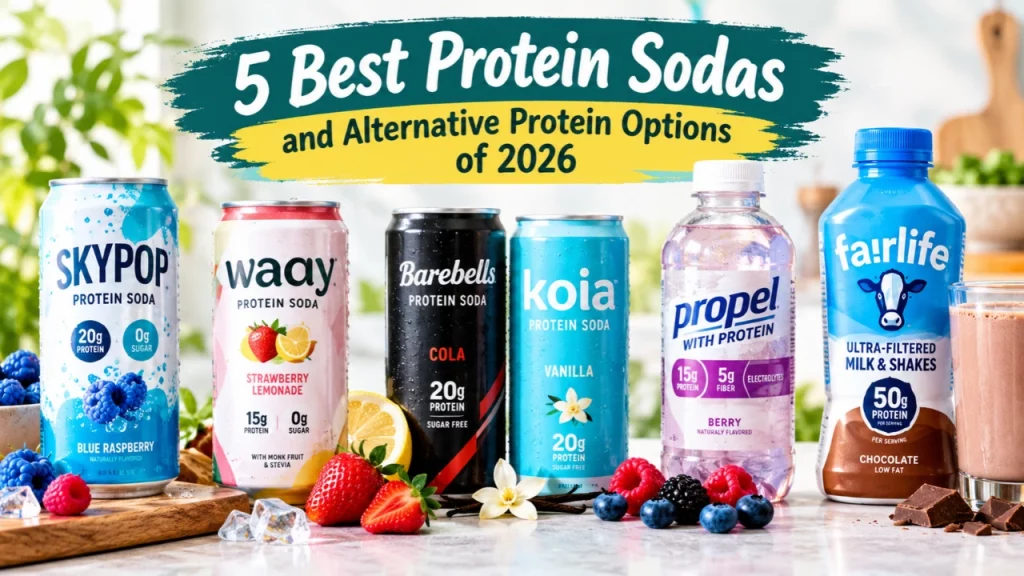
You’re three weeks into a GLP-1 prescription, your appetite has mostly vanished, and you know you’re not eating enough protein because you can barely finish half a chicken breast. A can promising 15 grams of protein, zero sugar, and a fizzy strawberry-lemonade flavor looks like the easiest win of your day. You crack it open, drink it fast because it’s cold, and an hour later you’re doubled over with bloating that feels worse than anything food has done to you lately. That scenario — not the taste reviews, not the brand comparisons — is the real question behind this year’s protein soda boom, and it rarely gets answered honestly.
Brands like SkyPop, Waay, Barebells, Koia, Propel, and Fairlife have all raced to fill the gap left by the Olipop and Poppi soda craze, with protein counts ranging anywhere from about 4 to 15 grams per can. That part of the story has been covered everywhere. What hasn’t been covered is what happens after the can is empty, especially if your digestion is already running on GLP-1 drug time.
Myth: Carbonating and Canning Whey Protein Destroys It
There’s a common assumption that whey protein isolate gets “cooked” or chemically altered by the carbonation and pasteurization process used in canned beverages, making it useless once it hits your bloodstream. The truth is more boring and more reassuring: carbon dioxide bubbles and the mild heat used in commercial canning can change a protein’s physical shape slightly, but they don’t break the peptide bonds that your digestive enzymes need to cut apart during digestion. Whey isolate is already a highly processed, denatured protein by the time it’s powdered — that’s part of how it’s made shelf-stable in the first place. What matters far more for absorption is total dose and what else is in the can with it, not the fizz.
Myth: Sugar Alcohols Are Only a Problem for People Who Already Have IBS
Allulose, erythritol, and stevia blends are the backbone of nearly every “zero sugar” protein soda, and they’re frequently waved off as harmless because they don’t spike blood glucose. But sugar alcohols are classic FODMAPs: they’re absorbed slowly and incompletely in the small intestine, then fermented by bacteria further down, producing gas, bloating, and in higher amounts, diarrhea — in anyone, not just people with diagnosed IBS. This becomes a bigger issue for GLP-1 users specifically because these drugs already slow gastric emptying and intestinal transit as part of how they work. GLP-1 receptor signaling is more complicated than a single on-off switch; research on how receptor activity-modifying proteins shape GLP-1 receptor signaling notes directly that current GLP-1 therapies are “associated with side effects, including gastrointestinal disruptions,” and that scientists are actively trying to design versions that avoid this by changing which signaling pathways get activated. That work is still at the cell and molecular level, not yet a human trial, but it confirms what many patients already suspect: the GI slowdown isn’t a side issue, it’s baked into how these drugs function. Layering a fermentable sweetener on top of that slower transit gives gas-producing bacteria more time with more fuel, in a gut that’s already moving at half speed.
Myth: One Can Basically Works Like a Mini Protein Shake
A can advertising 10 or 15 grams of protein sounds like a real contribution to your day, and it is — but context matters. Nutrition guidance aimed at building or preserving muscle generally points to needing a meaningfully larger single dose of fast-digesting protein to maximize the body’s muscle-building response in one sitting, and most protein sodas land well under that threshold. That doesn’t make them worthless: for someone on a GLP-1 drug who physically cannot eat a full meal, a smaller protein hit sipped slowly may be the only protein they can tolerate between appointments. But it’s closer to a snack-sized nudge toward your daily total than a replacement for a real protein-dense meal or a full-dose shake.
Myth: If You’re on a GLP-1 Drug, Any High-Protein Drink Is a Safe Bet
This is where the generic “check with your doctor” advice falls short, because some people have specific, predictable reasons to be cautious. Anyone with diagnosed FODMAP sensitivity or IBS should assume erythritol and allulose will provoke symptoms, full stop. People with lactose intolerance are often told whey isolate is “lactose-free enough,” but isolate still carries trace lactose compared to whey concentrate, and a sensitive gut on top of GLP-1-slowed motility may not tolerate even that trace amount well. Timing matters too: the days right after a GLP-1 injection, when gastric emptying is at its slowest and nausea is often at its peak, are the worst window to introduce a carbonated, sugar-alcohol-sweetened drink on an already-queasy stomach. Sipping slowly, pacing it away from injection day, and testing tolerance with a half can before a full one are practical ways to find out where your personal line is.
Myth: Protein Soda Is Automatically the Smarter Buy
Compared to a glass of milk or a scoop of whey mixed with water, canned protein sodas are usually a less efficient way to get protein per dollar and per calorie, because you’re paying for carbonation, flavoring, and packaging on top of a relatively modest protein payload. Milk and basic protein powder remain the more metabolically efficient options when the goal is simply hitting a protein number. Where protein soda earns its place is tolerability and appeal — when nausea or appetite loss makes a glass of milk unappealing, a flavored, cold, fizzy can someone will actually finish beats a “better” option left untouched in the fridge.