10 Best Foods for Lung Health to Add to Your Diet
The foods that help your lungs are well documented — but the supplement version of one star nutrient can raise lung cancer risk in smokers.
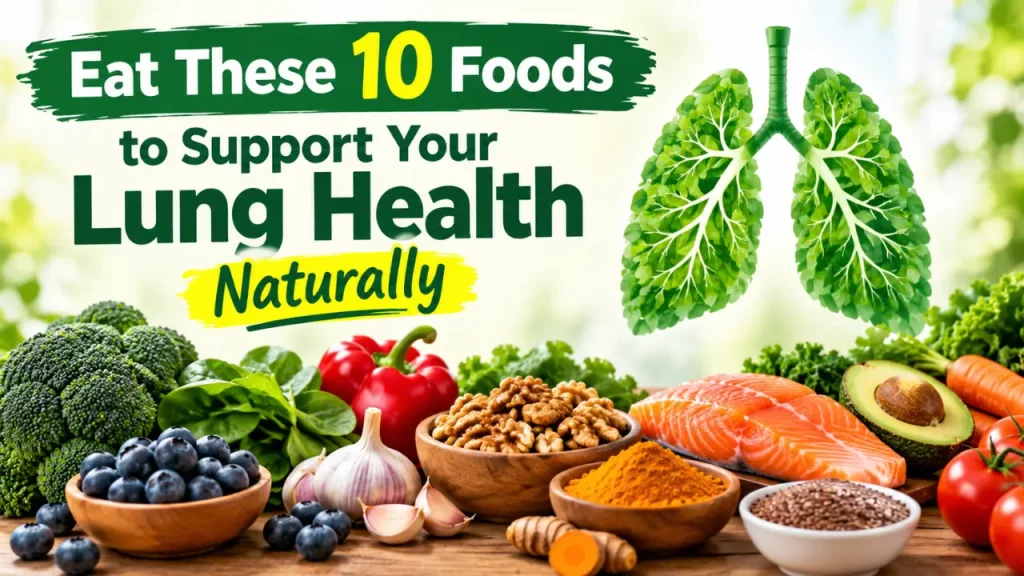
The usual assumption is simple: lungs love antioxidants, so the more colorful produce and the more vitamin pills you stack on your plate, the clearer your breathing will be. That assumption holds up for whole foods. It falls apart the moment “more antioxidants” turns into a supplement bottle, and it falls apart in a specific, well-documented way for people who smoke or used to smoke. The full picture of lung-friendly eating includes not just what to add, but what to dial back and which “healthy” pill to skip.
1. The foods that do the real work
Apples and their quercetin content, tomatoes and their lycopene, fatty fish and walnuts for omega-3s, garlic and onions for sulfur compounds, beets and beet greens for nitrates that help oxygen uptake, and beans and lentils for fiber and magnesium all have reasonable evidence behind them for supporting lung function and calming airway inflammation. A ripe raw tomato, for comparison point you’ll see again below, carries just 5 mg of sodium and 13.7 mg of vitamin C per 100 g, according to USDA FoodData Central values for raw tomatoes — a useful baseline for how little sodium a genuinely lung-supportive food needs to carry.
2. The antioxidant pill that backfires: beta-carotene supplements
Here is the part most lung-food lists skip entirely. Beta-carotene, the orange-red pigment in carrots and sweet potatoes, is one of the most studied antioxidants, and in supplement form it has repeatedly been linked to higher lung cancer risk, not lower. A systematic review pooling nine randomized controlled trials found no overall effect of beta-carotene supplementation on cancer incidence across the board, with relative risk for all cancers combined at 1.01 (95% CI 0.98–1.04), but it specifically flagged that lung and stomach cancer incidence were significantly increased among people supplemented with beta-carotene, according to this meta-analysis of randomized controlled trials.
The strongest single signal comes from the Finnish ATBC trial, which gave 29,133 male smokers aged 50 to 69 a daily dose of 20 mg of beta-carotene for a median of 6.1 years. That trial reported increased lung cancer risk and increased overall mortality in the supplemented group, as documented in the original postintervention follow-up analysis published in JAMA. Eighteen years after the supplementation stopped, the excess risk had faded: relative risk for lung cancer among former beta-carotene recipients settled at 1.04 (95% CI 0.96–1.11) compared with non-recipients, according to the 18-year follow-up of the same ATBC cohort — meaning the danger appears tied to active, high-dose supplementation, not a permanent change.
3. Who this actually applies to
This is the caveat almost nobody states plainly: the risk shows up in smokers taking concentrated pills, not in people eating carrots. In the separate VITAL cohort study of 77,126 adults aged 50 to 76, longer duration of use of individual beta-carotene, retinol, and lutein supplements was associated with significantly elevated lung cancer risk, with a hazard ratio as high as 2.02 for one subgroup, according to the VITamins And Lifestyle study. Meanwhile, in that same ATBC population, dietary intake of carotenoids and fruit and vegetables from food was linked to lower lung cancer risk, relative risk 0.73 (95% CI 0.62–0.86), per the dietary carotenoids analysis from the ATBC cohort study. So a tomato and a beta-carotene capsule are not interchangeable, even though one contains a related pigment. If you smoke, used to smoke heavily, or were exposed to asbestos, a high-dose beta-carotene supplement is one of the few “healthy” products worth actively avoiding rather than adding. If you simply eat carrots and squash, none of these trials suggest you have anything to worry about.
4. Processed and fried foods
Processed meats and anything fried in reused oil work against lung health through inflammation rather than through any single dramatic mechanism. Fried foods are typically high in oxidized fats, and oxidized fat compounds promote the same low-grade systemic inflammation that worsens airway swelling in asthma and COPD. Processed meats add nitrites and heavy sodium loads on top of that. Compare that sodium load with a whole tomato’s 5 mg per 100 g, or just 1.42 mg per 28 g, per USDA data — a deli-meat sandwich or a bag of fried chips reaches multiples of that from a single serving, without the fiber, potassium, or vitamin C that came packaged with the tomato’s sodium-light profile.
5. Sodium’s quiet effect on breathing
Sodium does not just raise blood pressure. In people with compromised lungs, especially COPD, excess sodium promotes fluid retention, and that extra fluid can accumulate around the lungs and lower extremities, making the chest feel tighter and breathing more labored. This is the same basic mechanism that drives sodium restriction in heart failure diets, and it applies with almost equal force to chronic lung disease, since the heart and lungs operate as a connected pressure system. A diet built around naturally low-sodium produce, like the tomato example above, keeps that fluid balance working in your favor instead of against it.
6. Alcohol and sulfites
Alcohol in excess dehydrates airway linings and interferes with the cilia, the tiny hair-like structures that sweep mucus and particles out of the lungs. Wine and some dried fruits also contain sulfites, a preservative that can trigger bronchospasm in sensitive individuals, including a meaningful share of people with asthma. None of this means a single glass of wine is dangerous for the average person, but habitual heavy drinking is a genuine, underdiscussed drag on respiratory clearance, not just a liver issue.
7. Caffeine and tea, without the overclaim
Caffeine is a mild bronchodilator, chemically related to the asthma medication theophylline, which is why a cup of coffee is sometimes mentioned as a feel-good addition for breathing. What’s missing from most casual mentions is any honest accounting of size or duration: there is no large-scale human trial in the evidence base establishing how much, or for how long, a daily cup of coffee or tea measurably changes lung function in ordinary people. Treat it as a plausible, low-risk habit rather than a treatment, and don’t let it replace the foods and behaviors with actual trial evidence behind them.
8. What diet can and can’t undo after smoking
Quitting smoking is the single biggest lever for lung health, and food is a supporting actor, not a substitute. Structural damage such as emphysema, where air sacs are destroyed, does not reverse with any diet. What can improve gradually, over months to a few years after quitting, is airway inflammation, mucus clearance, and exercise tolerance, and a diet lower in sodium, fried food, and processed meat, built around the foods in the first section, supports that gradual recovery. Nobody should be told their lungs will be “rebuilt” by food alone; the honest claim is that good eating removes extra inflammatory burden while the body does what repair it still can.
The list of lung-friendly foods is short and mostly familiar. What changes the picture is knowing that a pigment protective in an apple or a tomato is not automatically protective in pill form, that sodium and fried food work against breathing through fluid and inflammation, and that recovery after smoking has real limits no ingredient can erase.
Sources
- USDA FoodData Central, tomatoes nutrient profile (2019)
- Beta-carotene supplementation and cancer risk: a systematic review and meta-analysis of randomized controlled trials (2010)
- 18-year postintervention follow-up of the ATBC Cancer Prevention Study (2014)
- Long-term use of beta-carotene and other supplements and lung cancer risk, VITAL study (2009)
- Incidence of cancer and mortality following alpha-tocopherol and beta-carotene supplementation, postintervention follow-up (2003)
- Dietary carotenoids, serum beta-carotene and retinol and lung cancer risk, ATBC cohort study (2002)
